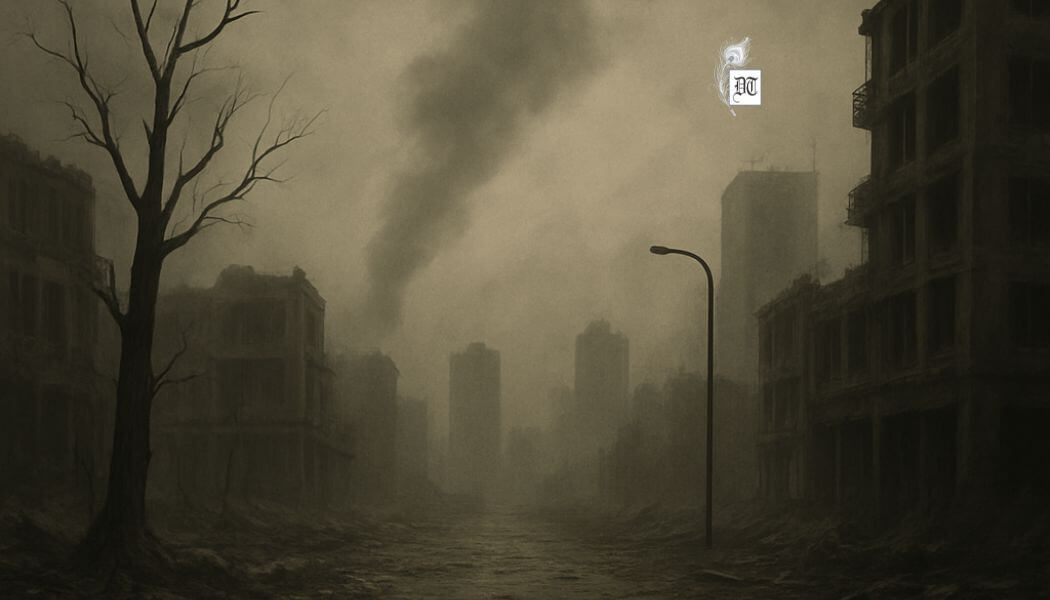
Chitra’s poignant analysis for DifferentTruths.com uncovers the “smog refugee” phenomenon, where toxic air is quietly dismantling New Delhi’s social fabric.

AI Summary
- Silent Migration: Worsening air quality is driving a steady exodus from Delhi, with residents increasingly identified as “smog refugees”.
- Health Crisis: Studies show nearly 40% of residents want to leave as pollution triggers severe respiratory and neurological risks.
- Systemic Failure: Despite numerous action plans and judicial interventions, persistent mismanagement continues to threaten the city’s economic and social fabric.
- Studies indicate that a gradual migration has begun, with people leaving New Delhi due to its suffocating air pollution
- Although the numbers may seem small and undramatic at this moment, the movement is gaining momentum
- Many are referring to these individuals as “smog refugees”
- A recent study titled “Countering Delhi’s Air Pollution and Aligning Solutions: Clean Air as a Right to Life,” conducted by the Illness to Wellness Foundation, reveals that of the 17,000 people interviewed, four in ten expressed a desire to relocate.
- Similarly, a consumer insights platform, Smytten PulseAI, found that among 4,000 surveyed residents, 36.6 per cent are eager to leave the capital due to hazardous air quality
For many inhabitants of New Delhi, the city is no longer a refuge but a reckoning. The simple reason is this: Delhi ranks among the most polluted capitals in the world, with the air quality index often exceeding 500.
With its alarmingly high levels of air pollution and a persistent choking haze that never seems to lift, living in the city is no longer feasible for the faint-hearted or those with respiratory issues. People, especially children and older adults, are struggling to breathe.
It is not surprising that even the most patient and optimistic citizens of Delhi are feeling disenchanted with the city. Many are beginning to give up on this city that has evolved into seven cities since medieval times, or earlier. This sentiment is shared by a diverse group of people, including wealthy residents, expatriates, embassy personnel, middle-class professionals, and the poor, especially the one million migrant labourers who have been among the hardest hit. Many are relocating to other cities because their experiences in Delhi have tested their endurance to the limit and significantly impacted their quality of life.
The exodus is happening quietly but steadily. While the numbers may seem small, the movement out of the city has begun. This silent migration and gradual depopulation are reshaping the city’s economic and social fabric, albeit slowly. People are referring to those who are leaving as “smog refugees.”
While those in power dismiss these concerns, claiming that soaring real estate prices reflect a thriving city, there is evidence to suggest otherwise.
A recent study titled “Countering Delhi’s Air Pollution and Aligning Solutions: Clean Air as a Right to Life” by the Illness to Wellness Foundation found that out of 17,000 people interviewed, four in ten expressed a desire to leave the city. The report highlights that Delhi’s pollution is a structural issue that persists year-round, not only during the winter smog season.
Additionally, a new survey conducted by the consumer insights platform Smytten PulseAI offers further insights. Among 4,000 surveyed residents, 36.6 per cent indicated that they are considering leaving the capital due to hazardous air quality. Many feel that relying on air purifiers, nebulisers, and masks while staying indoors is no longer acceptable. For them, health is a non-negotiable priority.
A recent study by the Indian Council of Medical Research, presented in Parliament, reports that two lakh cases of respiratory illnesses were recorded in the city from 2022 to 2024. Dr Daljit Singh, vice chairman and head of neurosurgery at Max Super Smart Speciality Hospital in Delhi, warns that patients affected by air pollution are at increased risk of strokes, dementia, Parkinson’s disease, and Alzheimer’s disease. Additionally, Dr Gopichand Khilnani, chairman of the PSRI Institute of Pulmonary and Critical Care and Sleep Medicine, describes the rise in illnesses linked to air pollution as a public health emergency. He likens the dangers posed by embedded particulate matter to a ticking bomb, with many of its full effects still unknown. He has advised those who can afford to relocate to do so.
Sick cities translate into poorer cities. Research conducted by Yale University’s Economic Growth Centre in November 2024 indicates that improving air quality could boost a city’s GDP by 6.7 per cent and increase residents’ income by 12 per cent. Based on these findings, Delhi is likely to face declining wealth.
The National Clean Air Programme (NCAP) has declared Delhi a non-attainment city, despite numerous long-term action plans implemented since the 1990s that have failed to improve air quality. Various authorities, including the Supreme Court, High Court, National Green Tribunal, Environment Pollution (Prevention and Control) Authority, and the Ministry of Environment, Forests and Climate Change, have established timelines and action plans, yet none have proven effective.
Will the city take action to save itself? Or will it allow the data to be overlooked without response? Will we, as residents, remain blinded, fail to recognise the migration, and argue that Delhiites are unaffected?
Picture design by Anumita Roy

Chitra Gopalakrishnan, a New Delhi-based writer, uses her ardour for writing to break down the barriers between nonfiction and fiction, narratology and psychoanalysis, marginalia and manuscript, and tree-ism and capitalism.


 By
By
 By
By
 By
By