Mowmita reveals that Mount Kailash is where physical and spiritual worlds seamlessly overlap, guarding ancient secrets and defying all human conquest, for Different Truths.

Mount Kailash is often described as the navel of the world—a place where the physical and spiritual worlds quietly overlap. But beyond devotion and mythology, there is an undeniable mystery stitched into every rock, ripple, and shadow around Kailash Mansarovar. Pilgrims who journey there do not return with just photographs; they return with stories that sound impossibly surreal yet strangely believable in this land where nothing feels ordinary.
For centuries, explorers and geographers have claimed that no one has ever successfully climbed Mount Kailash. Not because they lacked courage or skill, but because every attempt ends abruptly. Climbers report sudden storms, shifting weather patterns, and strange sensations of being watched or warned away. Even legendary mountaineer Reinhold Messner is said to have refused to attempt the summit, calling it a mountain “not meant for human conquest.” Locals say that Kailash is the throne of Shiva; it allows no footprints to be left on its peak.
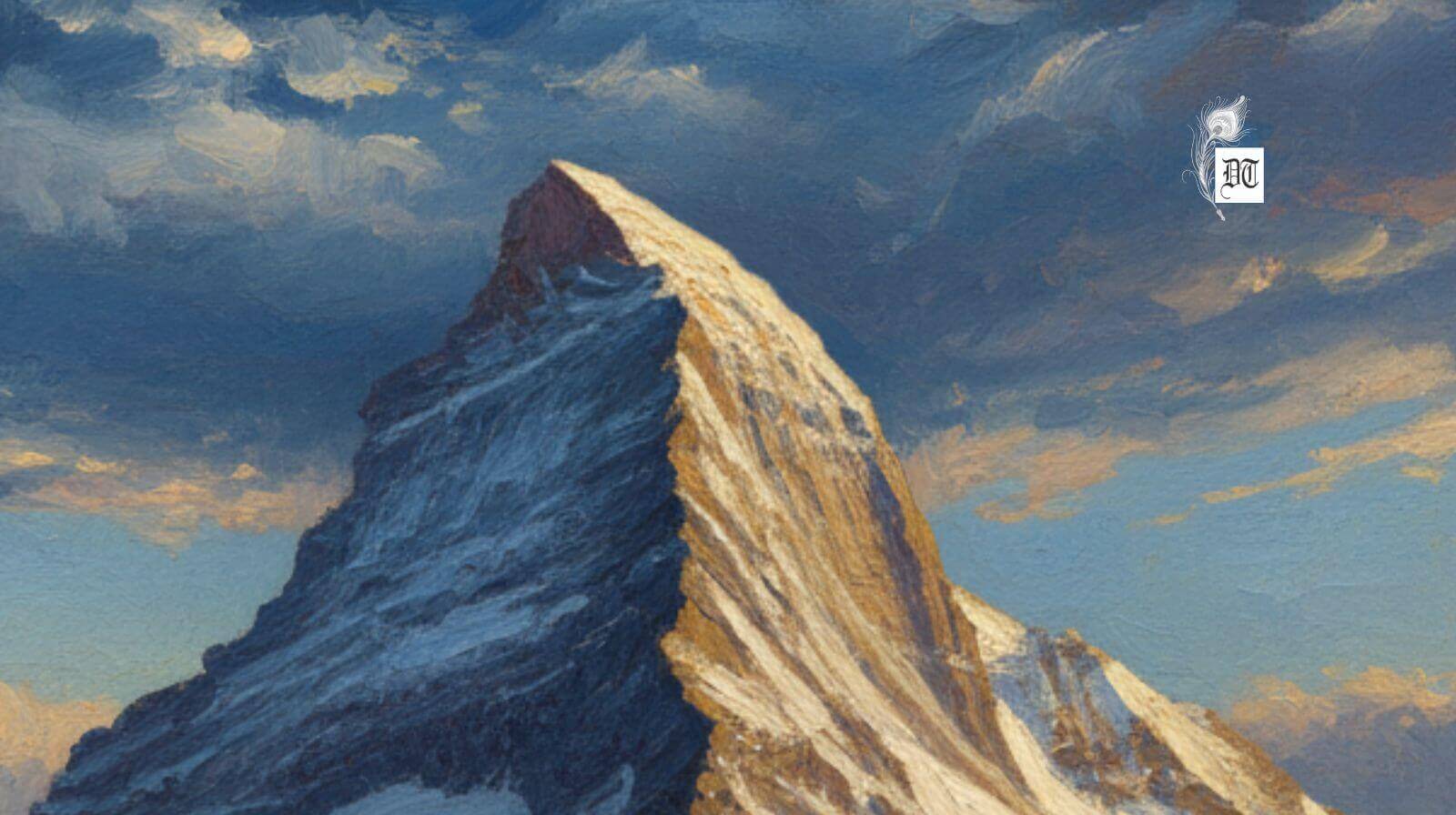
One of the most intriguing mysteries is the perfectly symmetrical pyramid shape of the mountain. From a distance, it looks unnatural—almost carved. Some researchers have suggested it could be an ancient spiritual monument or even a natural energy conductor. Those who spend time near it often describe an overwhelming sense of calm, as if the mountain is subtly altering the rhythm of the mind itself.
The twin lakes—Mansarovar and Rakshastal—add another layer of mystery. Although they sit side by side, they are complete opposites: one freshwater, one saline. One circular, one crescent-shaped. One symbolising purity, the other associated with darkness. Strangely, their waters never mix, despite being separated by nothing more than a thin strip of land. Scientists have tried to explain this phenomenon through geology, but pilgrims believe the answer lies in cosmic balance—light and shadow existing in harmony.
Mansarovar itself carries eerie tales. Many travellers claim the lake reflects unusual lights or orbs moving across the water at night. Some describe seeing strange patterns ripple across the surface without wind. Local lore says the lake reveals visions to those who sit in silence long enough—the mind touching something far older than human memory. Scriptures describe Mansarovar as a lake first created in the mind of Brahma and only later manifested on Earth, making it a “thought” made real.
The region is also associated with the legend of Shambhala, a purportedly hidden kingdom located somewhere in the vicinity of the Himalayan belt. According to Tibetan monks, the path to Shambhala opens only to those spiritually prepared—never to the curious or the unworthy. Some believe that the unusual magnetic energies around Kailash could be connected to this legendary realm.
Even time seems strange near Kailash. Travellers often claim their watches malfunction, electronics behave unpredictably, and the sense of day and night blurs during long meditative hours. Scientists attribute this to high altitude, but devotees insist: Kailash does not follow ordinary rules.
In the end, the mystery of Kailash Mansarovar is not meant to be solved. It is intended to be felt—a quiet reminder that some places are not of this world but gateways to something far more ancient and profound.
Om Namah Shivaya!
Picture generated by Anumita Roy

Mowmita Sur is an educationist, author, poet, and content writer. She has received many accolades for her writings at both the national and international levels. She was awarded as one of the best 50 poets of India. Many of her published book gets effusive praise and good reviews. Her books are captivating, incredibly well-researched and evoke strong emotions. She writes witty fiction, non-fiction, horror and mysteries. Her characters are clever and fearless like her.


 By
By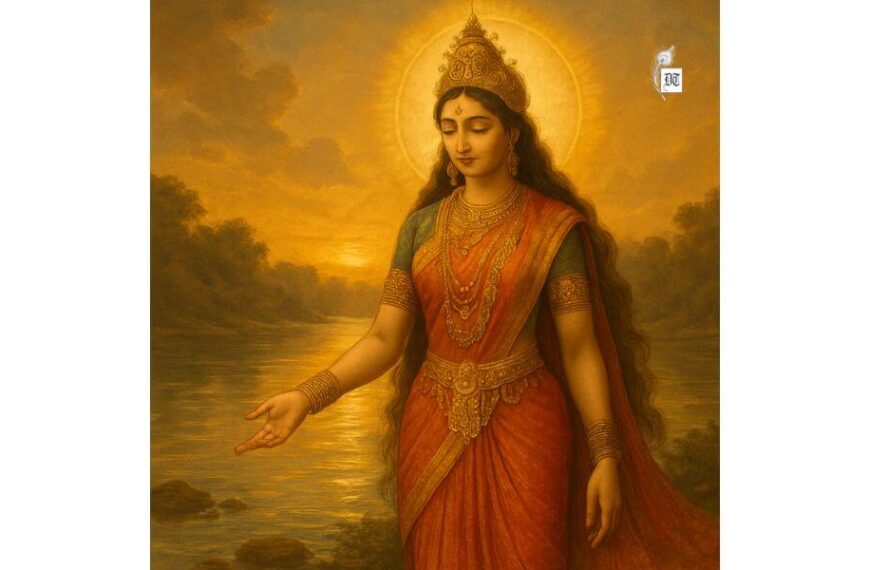
 By
By