Akash in DifferentTruths.com reflects on “flow” as the living rhythm of Christ—divine love moving through creation, humanity, and transformation—on the eve of St Joseph’s Day, March 19, this year.
AI Summary
· The write-up redefines flow as Christ’s movement—divine, disruptive, and redemptive.
· It connects theology, creativity, and compassion as acts of spiritual flow.
· Akash urges believers to embody Christ’s living current through justice, empathy, and faith.
Flow is more than movement. It is the breath of existence itself. In the beginning was the Word, and the Word was with God, and the Word was God. This Word did not remain still. It moved across the waters, hovered over chaos, and spoke light into darkness. From the very first breath of Genesis to the final promise in Revelation, the flow in the name of Jesus Christ is not just theological—it is deeply human, tender, disruptive, and divine.
To speak of flow is to speak of incarnation. Christ, the Son of God, did not remain distant or unapproachable. He flowed into our world through the womb of a virgin, through the birth pangs of a woman overshadowed by fear and favour. He did not merely enter time – He entered its currents. He walked among fishermen, sat with sinners, wept with mourners, and touched the untouchable. His ministry was a river, twisting through deserts of despair, bringing hope to those long forgotten by empires and temple doors. In Him, flow became flesh.
In our lives, we often imagine time as a straight line, a progression from one phase to another. We are taught to move from childhood to youth, from school to job, and from one success to another. But this linearity is an illusion. Life does not move that way. There are breaks, bends, rapids, and sometimes long periods of stillness. Flow, in its most sacred sense, does not avoid these disruptions; it embraces them. And so did Jesus.
Jesus’s flow was often disruptive. He healed on the Sabbath, when He wasn’t supposed to. He dined with tax collectors and women when He wasn’t allowed to. He let a bleeding woman touch Him; He let tears of a repentant sinner anoint His feet, He welcomed children into a space where only adults claimed wisdom. Flow in Christ’s life was not tame. It was wild grace. It broke systems. It healed wounds that had been silenced under layers of tradition and power.
Yet even as He disrupted, He nurtured. Flow is not chaos. It has direction, even when it seems unpredictable. A stream cuts through rock not with rage but with perseverance. And Christ’s flow, His gentle revolution, changed hearts without burning bridges unless they were built by injustice. The Samaritan woman at the well met a man who knew her whole story, every failed attempt at love and every shame-filled walk to fetch water alone, and instead of shunning her, He invited her to drink from the eternal flow. That is the gospel. That is Jesus’s current mercy that moves toward the wounded.
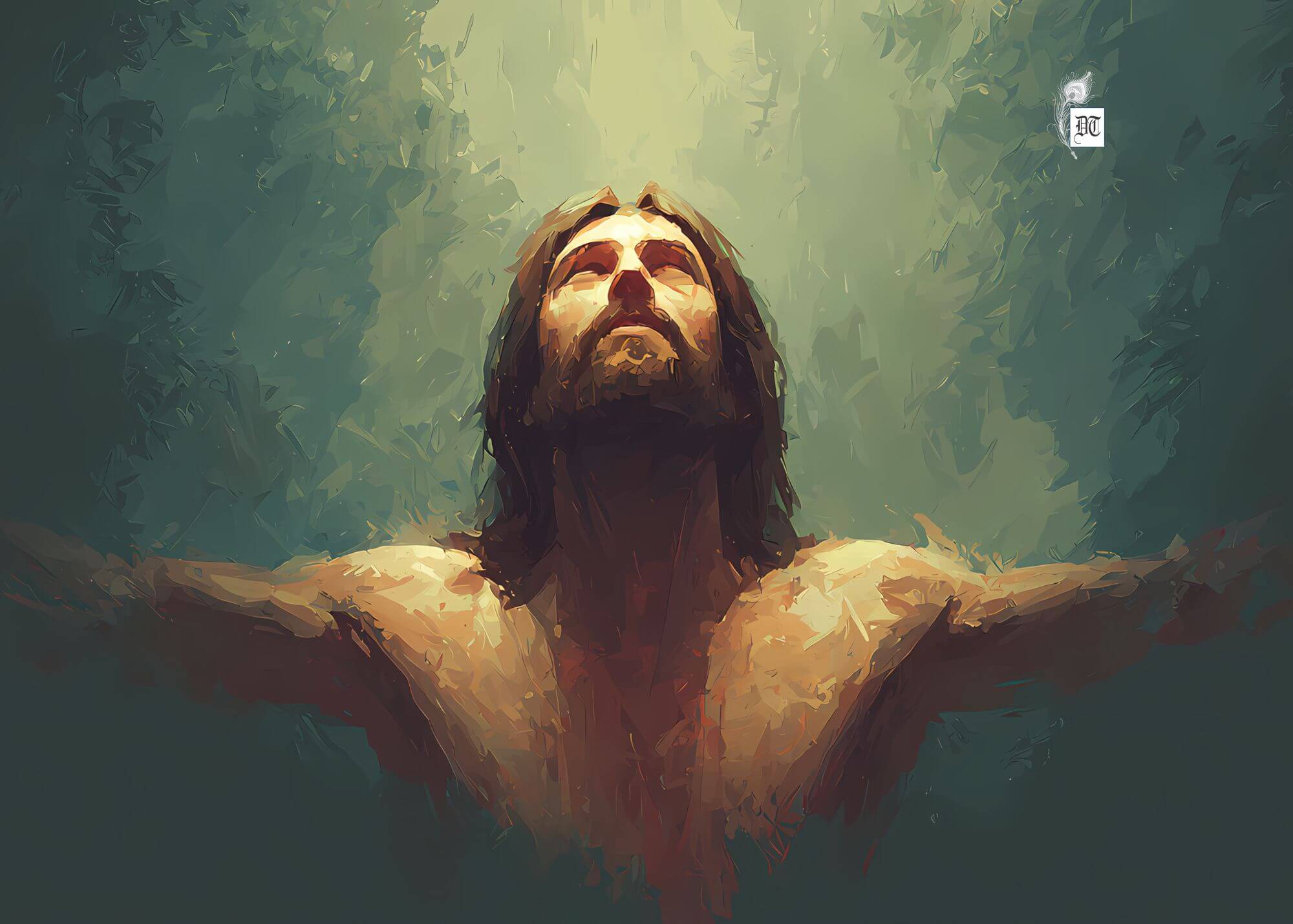
There is grief in the flow. We lose. We ache. We stand beside dying dreams and wonder where the river went. Christ knew this as well. In Gethsemane, the flow paused. Or so it seemed. He sweated blood. He prayed to be spared. He asked, not once but thrice, for the cup to be passed. In that garden, we see the deepest honesty; sometimes, flow is not easy. It doesn’t always feel divine. Sometimes it feels like drowning. But He submitted. Not passively, but faithfully. “Not my will, but Yours be done,” He said, offering Himself to the current that would soon carry Him to the cross.
The crucifixion was not a cessation of flow. It was a convergence. The human and divine, the temporal and eternal, and suffering and redemption all flowed together at Calvary. Blood and water poured from His side. This was not only death. It was a new life springing forth, uncontainable, unstoppable. Through crucifixion, the flow of salvation touched all who had been damned by sin, shame, and separation. The curtain tore. The earth shook. And during World War II, Christ’s love flooded the world.
But flow does not end at death. Resurrection is the proof. Christ walked again, not as a ghost or memory but as the Risen One. He flowed through locked doors to reach frightened disciples. He broke bread with them, letting them taste redemption. He restored Peter with the question “Do you love me?” three times, undoing the triple denial not with punishment but with purpose. He asked them to feed, to love, to go. Flow became a mission.
We, too, are called to participate in this divine flow. To let Christ move through us. Not as saints in stained-glass windows, but as fragile, uncertain, often failing human beings who dare to love anyway. And love, in the name of Jesus, is the most powerful current on earth.
Yet in our world, flow is often denied to many. It is blocked by structures of hierarchy and hate. Some are cast out of the stream not because they lack faith, talent, or desire but because of race, gender, caste, class, identity, or wounds they never chose. Systems choke the river. Institutions build dams. Some voices are muted so others can echo louder. Christ, who flipped tables in the temple, who stood with the woman caught in adultery, and who washed the feet of His disciples, still flows through those who are unseen.
To speak of flow in the name of Jesus is to stand in solidarity with the oppressed. It is to let His radical love break the barriers we inherited and have too often protected ourselves from. It is to say that flow must be restored not only within souls but also within societies. The early church understood this. They held all things in common. They broke bread daily. They erased divisions between Jew and Gentile, male and female, slave and free. They let the Spirit flow through tongues of fire and acts of justice. They were not perfect, but they moved together.
Movements and counter-movements have shaped Christian history. Sometimes the river roared with righteousness: the abolition of slavery, the fight for civil rights, and the calling out of corruption. Sometimes it was stagnant, silenced by fear, or twisted by power. But Christ’s current has always found a way. Through reformers, mystics, martyrs, mothers, poets, and prophets, He has kept the waters flowing. Even when the Church faltered, His Spirit surged.
In my own creative practice, I encounter this flow not just in scripture but in silence. In writing. In tears. In moments when words fail and only the ache of being alive remains. Flow is not always eloquent. Sometimes it is just showing up. Breathing. Praying with groans too deep for language. Letting Christ’s presence remind me that I belong, even when I feel adrift.
To reflect on flow is to remember that we are not static beings. We change. We fall. We rise. And in all this, Christ is with us, not as a distant observer, but as Immanuel, God-with-us. He sits with us by dry riverbeds. He walks beside us when the flood comes. He holds us when we can’t swim anymore. And He tells us, “I am the Living Water.”
When we write, when we create, when we love in the name of Jesus, we join the eternal stream. We document not only our thoughts but also His grace. Not only our pain, but also His healing. We trace the ripples of His mercy across time, history, and our trembling hearts.
Flow is not a theory. It is a way of life. And in Jesus, it is also a way of death, resurrection, and eternal becoming.
Even now, in a world fractured by war, climate collapse, injustice, and despair, Christ’s flow remains. It moves in refugee camps, in protest marches, in whispered prayers, in breaking bread with strangers, in children’s laughter, in nurses’ hands, and in poets’ ink. It moves in forgiveness. In courage. In the quiet decision to keep believing.
I am excited by flow because I have tasted its mystery. I have felt it in moments when I knew I was lost and yet somehow found. I have seen it in people who should have broken but instead blossomed. I have heard it in hymns sung by tired voices. I have seen it in the eyes of the dying who knew peace.
To follow Christ is to say yes to this flow. Not because it is easy. But because it is true.
And truth, in the name of Jesus Christ, does not stay still. It walks. It weeps. It heals. It burns. It flows.
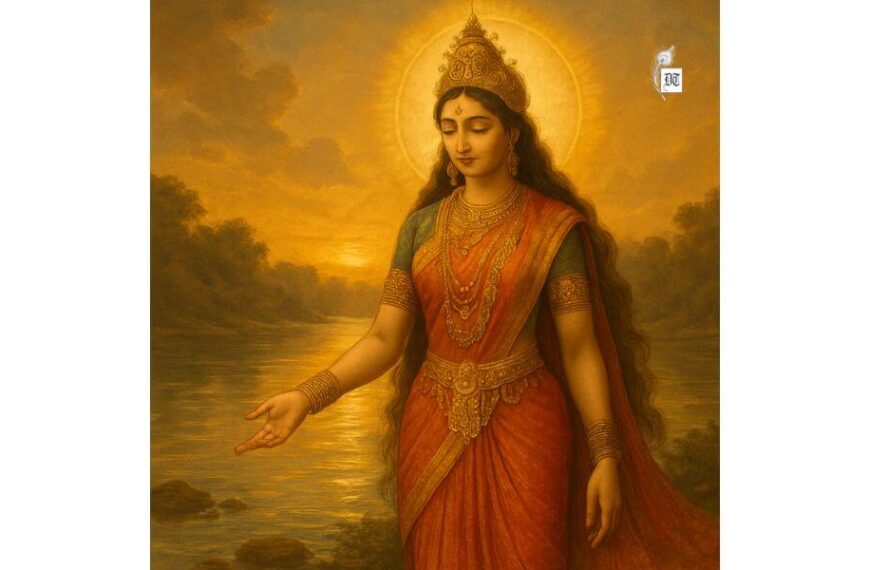
Picture design by Anumita Roy

Akash Paul, a renowned criminologist, theologian, and demonologist, and the author of two globally acclaimed textbooks, pioneered post-crime analysis in criminology and comparative religious studies in theology. His expertise spans criminal profiling, sexual offenses, Christianity, and religious history, with notable contributions to each of these fields. An insightful critic of contemporary society, he also writes poetry, short stories, and novels, blending creativity with profound societal analysis.
 By
By
 By
By