
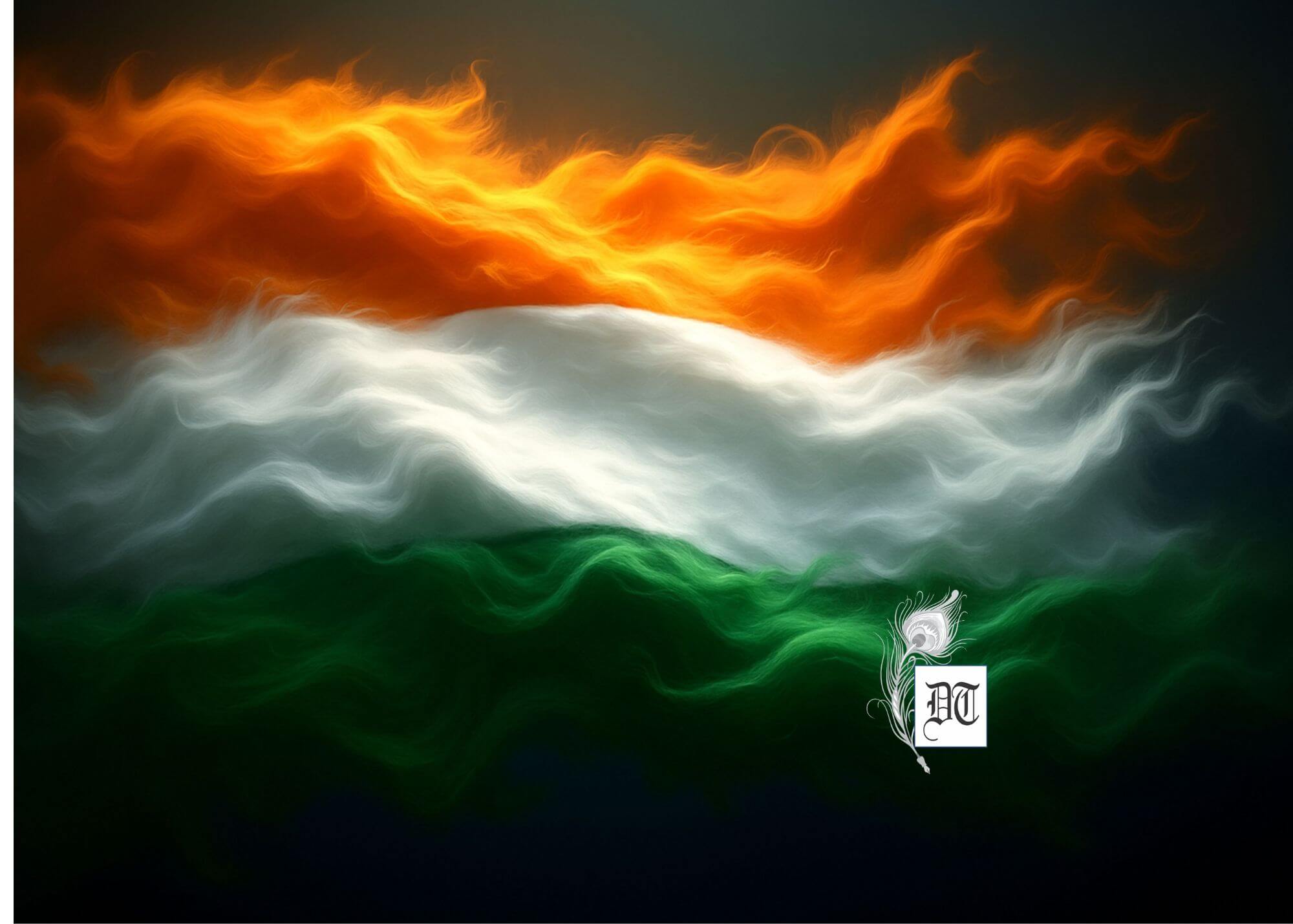
Akash critiques India’s democracy, analysing its institutional flaws, majoritarianism, and suppression of dissent, in this Opinion piece, exclusively for Different Truths.
India, often hailed as the world’s largest democracy, embodies a paradox. On one hand, it celebrates periodic elections, vibrant media, and constitutional guarantees of fundamental rights. On the other hand, it grapples with systemic issues that compromise democratic ideals. While democracy in India has endured for over seven decades, its resilience masks deeper contradictions. This essay aims to analyse and criticise Indian democracy from a research-driven and contextual perspective, exploring its institutional inefficiencies, majoritarianism, electoral distortion, democratic backsliding, criminalisation of politics, and suppression of dissent.
1. The Electoral Mirage: Free, Not Fair
While India holds regular elections, the fairness of these contests is under severe scrutiny. Research by C Kapoor (2024) highlights the “ritualistic nature” of Indian elections, which have increasingly become spectacles of money, media, and manipulation rather than informed civic engagement (SSRN). The rise of paid news, opaque electoral bonds, and data-driven voter profiling enables dominant parties to subvert the electoral process.
Furthermore, the First-Past-The-Post (FPTP) system exacerbates representational imbalances. For instance, in the 2019 general elections, the ruling BJP won 37.4% of the vote but secured over 55% of seats in the Lok Sabha, raising questions about the legitimacy of the mandate [Election Commission of India, 2019]. Minority parties often receive a sizable vote share but are underrepresented in legislatures, creating a pseudo-majoritarian rule.
2. Majoritarianism and the Erosion of Secularism
One of the most serious criticisms of Indian democracy is the erosion of its secular fabric. YP Singh (2025) argues that the increasing criminalisation of free speech and the suppression of religious minorities indicate a democratic erosion by parochial measures (Brill). Laws such as the Citizenship Amendment Act (CAA) and the proposed National Register of Citizens (NRC) have led to massive protests and concerns of institutionalised discrimination against Muslims.
The shift from pluralism to religious majoritarianism undermines India’s constitutional ethos. Scholars note that “Hindutva nationalism” attempts to redefine national identity in exclusionary terms (Chatterjee, 2024, Taylor & Francis). This transformation raises concerns about ethnic democracy, a regime where one ethnic/religious group dominates state institutions and policy.
3. Suppression of Dissent and Media Freedom
India has slipped significantly on press freedom indices. The World Press Freedom Index 2024 ranked India 161 out of 180 countries. According to Gaur (2025), the use of sedition, UAPA, and anti-terror laws against journalists, intellectuals, and activists such as Varavara Rao, Gautam Navlakha, and Sudha Bharadwaj demonstrate the weaponisation of legal apparatus to silence dissent (Creative Saplings).
A free press is a foundational pillar of democracy. However, corporate ownership of media and fear of state reprisal have led to rampant self-censorship. The term “Godi media” has emerged to describe outlets that function more as propaganda arms than independent institutions.
4. Criminalisation of Politics and Decline of Institutional Integrity
According to the Association for Democratic Reforms (ADR), over 43% of elected Members of Parliament in 2019 faced criminal charges. While some are minor, many include serious offences like murder, rape, and corruption. As Singh (2025) asserts, this normalisation of criminality undermines democratic accountability and erodes public trust in institutions [Brill Studies in Critical Social Sciences].
Furthermore, constitutional bodies such as the Election Commission, Central Bureau of Investigation (CBI), and Enforcement Directorate (ED) are accused of political bias. Their credibility is questioned when investigations disproportionately target opposition leaders before elections while ignoring ruling party figures. The erosion of institutional independence creates an illusion of democracy without substantive checks and balances.
5. Democratic Deficit in Policymaking
India’s democratic framework often does not translate into inclusive policymaking. Rural populations, Adivasis, Dalits, and the urban poor are frequently excluded from decision-making processes. A study by Chakraborty (2024) illustrates that governance is often top-down, elitist, and bureaucratic, with limited space for participatory democracy (IJEKS).
Even parliamentary debates have seen a sharp decline in duration and depth. Laws are rushed through without adequate scrutiny or debate. For instance, the three farm laws of 2020 were passed without stakeholder consultation or thorough legislative debate, resulting in year-long protests that forced their eventual repeal.
6. Digital Surveillance and Data Control
India’s democratic credentials are further questioned by its embrace of digital authoritarianism. The use of Pegasus spyware to allegedly surveil journalists, opposition leaders, and activists was confirmed in the Pegasus Project revelations. The absence of accountability or parliamentary investigation into such violations reflects a diminishing respect for privacy and civil liberties.
Moreover, the growing role of Aadhaar-linked databases, facial recognition in policing, and centralised apps like Aarogya Setu demonstrate an expansion of state surveillance under the guise of governance. Scholars like Holmwood (2024) argue that this reflects a technocratic encroachment on democratic freedoms (SAGE).
7. Caste, Class, and Structural Inequality
Indian democracy has been historically blind to structural inequalities rooted in caste and class hierarchies. Although political representation has improved for marginalised groups, systemic discrimination continues in access to education, healthcare, and justice. Dalit and Adivasi communities face persistent violence and exclusion.
J. Holmwood (2024) critiques Indian democracy as functioning more as an instrument of elite reproduction than genuine empowerment. Electoral democracy often serves as a tool for elite capture rather than radical transformation. Caste-based violence and manual scavenging persist, despite constitutional prohibitions.
8. Populism and Authoritarian Drift
India’s political landscape has witnessed a growing trend of personalised, populist leadership, reducing politics to loyalty toward a central figure rather than allegiance to institutions or ideologies. Leaders are celebrated as “messiahs,” while dissenters are branded anti-national.
Mahfudhi (2024) characterises India’s recent political shift as a move toward populist authoritarianism, where popular mandates are used to dismantle democratic checks rather than strengthen them (JSTOR). The idea of “New India” projects muscular nationalism and economic self-reliance, but sidelines federalism, pluralism, and deliberation.
9. Judicial Ambiguity and Executive Deference
The judiciary, once hailed as the guardian of the Constitution, is increasingly seen as deferential to the executive. Key cases involving habeas corpus petitions during the Kashmir lockdown, electoral bond transparency, and freedom of expression have seen delayed hearings or ambiguous verdicts.
Chatterjee (2024) and Cucciolla (2025) highlight how judicial silence or delay enables executive overreach (Taylor & Francis, SAGE). Without timely judicial intervention, constitutional violations are normalised.
10. Democratic Backsliding and International Concerns
Democracy watchdogs have raised alarms. In 2021, Freedom House downgraded India from “Free” to “Partly Free,” citing attacks on press freedom, minority rights, and judicial independence. Similarly, the Varieties of Democracy (V-Dem) Institute described India as an “electoral autocracy.”
These assessments are not foreign conspiracies but align with domestic academic critiques. The issue is not whether India holds elections, but whether the liberal democratic ecosystem: freedom, pluralism, institutional balance, is being hollowed from within.
Conclusion: Democracy as Performance or Principle?
Indian democracy survives, but it is increasingly performative rather than participatory. While the machinery of elections, parties, and courts continues to function, the democratic spirit rooted in dissent, deliberation, and dignity is in peril.
To revitalise Indian democracy, reforms are needed at multiple levels:
· Electoral finance and transparency
· Judicial independence and fast-tracking of civil liberty cases
· Institutional accountability for intelligence and law enforcement agencies
· Decentralisation and participatory governance
Without addressing these systemic flaws, Indian democracy may persist in form but decay in substance. It is not the absence of elections that threatens democracy, but the presence of elections without the safeguards of freedom, equity, and accountability.
References
i. Raj, A. (2024). The Rudimentary Tenets Undergirding Bharat Ratna Karpoori Thakur’s Philosophy. Academia.edu
ii. Chakraborty, R. (2024). Empowerment and Nation-Building. IJEKS
iii. Mahfudhi, M.A. (2024). The Political Outsider: Indian Democracy and the Lineages of Populism. JSTOR
iv. Kapoor, C. (2024). Environmental Neglect and Maslow as the Scapegoat. SSRN
v. Singh, Y.P. (2025). Democratic Erosion by Parochial Measures. Brill
vi. Holmwood, J. (2024). Race, Caste and Colonialism. SAGE
vii. Gaur, H.K. (2025). When Words Are Used Against You. Creative Saplings
viii. Chatterjee, D. (2024). Concluding Remarks: Marginality in the Indian Scenario. Taylor & Francis
ix. Cucciolla, R.M. (2025). Dreams of Peace and Realities of War. SAGE
Picture design by Anumita Roy

Akash Paul, a renowned criminologist, theologian, and demonologist, and the author of two globally acclaimed textbooks, pioneered post-crime analysis in criminology and comparative religious studies in theology. His expertise spans criminal profiling, sexual offenses, Christianity, and religious history, with notable contributions to each of these fields. An insightful critic of contemporary society, he also writes poetry, short stories, and novels, blending creativity with profound societal analysis.


 By
By
 By
By

 By
By
Interesting perspective, son…
Most provocative article ☺️✨✨