
Prof Bhaskar explores West Bengal’s cultural decline, highlighting criminality, social value erosion, the silence of civil society, fear of the middle class, and political power’s dominance, exclusively for Different Truths.
Of the three categories of people residing in West Bengal, namely, the grounded one, the hanging one, and the hijacked one, the middle one, often called the middle class, seems perturbed by the August 2024 rape and murder of a young on-duty lady doctor in the premier hospital in central Kolkata, that is RG Kar Hospital. The hijacked category seemed to stay away from the public outcry, and the grounded category was guided to join the public protests on the road. This was since the date of occurrence of the murder and alleged rape on the 9th of August 2024. Six months since then is a long period in such cases, and justice has yet to touch the victim.
The cultural decline observed in West Bengal over the past few decades raises an important question: why is this happening? Instead of examining individuals in isolation, we will focus on the ‘collective culture,’ which manifests through group behaviour in public spaces.
What we are witnessing is the unabated actions of criminals and unruly individuals in the public domain of West Bengal. They seem to be getting the protection of political power and hence live undaunted after committing any crime. Some of these crimes include rape, gang rape, murder, abuse of women in public places, groping, assault in public, and abuse of the ‘bhadralok’ in the public. If media reports are to be taken seriously, then the state of West Bengal has been experiencing late escalated crime against women in public places. One may opine this is nothing new intertemporal and across states. Nonetheless, ‘Newness’ or co-existence of rogue states does not warrant being cited as one to be followed in West Bengal—a state that experienced a renaissance and women’s dignity over the past more than a century.
Crime and Politics
What is concerning is the social acceptance of the criminalisation of politics and the politicisation of crime in a state of decade-old authoritarianism. The criminals who dominate the public space with their heads held high coexist with the ‘head down’ attitude of the educated segment of society. This system is upheld by a compliant bureaucracy and an ineffective police force. Some bureaucrats and police officers anticipate receiving lucrative extensions or postings to high-powered committees after retirement, all in exchange for their loyalty. In such an environment, spinelessness and sycophancy become the norm. Conversely, those who remain upright in their duties may be subjected to frequent transfers to remote, hazardous locations. So, who dares to challenge the authorities in power?
In this context, the core state may establish a parallel administration and a parallel police force through the appointment of minister-like individuals and the engagement of civic volunteers. These volunteers typically do not have accountability to the public, and their roles are often temporary and ill-defined. As a result, these civic volunteers can be easily misused by those in power. Furthermore, they may have a higher tendency to engage in unethical behaviour, which often goes unnoticed and unpunished.
The most concerning issue is the silence of civil society, which waits to see when it will be elevated to the status of the elite or rewarded by the ruling authority. As a result, many individuals become sycophants of those in power. The middle class, a significant subset of civil society, lives in fear—the fear of losing their dignity and facing an uncertain future. This is an ambitious class that upholds self-imposed ethical standards, which prevents them from opposing the ruling elite.
Individual’s Political Identity
The ruling class knows the cost-benefit calculations of each social category. What is peculiar for West Bengal was the political identity of the individual as a major identity post-1960s. It was and is different from the cultural identity as a human being or identity in terms of language, religion, and gender. It was like a human society truncated by politics, like who was a member/sympathiser of a particular political party and hence group formation by like-mindedness. By extension of imagination, West Bengal moved a full circle from the ‘partial feudal, partial capitalist’ phase to the communist phase, culminating in the monarchy-type phase. Before communism was fully realised through forced industrialisation, people voted in favour of the voice of dissent, and authoritarian power replaced communist rule in West Bengal. The process was political voting, though most of that voting remained guided, grabbed, forced, or obstructed.
What kind of transition was it in West Bengal? A peep into the history of the not-very-remote past will show the renaissance in undivided Bengal that found Raja Rammohan Roy, Vidyasagar, Ravindranath Tagore, Nazrul Islam, and MN Roy that elevated Bengal to international heights by vision culture. The list becomes elastic with the inclusion of Prasant Chandra Mahalanobis, Satyajit Roy, Sunity Chattopadhyay, and other unnumbered members in the constellation. If that period is juxtaposed, during the past half-century one hardly discovers names other than a few scientists and Nobel Laureates. The present has ceased to be a replica of the past. It highlights the replacement of wise individuals by criminals, who align well with the political authority characterised by self-glorification and the praise of sycophants.
Once a cultural society gets converted into a political society, social actions revolve around polity, where people take the character of the party in power. If all echo one leader’s voice, it becomes authoritarianism that the authority enjoys, and common people feel safe. In the same process, a section of the people close to the authority becomes ‘Dabang’ to exercise its capacity on the weak society—rape and murder are the outcomes.
The Cultural Society
Had the cultural society been strong enough to withstand political pressure in the public domain, the advent of political society could have been made to wait for an elastic period. Despite the 34-year communist rule, or because of the communist rule, people got converted into political people for reasons of safety. The economy of West Bengal could not take off despite the non-so-adverse initial conditions of the 1950s. The political mechanism worked to keep people trapped at a low level, and people remained in equilibrium at that level, with exceptions. The turmoil started in the mid-1960s at the pan-India level because of the war and food deficit of which West Bengal was a part, and West Bengal’s cultural space gave birth to radicalism as an offshoot. Cultural history as such took a turn in favour of lumpenisation since the early 1970s that ruined the cultural space. The non-linearity of cultural space took a welcome turn in the late 1970s that brought back the Left Rule in West Bengal. If it was welcome, the question comes on the end of the communist rule in West Bengal that continued uninterrupted for more than three decades. Undoubtedly, the fall of communist rule had nothing to do with the 1989 disintegration of the USSR or post-1978 China.
The formation of a political society that overrules the cultural society also overrules all-encompassing welfare and strengthens a particular class of society. The problem is that the class is yet to take shape. Hence, it was a pre-mature perception of the ruling polity to have a ready-made class pedestal. This characterized the communist rule in West Bengal that broke down even after 34 years of uninterrupted rule.
Rising Economic Crisis
In all probability, ‘political society’ was a discovery of the Left rule that worked for a long period, constrained by constitutional boundaries. The fatigue of the voters with this identity led to ‘Parivartan’,’ which Bengalis are fond of. It was a change (Parivartan) that started manifesting itself with rising economic crises and forced migration of the educated middle class to regions outside West Bengal and India. It may be premature to opine that this migration mobility was the reason for the cultural vacuum of West Bengal. In case a system is internally robust, it can withstand the exit of a tiny segment of society. It might have been that termites destroyed the potential within—termites being the crooks and criminals, sycophants, and state beneficiaries.
Physical or historical times being continuous, it is difficult to pinpoint when cultural retardation began and when the cultural revolution ended. What at most one can point out is identifying state-protected phenomena that show cultural retardation. The cultural revolution probably did not need state protection in undivided Bengal, with exceptions.
Picture design by Anumita Roy

Prof. Bhaskar Majumder, an eminent economist, is the Professor of Economics at GB Pant Social Science Institute, Allahabad. He was the Professor and Head of the Centre for Development Studies, Central University of Bihar, Patna. He has published nine books, 69 research papers, 32 chapters,15 review articles and was invited to lectures at premier institutes and universities over 50 times. He has 85 papers published in various seminars and conferences.
He also worked in research projects for Planning Commission (India), World Bank, ICSSR (GoI), NTPC, etc. A meritorious student, Bhaskar was the Visiting Scholar in MSH, Paris under Indo-French Cultural Exchange Programme. He loves speed, football and radical ideology.

 By
By
 By
By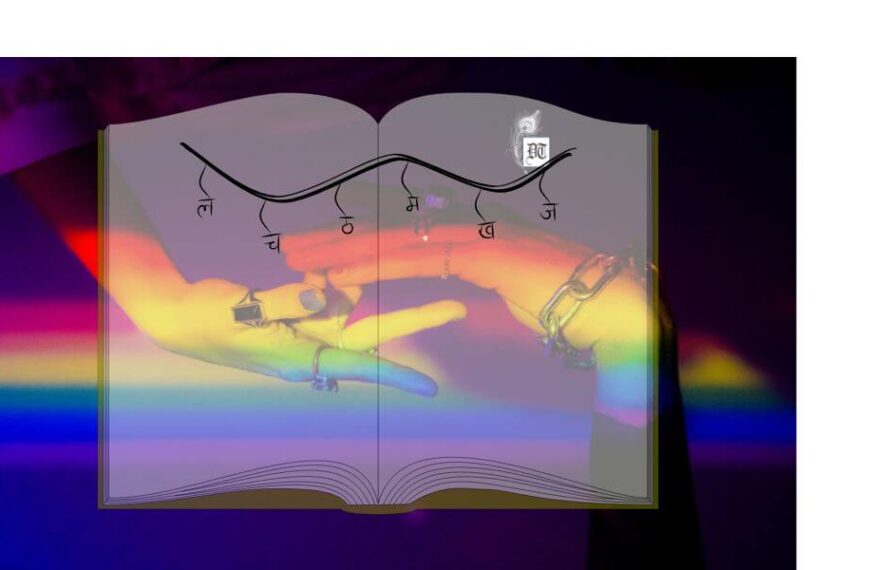

 By
By