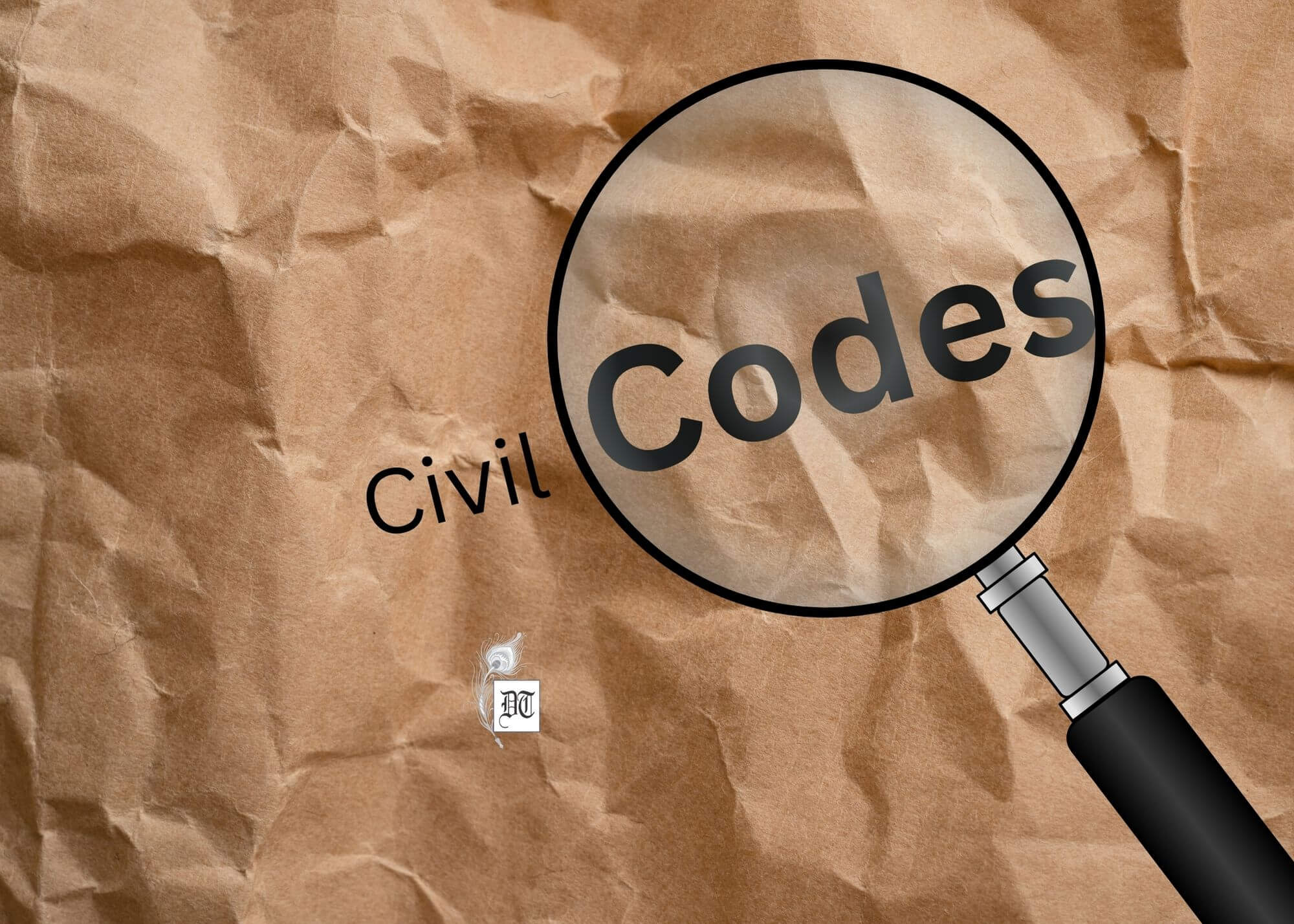

Dr Navodita criticises India’s Uniform Civil Code debate, arguing it could undermine religious freedom and individual liberty, potentially leading to state overreach in personal matters, exclusively for Different Truths.

Democracy is often about freedom and liberty of the individual and by what measure an individual finds this freedom under a certain political regime or in a set social era. The battle of genders often talks about how empowered a girl child or a boy child is, even in the age of AI and ChatGPT. The Constitution of India secures to its citizens- equality (of status and of opportunity) and liberty (social, economic and political).
Over the years as we still debate the terms ‘secular’ and ‘socialist’, the younger generation is more interested in knowing how free they are to exercise choices in their personal lives. This is where the Uniform Civil Code (UCC), as envisaged by the incumbent government, has failed the litmus test. Their poll promises of a UCC for states did not bear much fruit with the electorate in the general election of 2024. Therefore, to repeat that for Jharkhand polls is nothing more than a political agenda that has gone sour, much to the chagrin of many non-Hindu communities.
The laws that govern your personal lives around marriage, divorce, adoption, inheritance and cohabitation and other such lifestyle matters can never be put into one standard norm or system of administration. India has always been a country of diversity with respect for all religions, classes, creeds, castes and genders. Then why the uniformity?
The uniformity of the law itself discriminates between one religion and another so as to impose a certain decree onto each community. Moreover, the fact that it leaves out tribal communities of its gambit is reason enough to believe that this law is just a ‘politicisation of personal laws’ which itself is disrespectful to all non-Hindu communities. In some regards, it is also a violation of Article 25 of the Indian Constitution that grants religious liberty to its citizens.
The present government seems to indicate that if one has to dwell in this country, it should be done ‘My Way or The Highway’ (either the Hindu-way or else). The intolerance this law brings to the entire way in which democracy functions is anybody’s guess. Ideally the UCC should be given in the hands of some serious legal experts or a body of jurists who should carefully draft a ‘uniform law’ based on different personal laws instead of putting it in the hands of a few politicians who want to saffronize the agenda.
The personal laws and decisions related to one’s parentage, marriage, inheritance and living together are very important and to have such a huge amount of ‘state interference’ in that only makes the State more fascist curtailing the basic liberties of its citizens. Today’s generation wants a greater say in matters governing their lives and least state interference in their lives. So, to have this affect inter-faith marriages and cohabitation would almost have the state entering the bedroom of some citizens which is a huge violation of ‘personal freedom and liberty’ to make decisions. The government should seriously consider its better implementation and rollout process.
Picture design by Anumita Roy

Navodita Pande teaches Mass Media and Communication and English to ICSE/ISC school in Assam. She also trains students in Yoga, gratitude and healing. She loves to paint, write and read as her pastimes. She lives in Assam with her daughter.



 By
By
 By
By
 By
By