
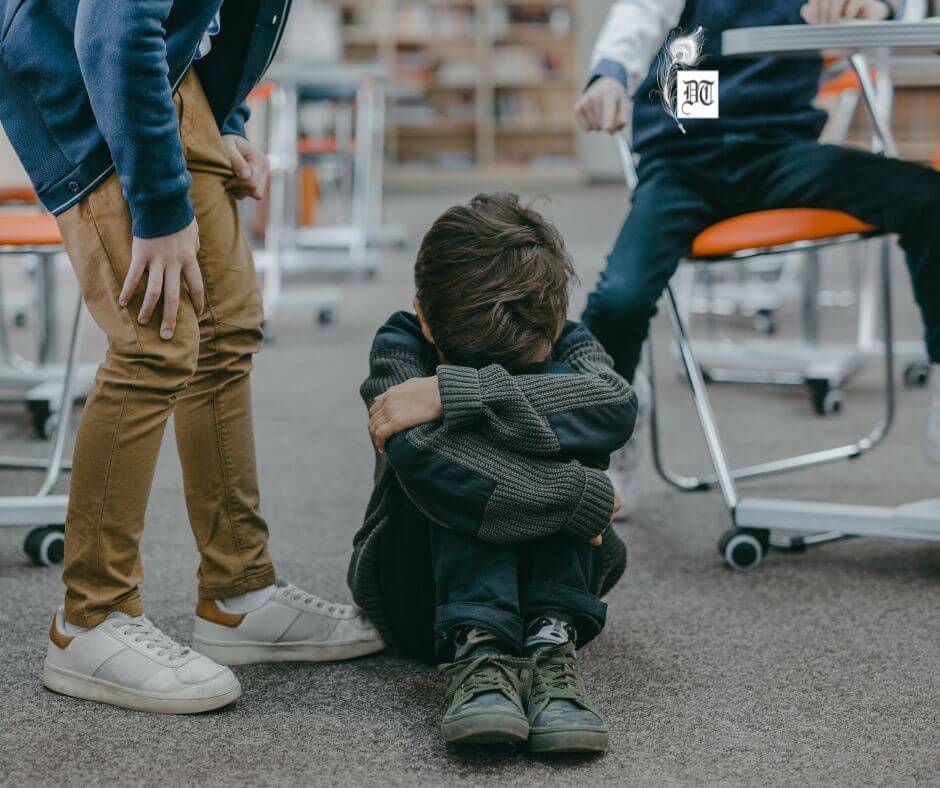

Sayantani reports about a heartbreaking tragedy in Jaipur that exposes the fatal cost of ignored bullying and the need for schools to prioritise listening, for Different Truths.
She departed home with a ribbon in her hair and some half-finished task sheets in her bag.
It was another beautiful morning in Jaipur. With an ‘on the go’ mode, a hurried breakfast, the clicking and shutting of the lunchbox, and a regular ‘Bye Ma’ hug, the parents sent the child to school, trusting that the kid would be no less safe than at home.
That same day, by afternoon, the school called with the most devastating sentence any parent would never want to hear.
Their nine-year-old daughter had an accidental fall from the fourth floor and could not be saved. While the CCTV footage was circulated, television debates were at their peak, and her name trended on social media all over; the report said it was an accident for a day, but she was bullied for over a year.
A CBSE enquiry was held, and information emerged about a major emotional disaster. She sought help and protection from her teacher but received a dismissive and aggressive response.
On paper, it was a mere “case”. But in reality, it’s an existing crisis of the society ‘being unheard’.
A child who repeatedly asked for help, and the slogans of ‘holistic education’ failed.
The Real Problem
The entire matter is not the fall but the long, hidden, and untold issue.
When Bullying Becomes Normal: Children mirror what they see. When adults tolerate casual humiliation, dismiss children’s serious complaints as mere misunderstandings and treat them as jokes or irritations.
Teacher’s Balance: When teachers are overworked and not well-trained in child psychology and how to respond to bullying, a child’s repeated plea for help becomes ‘naggingness’ or a ‘tantrum’ to some teachers.
When Identity Overpowers Existence Crisis: The glossy prospectus shines brightly about the well-mentioned anti-bullying policies. But it is questionable how much those policies are actually alive. The moment a crisis arises, the schools should act on it.
When a child urges for help, the first reaction should not be ‘Will this hamper our school’s reputation?’ but ‘Let us find out if the child is safe.’
How to Initiate Genuine Change
The 3-Minute Rule for Teachers: Whenever a student complains about any kind of minor harassment, the teacher should pause work and pause for three minutes to listen, ask questions and separate the student if needed. Writing down all the details of the moment will help to uncover the actual cause and take action.
This 3-minute serious attention without any eye-rolling or public scolding of the genuine complaint can literally change a life.
Kid-friendly Reporting Channels: A school is a second home, and all students should be comfortable enough to consider their difficulties. A colourful ‘Help Box’ in each corridor, where the students can drop notes if they are scared to speak or no one listens to them, can be an easy way out.
A humble TIC who says, ‘If something feels wrong, you can always come to me,’ will bring a touch of trust in the students.
Parents Are Offered a Platform for Expressing Their Concerns: Every complaint by the parents should be treated as data and not drama. The investigation should be respectful, and escalation to the higher authority should be made through emails and letters following the right procedures.
Positivity & Hope
The little girl from Jaipur might not ever come back to tell us what was the need of the hour that day. But we can still learn from the silence that she left behind.
The highest tribute we can offer is in creating a classroom where each child is believed at the first whisper and not at the final scream.
Trust the child.
The loudest tribute we can offer her is this: a classroom where a child is believed at the first whisper, not the final scream. We should teach our kids three things to remember:
- If something is hurting you, you are not too sensitive, but it’s a problem.
- Keep telling your heart out – go up the ladder. If one teacher does not listen, go to another. Try your parents, siblings or someone who will listen.
- Bullies are not the guardians of your life. Keep doing what you love to do; your confidence will remind you that you are more than their words.
The core lesson for all of us should be that kindness and listening skills should be around the school uniform, which would keep a child safe physically and mentally, to rise above any despair.
Picture design by Anumita Roy

Sayantani Mukhopadhyay is a writer with a bold passion for journalism and empowerment. She holds a background in English Literature, Human Resource Management, and Mass Communication and Journalism. Her work blends critical inquiry with people-focused insights, centring on sustainability, social issues, and conscious living. Through authentic and research-driven storytelling, she strives to amplify voices, challenge norms, and inspire collective awareness and action.


 By
By
 By
By
 By
By
 By
By