
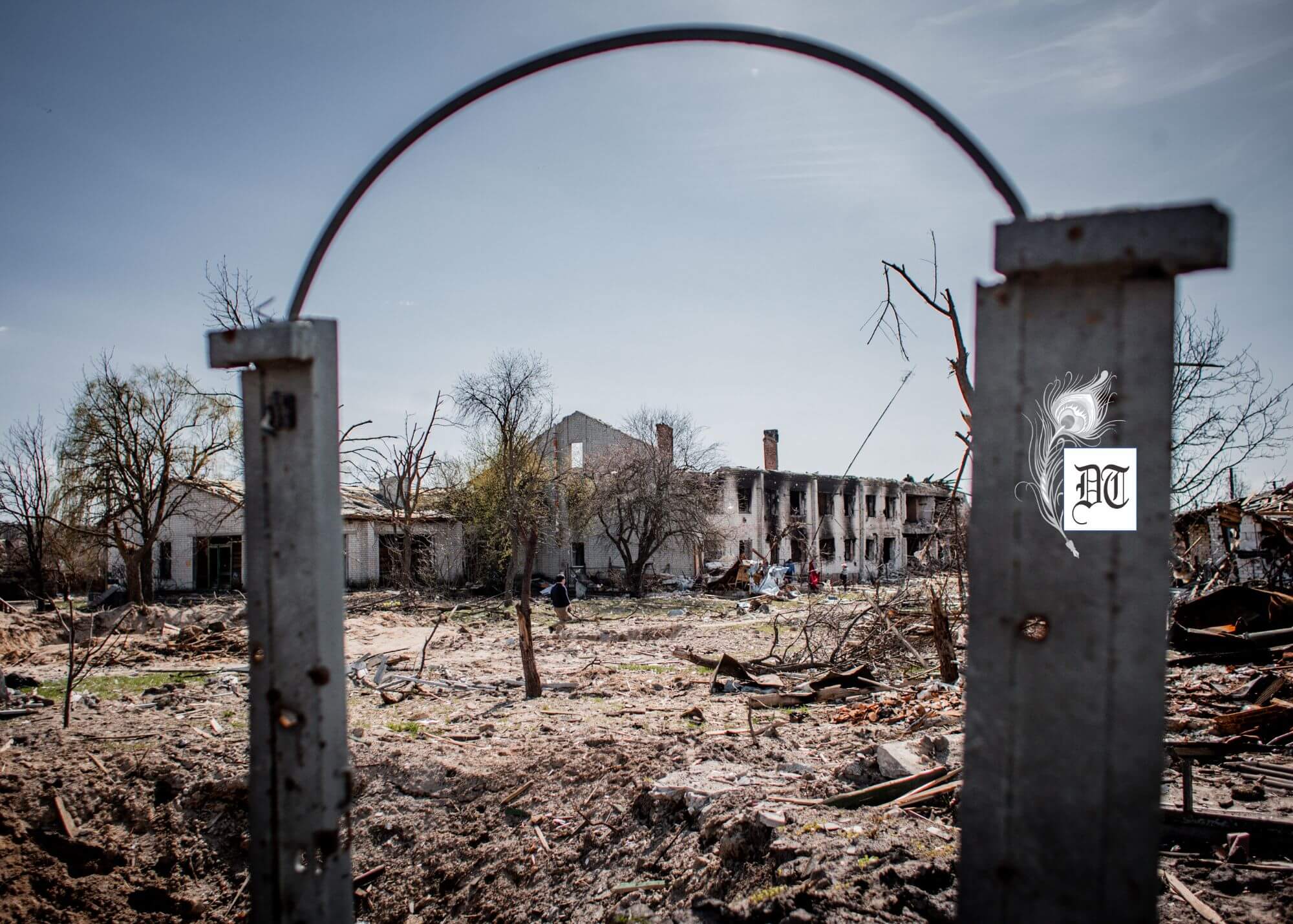
Priyadarshani’s poem explores the haunting aftermath of war, where peace is fragile and the past haunts the present lives of those left behind, exclusively for Different Truths.
The ink dried on a treaty no one could touch,
And somewhere, two ministers shook hands
Over cups of tea brewed with denial.
They signed it.
They smiled.
They went home for dinner.
The guns fell silent for a while,
And the generals smiled in photo frames,
But the air still tasted of blood and dust.
That mother in Lahore stitched a prayer into her shawl,
Still waiting for the boots that walked away.
That father in Amritsar built a kite
From newspaper clippings of the ceasefire—
But the string snapped mid-flight.
In some alley in Kupwara,
A dog still howls at a burned wall
Because it remembers the boy who fed it
Before he became meat for the motherland.
A boy in Poonch
Has forgotten how to sleep.
Because silence reminds him
Of the five seconds before the shell hit.
He hears birds
And he hides.
He hides from peace
Because peace is suspicious.
Peace feels like the breath before a scream.

They said the war was over.
As if wars end.
As if you can unbomb a house.
Unshatter a skull.
Unhear your brother screaming on the radio.
“Tell Amma—tell Amma I—”
Then silence.
They said it's over.
And the flags were ironed.
The anthem played on full volume
So, no one could hear the mothers
But the war didn't leave.
It just changed clothes.
Now it walks around in school uniforms,
In soldiers’ prosthetic legs,
In a widow’s cupboard full of medals, she wants to burn
But doesn’t—because that’s the last thing he touched.
They said, “The war has ended.”
I say, The war is an animal.
It sheds its skin.
It moves into your marriage.
It eats the silence in your home.
It becomes your child’s imaginary friend.
It becomes your religion.
It becomes your mirror.
You look into it.
And it looks back with your own eyes, but gone.
You ask, “Who won?”
It laughs like breaking glass.
There is no after.
There is only an echo.
There are only
empty cribs.
letters that never arrive.
wedding dresses in bombed-out closets.
pictures burned around the edges,
but the eyes in them —
Still watching you.
Still asking:
Why are you alive and I’m not?

— Some wars don’t end. They go quiet enough to ignore.
— Until a child draws a flag, and it starts again.
— after the war, they taught peace like a forgotten dialect
— and everyone nodded, but no one understood.
Picture design by Anumita Roy
Priyadarshini Khan, a pensive ninth grader at Saini International School, Howrah, balances school, life, and expectations. Her ink-stained fingers frequently craft poetry, a release for her abundant thoughts. Between overlooked exams and math class ponderings, her aspirations extend beyond her school planner. Driven by studies and caffeine, she diligently pursues knowledge as life progresses.

 By
By
 By
By
 By
By
 By
By