
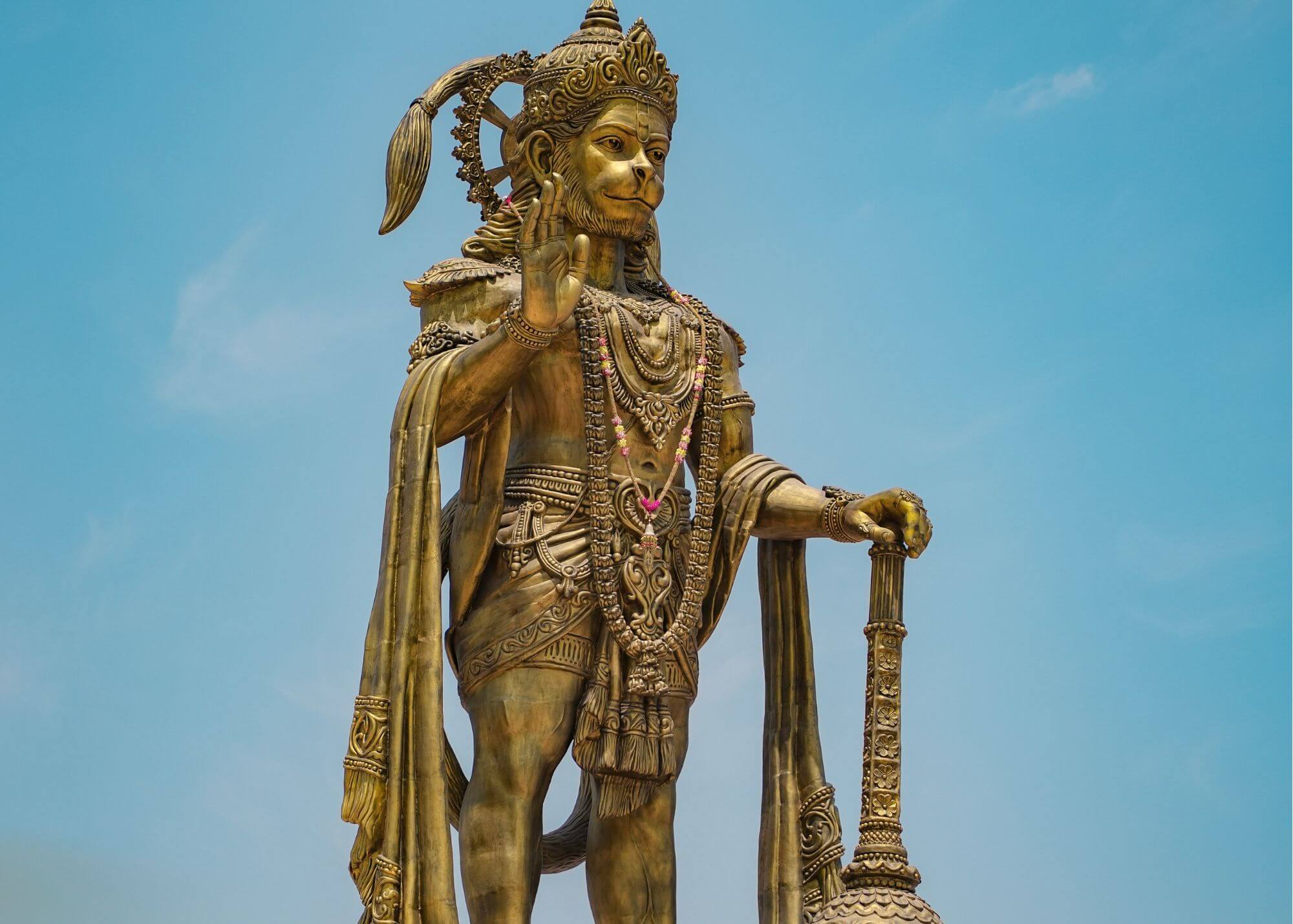
Akash elucidates that Lord Hanuman embodies loyalty, strength, and devotion, transcending myth to inspire India’s cultural, religious, and philosophical imagination, exclusively for Different Truths.

The figure of Lord Hanuman occupies a distinctive and exalted position in the cultural, religious, and philosophical imagination of India. To many, he is the epitome of loyalty, strength, courage, and unshakeable devotion, while to others, he is a deeply symbolic archetype representing the boundless possibilities latent in humanity when faith merges with discipline and action. His image is familiar not only in the great Sanskrit epics, but also in the folklore, architecture, theatre, and popular devotion that have flourished across centuries. Even beyond India’s borders, his mythos spread into Southeast Asia, shaping the cultural narratives of Cambodia, Indonesia, Thailand, and beyond. Hanuman’s life and deeds cannot be confined to the role of a mere character in the Ramayana; rather, he transcends myth to embody eternal virtues of service, humility, and inner strength.
Origins and Early Roots
The etymology of the name Hanuman reveals as much about his legendary birth as about his mythic role. One interpretation traces it to the Sanskrit phrase meaning “one with a disfigured jaw,” a reference to the childhood episode in which the young Hanuman, mistaking the Sun for a fruit, attempted to seize it and was struck by Indra’s thunderbolt, which injured his jaw. This story already encapsulates two defining qualities: a cosmic daring that exceeds mortal imagination, and the gift of immortality and protection that the gods collectively bestowed upon him thereafter. Born of Anjana and Kesari but spiritually fathered by the wind god Vayu, Hanuman represents a union of earthly existence and cosmic force. In Shaiva traditions, he is viewed as an incarnation of Shiva himself, while in Vaishnava theology, he is venerated as the divine son of Vayu, destined to assist Vishnu in his manifestation as Rama.
Mentions of divine monkeys appear even in the Rigveda, where enigmatic hymns describe a simian figure associated with cosmic energies. Yet it is in the Ramayana that Hanuman emerges in full, as the loyal messenger, servant, and warrior of Rama. His role, however, expanded dramatically in later centuries, particularly with the devotional efflorescence of the second millennium CE, when the Ramcharitmanas of Tulsidas re-imagined him not merely as a heroic aide but as the very embodiment of bhakti, devotion personified.
Childhood Episodes and Bestowal of Powers
The tales of Hanuman’s youth oscillate between humour, pathos, and grandeur. His boundless energy often expressed itself in mischief, which sometimes disturbed sages engaged in meditation. Angered, one sage cursed him to forget his supernatural abilities until reminded of them in a moment of dire necessity. This motif, of suppressed yet latent potential awaiting rediscovery, symbolises the human condition itself: strength lies within, yet is often veiled until awakened by faith and circumstance. The gods themselves endowed him with extraordinary gifts: fire could not harm him, water could not drown him, and his body became as invincible as the thunderbolt.
The Ramayana and the Devotee’s Role
Hanuman’s true grandeur unfolds in the Ramayana. When Sita is abducted by Ravana and taken to Lanka, Rama and Lakshmana ally themselves with Sugriva, the monkey-king. It is Hanuman who undertakes the perilous journey southward, crossing the vast ocean after Jambavan reminds him of his forgotten powers. His leap is more than a physical feat; it is a symbolic act of faith triumphing over apparent impossibility.
Upon discovering Sita imprisoned in the Ashoka grove, Hanuman reassures her of Rama’s coming victory. His refusal to rescue her directly reflects the dharmic order: it is Rama who must defeat Ravana, while Hanuman’s role is that of the servant and messenger. Captured by Ravana’s forces, he endures the ignominy of his tail being set alight. Yet in this humiliation lies triumph, for with his burning tail, he reduces much of Lanka to ashes. This episode has long been read as the victory of righteous indignation channelled into action.
Hanuman’s other exploits include the legendary carrying of the Sanjeevani-bearing mountain to save the life of Lakshmana, when he, unable to identify the precise herb, lifted the entire mountain itself. This moment epitomises both his physical might and his single-minded devotion to duty: he would not risk delay or error when the life of his master’s brother hung in the balance. Later, in Rama’s court, when offered gifts, Hanuman rejected them, declaring that Rama already dwelt in his heart. To prove it, he tore open his chest to reveal Rama and Sita within. This act, immortalised in art and poetry, has become the quintessential expression of devotion.
Hanuman in the Mahabharata and Other Texts
Hanuman’s legend does not conclude with the Ramayana. In the Mahabharata, he reappears centuries later as the elder brother of Bhima, both being sons of Vayu. In this episode, Bhima, proud of his immense strength, fails to move even Hanuman’s tail when the latter assumes the guise of an old monkey. Humbled, Bhima recognises his brother’s superiority, and Hanuman promises to aid Arjuna by placing himself on the Pandavas’ chariot flag, his war-cry terrifying the enemy. This tale highlights humility as the necessary balance to power.
Beyond the two epics, Hanuman is mentioned in the Puranas, the Shiva Purana declaring him an avatar of Shiva, and later devotional literature such as the Hanuman Chalisa and Bhakta Mala presenting him as a yogi, poet, and scholar. The Muktika Upanishad even depicts a philosophical dialogue between Rama and Hanuman on moksha, showing his assimilation into Vedantic discourse.
Attributes and Symbolism
Hanuman embodies paradoxes that harmonise into an ideal. Outwardly a vanara, a monkey-being, he is inwardly divinely beautiful. His form is strong, versatile, and adaptive: he can shrink to an atom or expand to mountain size. He is immortal, a brahmachari, an ascetic endowed with infinite strength, yet at once a poet and a devotee of refined sensibility. He represents shakti: the energy and strength of the cosmos and bhakti: the tender devotion of the heart—fused in a single being. His Panchamukha form, with five faces of different deities, illustrates the tantric synthesis of Shaiva and Vaishnava elements.
Hanuman Across Religions and Cultures
Hanuman’s appeal transcends the boundaries of Hinduism. In Jain retellings, he is portrayed not as a divine monkey but as a Vidyadhara, ultimately renouncing the world to become a Jain ascetic. In Sikh tradition, particularly through the Hanuman Natak and other texts, his martial prowess inspired the Khalsa ethos. Buddhism too absorbed his figure: Tibetan and Chinese adaptations portray him as a learned messenger, while scholars suggest his legend influenced the creation of Sun Wukong, the Monkey King of Chinese lore.
In Southeast Asia, Hanuman achieved an even more spectacular prominence. The Khmer Reamker, the Thai Ramakien, and the Indonesian wayang performances elevate him to a central role, often with embellishments not found in the Sanskrit original. In these traditions, he appears not merely as a servant but as a heroic protagonist in his own right, embodying martial skill, wit, and loyalty. The reliefs of Prambanan and Angkor Wat enshrine his deeds in stone, immortalising his cultural reach.
Medieval Devotionalism and Modern Resonance
It was, however, in the medieval period that Hanuman crystallised as the archetype of devotion. The Ramcharitmanas of Tulsidas presented him as the perfect bhakta, while the Hanuman Chalisa remains to this day a central text of popular devotion. Wrestlers and martial artists took him as their patron, and bhakti saints invoked him as the symbol of courage amidst oppression. In Maharashtra, Samarth Ramdas extolled Hanuman as the emblem of resistance against Mughal power, investing him with political as well as religious resonance.
His iconography multiplied: colossal statues, temples, and folk festivals celebrated his form and virtues. In plays such as the Ramlila, his role continues to thrill audiences annually. Hanuman Jayanti, celebrated across India though on varying dates, honours his birth with fasting, recitations, and acts of worship. His temples, whether in Khajuraho, Ayodhya, Salangpur, or Shimla, attract millions of devotees, while his monumental statues in Trinidad, Texas, and Malaysia testify to his global diaspora presence.
Philosophical and Theological Interpretations
At the heart of Hanuman’s legend lies a profound philosophical message. Unlike deities who command worship through sovereign power, Hanuman insists upon the dignity of servitude. He does not aspire to sovereignty, nor even to moksha for himself; his only wish is to serve Rama eternally. This radical humility is paradoxically his greatest strength, making him invincible not only in battle but in spirit. For Vaishnavas, he represents the ideal devotee whose self-effacement enables divine grace to manifest fully. For Shaivas, his identification with Shiva affirms the unity of divine energies across sects. For Vedantins, his dialogue with Rama symbolises the seeker’s quest for liberation under the guidance of the Lord.
Hanuman as Cultural Archetype
Hanuman’s endurance in the human imagination arises from the universality of his virtues. He exemplifies courage without arrogance, strength without cruelty, knowledge without pride, and devotion without expectation of reward. His tearing open of his chest to reveal Rama and Sita is not merely a devotional gesture but a metaphysical declaration: the true temple of God lies within the human heart.
In political and cultural history, he has been mobilised as a symbol of resistance, as during the Bhakti movement and the struggles against foreign domination. In modern India, he remains an icon both religious and political, invoked as a patron of national strength, martial vigour, and cultural pride.
Conclusion
Lord Hanuman stands at the confluence of myth, philosophy, devotion, and cultural history. His life, though narrated in mythological epics, resonates far beyond them, embodying timeless human values. He is at once the servant who becomes greater than kings, the ascetic who embodies unyielding energy, the warrior who fights not for conquest but for righteousness, and the devotee whose heart becomes the dwelling of the divine.
Through centuries, his figure has been reinterpreted: from Vedic hints of a divine monkey to epic heroism, to medieval bhakti, to modern nationalist symbolism, and now to global diaspora devotion. Yet the essence remains constant: Hanuman is the living emblem of strength yoked to humility, power guided by devotion, and knowledge tempered by service. In his immortal form, he teaches that the highest glory lies not in ruling, but in serving the eternal truth.
Picture design by Anumita Roy

Akash Paul, a renowned criminologist, theologian, and demonologist, and the author of two globally acclaimed textbooks, pioneered post-crime analysis in criminology and comparative religious studies in theology. His expertise spans criminal profiling, sexual offenses, Christianity, and religious history, with notable contributions to each of these fields. An insightful critic of contemporary society, he also writes poetry, short stories, and novels, blending creativity with profound societal analysis.


 By
By
 By
By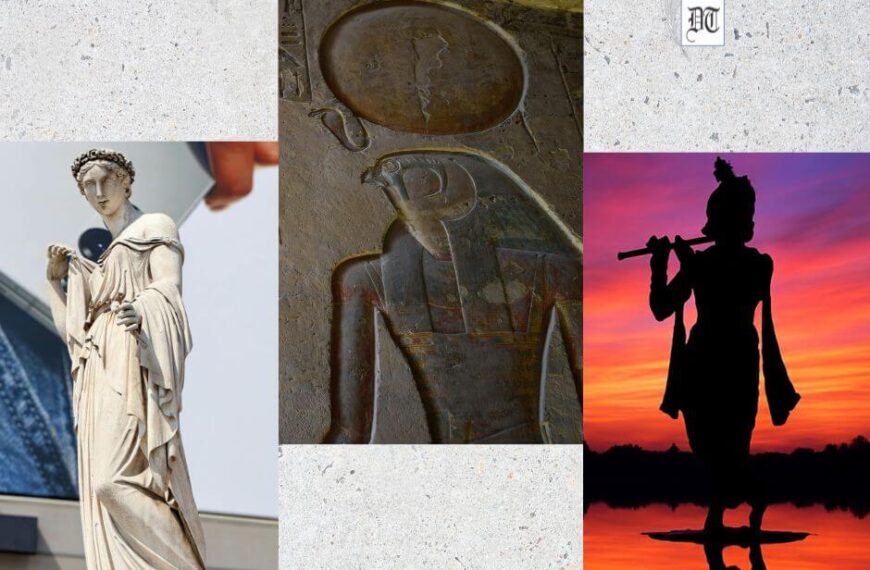
Jay Bajrangbali. 🙏
Spritual conceptual article 😌💓💓❤️❤️
Jay Hanuman 💖💖💖💖