
Dr Amitabh writes from an Indian surgeon’s unique vantage point across borders. This narrative delves into his intriguing encounters with Pakistan and its people against the backdrop of Operation Sindoor, exclusively for Different Truths.
I have always been curious about our neighbour, Pakistan. It’s a country born out of disaster. Islamic faith and fundamentalism ruled from the time of partition and continue with a prolific variety of Islam. It’s also the first country in the world that hanged its Prime Minister, Zulfiqar Ali Bhutto, and his daughter, Benazir Bhutto, also a Prime Minister, was shot dead while campaigning. It’s a country ruled by army generals and multiple coups. A country so rich in literature, music and hospitality that it leaves doors open to strangers. Yet, it’s a country with vast swathes of land owned by generations of landlords and poor citizens who go poorer than before.
Pakistan does not have a middle class. There are mosques relating to the Sunnis on every street and Islamic schools or madrasas that teach Islam to the children of the poor. The landlords send their children abroad to study and work, and are enshrined by the Islamic faith. I have friends, doctors, and professors who have become maulanas and started teaching tenets of Islam after a successful Western education. Pakistan is also the poorest nation in the world because its politics are controlled by a small group of elites who look after themselves, neglecting the common people. Pakistan leads in corruption. There is a lack of democracy, and its political system is shrouded by Islamic fundamentalism.
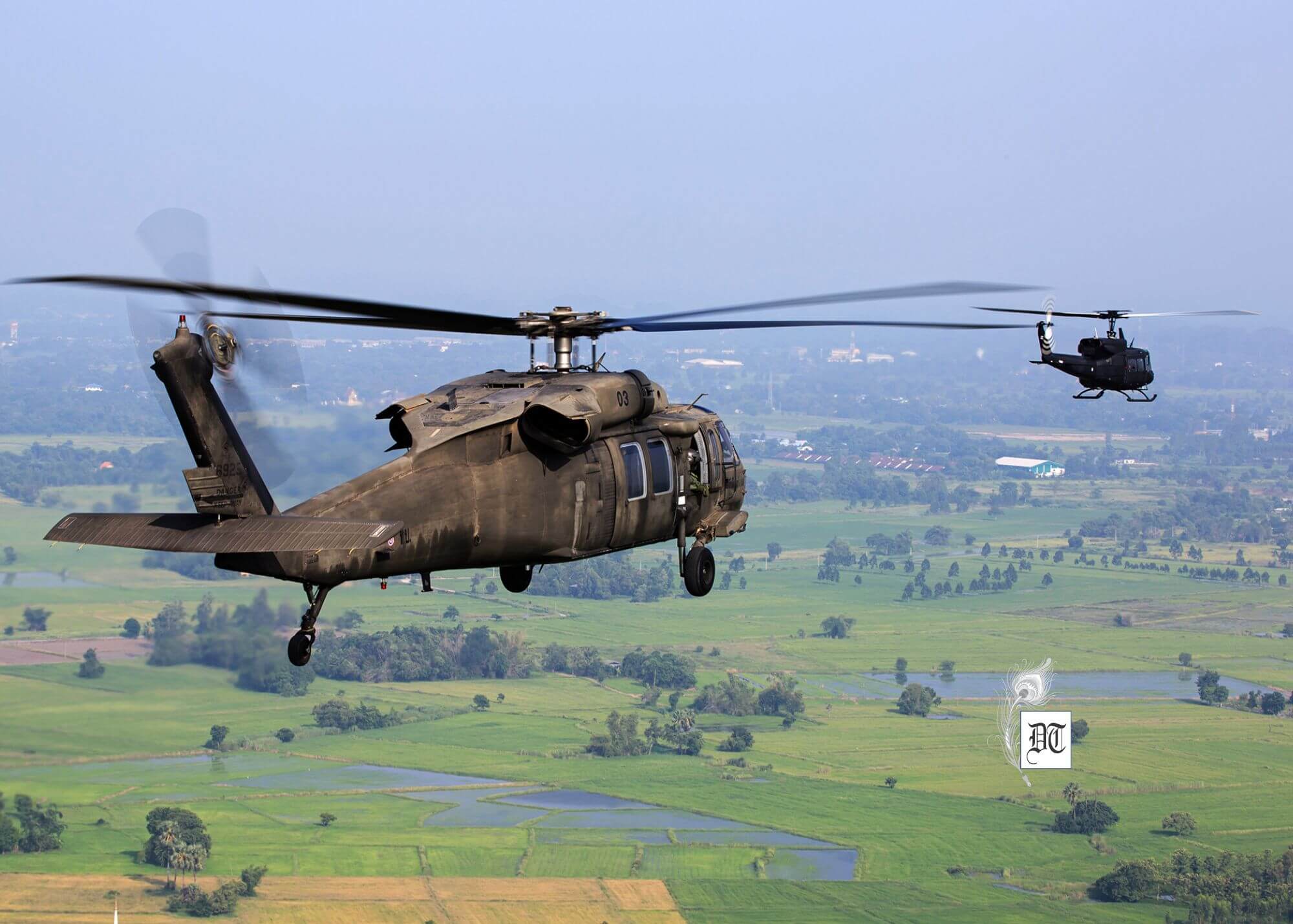
I am an Indian from India, a practising orthopaedic surgeon from Gwalior. I worked in high-altitude hospitals and snow-capped borders of Bhutan and China, in Arunachal Pradesh, snow-capped borders of India and China and Srinagar, Kashmir, where Pakistani-backed insurgency was taking place. I was the only helicopter-borne doctor; to an extent, I came back just for having tea at my home with my helicopter. I could see the Chinese looking towards me as I flew near their border, numerous times in a day.
My terrain in Africa started in Niamey, Niger, at the height of civil war, in the black townships of Mzilikazi in Bulawayo, Zimbabwe, and finally found a one-way ticket to the Bantustan, Republic of Transkei, with my Indian passport stamped not for South Africa and Southwest Africa. It was 1991.
Apartheid fell in 1994, and I developed my skills and education to become the Professor and Head of Emergency Medicine, gender-based violence at Cecilia Makiwane Hospital, named after the first Black registered nurse in apartheid South Africa. The hospital is situated in the Black township of Mdantsane, the second biggest after Soweto.
I remember the smiling face of the Director General of Health in the Bantustan of Transkei who came to the steps of the aircraft and uttered, Sir, welcome to Transkei. It was a welcome meant for a head of state. I smile whenever I remember those moments. I am now a South African citizen, an overseas citizen of India and an honorary Colonel for life in the South African Police Service.
I came across Pakistanis and Bangladeshis who entered into bribery with their multiple wives and many children. I gave employment to many as doctors, but they didn’t stay long. During the apartheid period, the South African passport was opened to the United Kingdom, where a visa was not a necessity. Soon, the Britishers found that big groups of Pakistanis arriving in the UK by this route were a part of the radical Islamisation in the UK.
In South Africa, they lived selling out-of-date groceries to the black people and had competitions from Zimbabweans, Nigerians, Ethiopians and Somalis. They all fought a deadly battle on the streets, stabbing and shooting each other. At the hospital, they all encountered me, pleading in Urdu, Bangla, Punjabi and Pushto. I spoke to them and tried saving their lives, but most often they died on the theatre table. A lonesome death far from their home.
They still visit me at my home; my only instruction to them is that their wives must not wear the burkha in my presence, and they must not wear the high pyjamas on their visit to my home. I never charged from any one of them. They all married Black Indigenous women as a marriage of convenience.
The United Kingdom removed the free entry without a visa, and then the Islamic radical groups started flourishing in Africa, with their core being South Africa.
Around five years back, I received an unusual request from a friendly nation. They needed confirmed locations and addresses of an Islamic dental surgeon practicing in Johannesburg and a Pakistani national who escaped the dragnets and found refuge in South Africa. I obliged and, through my connections, got the exact location and address. The very next day, in the middle of the night, a small plane with Rwandan markings landed in the Johannesburg airfield. American soldiers alighted and used bulletproof 4x4s, rushing to those two homes. They were captured, had their heads covered and were taken out. The operation took less than an hour.
The dental surgeon, a product of Witwatersrand University, Johannesburg, was a confirmed conduit for Al-Qaeda funds, and the Pakistani was an Al-Qaeda assassin protected in Pakistan. He was involved with others in the beheading of an American citizen in Pakistan. The reason for South Africa going to the International Court of Justice at The Hague against Israel was the constant pressure maintained by Islamic groups; the government of South Africa paid in billions of Rands. Israel continues its war on Gaza. There continues to be a shortage of monetary funds for the recruitment of three thousand freshly passed-out doctors from their medical schools in South Africa. The health sector is now crumbling.
A certain Bangladeshi man fell on the streets of a posh Harare sector. He just stumbled and fell. The autopsy carried out said that he had chronic dehydration. This man was an army officer in Bangladesh and was responsible for the murder of Sheikh Mujib’s family. He was assassinated. Before dying, he had taken a cup of coffee laced with polonium. The forensic doctor, along with his two helpers, also passed away in Harare. Zimbabwe.
While in India, along with the Kingdom of Bhutan, I had complete control over the Chicken Neck, the narrow corridor involving New Jalpaiguri, New Alipurdwar, New Cooch Behar and the border district of Jaigaon. Tea gardens and hamlets reigned on both sides of the road and beyond the borders. People brought me fresh Hilsa fish and, as always, information. They told me about their families and petty squabbles too, which I sorted, telling the Bangladesh Border Guards and their commander. Their only protest with me was why I am delaying my marriage and bringing a boudi (sister-in-law) to show them.
the Willy's Jeep screamed
moving up mountains
in a perseverance of mist
and memories
of gravel roads
and last encounter
a kiss and an aroma
stayed behind
you are still there
I know
And I am still
around
The Buddhist flags
flapped in a near-horizon
Back in Delhi and Gwalior, suddenly life turned a rough relevance after years living in the north-east. Perhaps I could no longer live another life. North Lakhimpur and Mathabhanga were more than just small towns. These were living alternatives from where I leapt frequently into rampant, undecided colours. Huts and tea gardens found shelter in many a violent season. Hurts remained, shielding me from thoughts of such unwary feelings. Eyes replicate to streets, travelling and hiding within besieged highways, the darkness we were supposed to hunt. Losing you long back then was perhaps an ancient rite, longer than I had ever thought. I fear this change in me, in such sudden windless horizons. I remember Lakpa Sherpa, my driver, giving me frequent uneasy sideways glances. He was overprotective of his sahib. I had closed my eyes. Phuntsholing came closer.
Lakpa died; a bullet found him finally in our common search, revealing the unknown. Closer to death, he shared with me halos of many a sunbreak he had lived through. He was one of those many I still have with me.
And again from Hashimara to Jaigaon and even beyond in the Kingdom of Bhutan, I ruled supreme; tiny villages and ponds, shadows cast with perpetual fogs in tea gardens, skies came down to touch me. In my Wily’s Jeep, I looked for the unknown, the Doars rushing at the junction of moist green and darker skies. I leapt into a boundless halo, a storm within me, nurtured in your leaving, and stayed safe. Mathabhanga was a hamlet; I stayed the night there
Tomorrow, we drive together, chasing a broken sun.
Picture design by Anumita Roy
Amitabh Mitra is a poet, artist, and medical doctor based in East London, South Africa. He is the Head of the Trauma and Emergency Medicine Department of a tertiary hospital complex in the black township of Mdantsane. It is the second-biggest Black township after Soweto. Recently, the Department of Arts and Culture, in association with Oxfam, honoured him for his contribution and long-standing devotion to the people of Mdantsane.

 By
By
 By
By
 By
By
 By
By
Absolutely awesome. DR Mitra is superb.
Well do e and all the best .
A million thanks Jay bhai
A powerful and thought-provoking article, composed with controlled verve.
A million thanks Azam bhai
Felt enriched by your first hand memoirs. An excellent write up, sir.
A million thanks Anupuma
You have collected vast experience and talents from small life incidents.
A million thanks, Pradeep bhai
Beautiful engrossing writeup.Share some more memoirs.
Sure, Kewal ji I will be writing, close encounters with different people