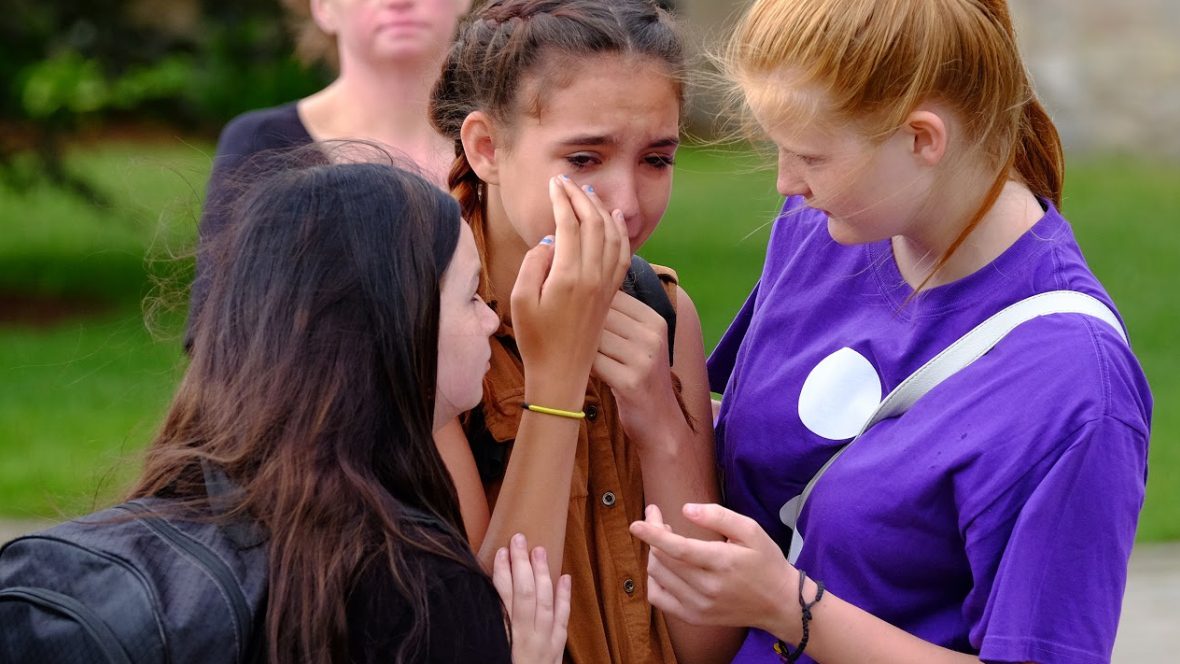

According to a new study published by the National Education Union, 81 percent of secondary teachers report having detected self-harming among pupils. Forty-nine percent said mental-health issues had led to suicides or suicide attempts at their schools or colleges. Here’s a report, for Different Truths.
Teachers say academic stress is to blame for a sharp rise in mental illnesses in children. Kids are self-harming and contemplating suicide in Britain in the face of constant exams and a narrow curriculum, teachers have warned.
According to a new study published by the National Education Union, 81 percent of secondary teachers report having detected self-harming among pupils. Forty-nine percent said mental-health issues had led to suicides or suicide attempts at their schools or colleges. A teacher in Kent told the union of “continuous” student breakdowns in the classroom “due to the academic pressure” of new exam specifications. Four in five of the 730 education staff surveyed said tests and exams were contributing to mental illness among pupils.
Teachers also cited the pressure from schools to do well, a narrowing of the curriculum to focus on “academic” subjects and self-inflicted pressures. A Sussex teacher highlighted a “massive conflict” between recent rhetoric from the government and schools on mental-health support and the “ongoing drive towards more testing at every level at school.”
At the NEU ATL section conference, joint general secretary Mary Bousted told delegates: “I look around me [and] I see children and young people whose mental wellbeing is under threat. “I wonder how far a narrow, academic curriculum and a barrage of high-stakes tests are contributing to the increasing mental ill health of our children and young people.” Bousted said it was “shocking that so many children are suffering from mental health issues to the point of contemplating suicide or self-harming.” And she blamed the government for the twin problems of increasing classroom stress and “hollowing out” mental health support services.
“The constant pressure for pupils to reach impossible standards and the constant tinkering with the curriculum leaves them feeling demoralised and disillusioned by education,” she said. “This is no way to encourage more children to do well at school or college.” Official statistics put the suicide rate for 15- to 19-year-olds at 5.8 per 100,000 in 2015 — up from 4.9 the year before. A motion passed at the conference today asserted that every teenage suicide “is a complex personal tragedy and that school or college can only ever be part of the narrative.”
But it also suggested that the “cumulative experience of contemporary education” was “contributing to the lived experience of hopelessness” among kids. Moving the motion, Southend High School for Boys head Robin Bevan said: “Our national leaders have abandoned any narrative of hope, exchanging it for a dialogue of fear.”
Josie Whiteley, president of the union’s Association of Managers in Education, said: “School budget cuts and post-16 underfunding over the last decade have led to education being forced into an absolute straitjacket, with a tight focus on English, maths and science while wider curriculum opportunities are ignored. “Schoolchildren are so stressed as a result that the levels of depression, self-harm and other mental health issues are increasing.” A government spokesman said: “Thanks to our reforms and the hard work of teachers, there are 1.9 million more children in a good or outstanding school than in 2010.
“By 2020, core school funding will rise to a record £43.5 billion — the highest ever and 50 per cent more per pupil in real terms than in 2000 — and the introduction of the National Funding Formula will address historic disparities in the system.”
Ben Chako
The author is the Editor of Morning Star daily
©IPA Service
Photo from the Internet




 By
By
 By
By
 By
By