
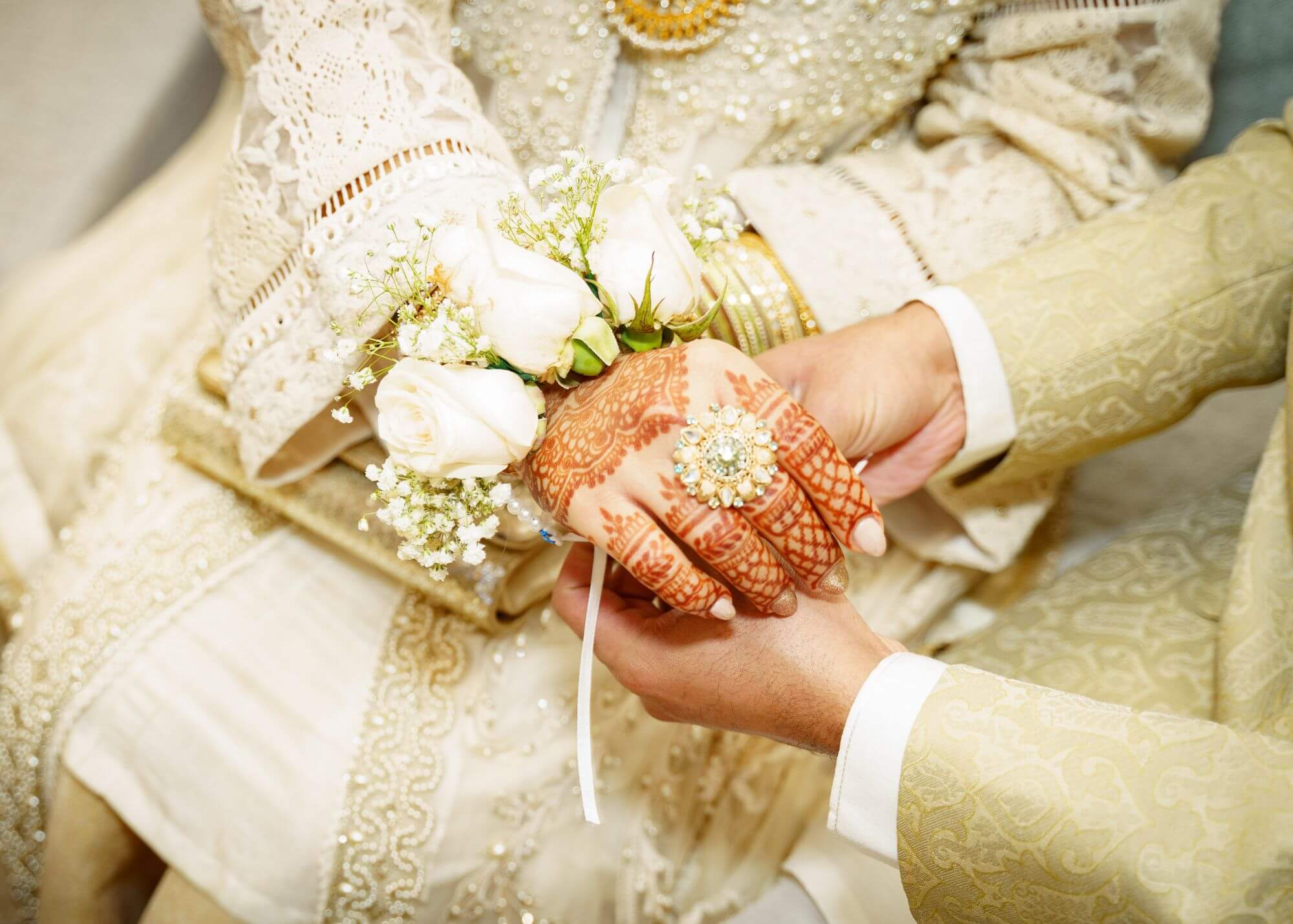

Growing up in Bombay’s Bene Israel Jewish community, weddings were vibrant, meaningful celebrations blending unique customs with familiar Indian traditions, reminisces Kavita, exclusively for Different Truths.
Wedding celebrations are special occasions in India and vary by culture and religious background. Growing up in a Bene Israel Indian Jewish family in Bombay, I have many poignant memories of both attending and taking part in the Jewish weddings in my community, from my childhood to adulthood. Some of the customs and traditions were distinctive from other wedding traditions, and some were like certain Hindu traditions and customs. To me, the Bene Israel celebrations were beautiful, meaningful, and full of rich symbolism. They are vibrant, enjoyable, and interactive and have their unique ways of conducting the proceedings.
The Bene Israel Indian Jews are the largest and oldest of the three communities of Indian Jews. The other three are the Cochin Jews and the Baghdadi Jews. According to legend, the Bene Israel Jews arrived on the Konkan coast of India via a shipwreck over two thousand years ago. It is not exactly clear why they embarked on this journey, though there are various theories about their voyage. It is believed they were fleeing persecution from the Roman Empire. Seven couples were said to have survived the shipwreck. They blended in with the local population, settling in and around villages close to the village of Alibaug, where I spent many holidays in my childhood, since my uncle had a grain mill there. The Bene Israel Jews remembered a few of their customs, such as observing the Sabbath on Saturdays, praying The Shema and eating kosher food. They were oil pressers, and as they did not work on Saturdays, they were known as the Shanvartelis or Shanivar telis. Shanivar means Saturday in Marathi, the language of the Bene Israel Jewish people. So, they were known as Saturday oil pressers. A synagogue in Alibaug called Magen Aboth Synagogue, located in a street named Israel Alley, indicates the strong presence of the Bene Israel Jews in the area. The synagogue dates to 1910.
Pre-wedding Ceremonies
As with all Indian weddings, the pre-wedding ceremonies of the Bene Israel were significant and built up the excitement. The Mehndi or henna ceremony was done at home. This is also a tradition seen at other Indian weddings. The bride has elaborate and intricate designs artistically sketched on her hands and feet, and in the Jewish custom, the groom has the index finger or right thumb covered in henna. The henna, which is originally a wet green paste applied to the bride’s hands, must be left untouched overnight and left to dry. In the morning, it turns a bright orange. The longer the henna is left untouched, the stronger the red colour. I vividly remember the henna artist performing this ritual on the day before my wedding. It is also customary for the bride to be fed her favourite food by her brother. My brother knew I loved the chicken rolls from the nearby Sizzler restaurant, and he patiently fed me bite by bite, as the henna artist drew the patterns on my hands. I did not have the feet done. It is quite expensive to hire a henna artist, but the bride needs to indulge in this luxury. The bride is usually dressed in a green sari and wears green bangles during this ritual. Often, other friends and relatives who wish to apply henna may choose to have the henna done at this time. It is a joyous celebration, with only women in attendance. In some Jewish homes, turmeric is applied to the face and hands, sometimes even to the entire body of the bride, to enhance her beauty. The turmeric is removed with the ritual bath before dressing for the wedding.
As in Hindu weddings, the bride is given a mangalsutra by the groom. This is a necklace made up of a combination of black beads with gold beads or a gold locket in the necklace. Styles and designs of the mangalsutra vary according to taste and tradition.Many Bene Israel Jewish people have also adopted this custom. The groom places the mangalsutra around the bride’s neck as a sign of marriage.
Symbolism of a Ritual
Another Bene Israel pre-wedding celebration done at home was pulling the hot modak ladoos, prepared by a member of the family, from the large kadai or frying pan. I remember the symbolism of this ritual being explained as whoever pulled out the most modak ladoos would dominate the other partner in the marriage! Modak ladoos (pronounced laddus in Marathi, the language spoken at home by the Bene Israel Jews) in India are the equivalent of the Tibetan momos. The soft outside is made from rice flour or wheat flour mixed with khoya and refined wheat flour. The filling is made from freshly grated coconut with jaggery. The taste is sweet and tempting. The modaks may be fried or steamed. A Malida ceremony, which is the Bene Israel Thanksgiving, is also celebrated. Malida is a sweet dish prepared with flattened rice (poha) sweetened with jaggery, finely grated coconut, cinnamon and rose water. The malida platter is decorated with fruits, dates and flowers and placed in the centre of the table. Thanks are given to the prophet Elijah or Eliyahu Hanavi. Prayers and blessings are recited in Hebrew on the auspicious occasion. The prophet Elijah is central to the Bene Israel faith.
What I loved most was the wedding ceremony conducted in the synagogue by a Jewish priest with a ketubah or marriage contract. The bride wears a white saree or a white gown with a beautiful veil and is accompanied by her father to the raised stage where the groom is standing. The bridegroom sings a song called Nava Micol, which is a song in praise of the beauty of his bride. In Hebrew, the song is called “Yonati Ziv (My Beloved is a Dove). As he sings, the bride, along with her father, moves slowly at key intervals towards the stage. The bridegroom learns the song, and the bride and groom practice the steps in a prior rehearsal. This is my favourite part of the wedding ceremony in the synagogue. The congregation also joins in the chorus. The words of the song are in Hebrew. The link from the Internet (below) will provide a translation of the song as well as allow you to listen to the bridegroom in India singing the song to his bride.
https://sites.google.com/site/jewishtablesinging/special-occasions/yonati-ziv
A Symbol of Unity
When the bride and bridegroom exchange rings and the blessing is spoken by the priest, he hands a glass of wine to the couple for them to drink a sip each from the same glass in turns. Following this, the glass, wrapped in a white napkin, is smashed to pieces by the groom into a wooden box placed in a corner of the stage. The congregation erupts with Mazel tov, which means congratulations in Hebrew. When I was young, an aunt explained the significance of smashing the glass. It meant that once the couple had taken their marriage vows, no one else should drink from the same glass again. It is a symbol of unity.
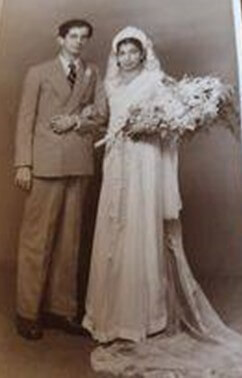
PC: The author.
Then the couple exits the stage and walks to the back of the synagogue behind the stage, where the Torah scrolls are kept in a small cabinet. They kiss the scrolls and then walk slowly out of the synagogue to the cheering crowd. The Torah scrolls were sacred and beautiful and filled me with awe.
Following the synagogue wedding, there is a reception with food and plenty of vigorous dancing. The couple is lifted up in chairs by some members of the guests and have to try and reach out to touch each other from a safe height. This was always a breathtaking sight as I watched the chairs swaying precariously from side to side and prayed that they would not topple over.
In the Ashkenazi Jewish wedding tradition, the marriage takes place under a huppah or a canopy. The bride circles the groom seven times. Although I have never attended this type of wedding, I watched a beautiful scene of a Russian Jewish wedding set in a small village, in the well-known film “Fiddler on The Roof.” It was always my dream to be married under a huppah, but God had other plans for me.
Sephardic Jewish Tradition
In the Sephardic Jewish tradition, I learned that the bride gives the groom a tallit or a prayer shawl and blessings are recited by either the bride or the groom. At the reception in Israeli weddings, a dance called the horah (also spelt hora) is usually a popular tradition and is accompanied by the rousing song Hava Nagila. I attended a Jewish wedding in Canada (the family was from the Bene Israe community from Bombay but had lived in Israel), in which I enjoyed joining in the dancing and got to join in with the crowd. As the tune Hava Nagila has a fast tempo, the dance steps and movements are brisk, energetic, and sometimes challenging to keep up with.
All Indian wedding ceremonies are imbued with meaning and rich symbolism. I have attended Christian, Parsee, Muslim, and Hindu weddings in Bombay and found each one to be expressive of their unique customs and traditions. Whatever the traditions, weddings have a way of bringing the entire community together to bless the newly married couple on their journey.
Picture design by Anumita Roy
Video from YouTube

In a career spanning over four decades, Kavita Ezekiel Mendonca has taught English in Indian colleges, AP English in an International School in India, and French and Spanish in private schools in Canada. Her poems are featured in various journals and anthologies, including the Journal of Indian Literature published by the Sahitya Akademi and the Yearbook of Indian Poetry in English. Kavita has authored two collections of poetry.

 By
By
 By
By
 By
By
 By
By