Debt is seen as a financial necessity and accounting treatment in today’s world. But the old worldly wisdom of living within one’s means is challenged by debt, persuading Tarun to investigate the emotional and moral basis of debt, in the weekly column, exclusively for Different Truths.
Debt is a big issue in today’s world. Normally, the issue is headlined from the point of view of a bank, how they are suffering for lack of credit offtake, or because their debts have turned bad. But what about the other side of the coin? How the debtor suffers because of inability to receive finance on favourable terms, or because the business adversity affects his ability to service the existing loan?
I have written before on debt, about how extreme emotions of optimism and pessimism drive a person to take on debt. There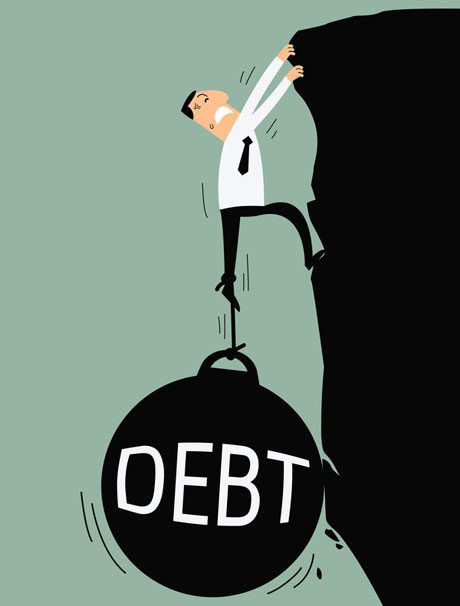 is an example of Steve Jobs taking on debt when he was starting with his iconic Apple, and successfully turning that debt into one of the largest cash piles in human history. He was a highly emotional person, as known from his personal life. But there have been examples of highly emotional people, getting destructive with debt.
Of course, debt is seen as a financial necessity and accounting treatment in today’s world. But the old worldly wisdom of living within one’s means is challenged by debt, forcing me to investigate the emotional and moral basis of debt.
Debt in simple terms is a promise to pay later. This involves taking cash, deposits, inventory or land and buildings for today’s use, with a promise to compensate for the use of that asset, in the form of interest. Also, the asset continues to be owned by the creditor, and he would be returned that after a certain period.
This implies that debt involves a promise about future. Since in today’s dynamic world, the future is highly uncertain, debt makes one vulnerable to wrong decisions or unforeseen turn of events.
I will take up three aspects of debt:
- Need to take on debt
- Alteration of psychology of debtor
- Returning of the debt.
Take the case of real-time businessman X. He started out with a great idea, of wind energy. The company was feted for doing great work. X won numerous awards, was named the best emerging businessman of the year. The stock markets gave fantastic premium to the company. Fast forward 10 years and the company is in the doldrums. Mr. X took on heavy debt to finance acquisitions three times his size, in the hope of scaling up his successful business model. Worldwide liquidity shrink happened in 2008, and he was unable to repay huge debts.
What went wrong? Mr. X wan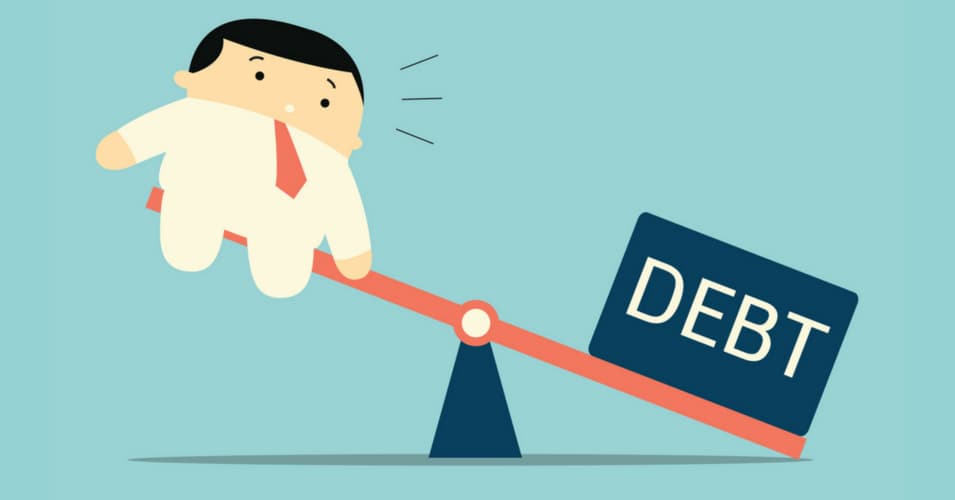 ted to grow. We all want to grow. He was being chased by banks to take loans. But he could have grown organically, meaning that he could have waited for his own revenues to finance his growth. But he took on loans three times his current condition warranted. This is unnatural. You can’t grow a tree faster by watering it thrice a day. Anything that creates an unnatural need, is bound to become worse. Follow the laws of nature while dealing with debt.
Secondly, when a person takes loans, his psychology alters. He is forever in pursuit to pay off his debts, while at the same time trying to live his normal life. So, there is always a toss-off between the need to pay off debts or grow more. Now, taking in debt involves a positive cash flow, while it involves a negative cash flow while returning the debt. A person may become complacent due to positive cash flows while dreading the negative cash flow that returns on debt are likely to generate. Although the books always record the liabilities-and in reality, the debt is never a part of the person’s assets-yet, psychologically, negative cash flows are draining to a person. I remember reading about an American student, who shot herself because her credit card had a debt of $2400! This happens because the sustained pressure that debt puts on an individual until paid off, is like a permanent shadow chasing the person. A debtor tries to fight off that pressure, and when it becomes too much, he either tries to take more risk to get out of debt as soon as possible or simply gives up. That student who shot herself probably gave up the fight.
How to get out of debt? Common sense suggests that one should cut down on expenses, save more, and pay off high-cost debt first. However, research suggests something else. Due to peer pressure, one is unable to cut down on expenses. In any case, it is too difficult to change one’s consumption patterns. One can work a double shift to earn more, but that is not easy again, as that means cutting down on leisure time and stressing one’s body too much. Paying off high-cost debt first makes sense, but the psychological aspect of paying off debt makes it sensible to pay off small debts first. The small amounts would be easier to pay off and would give the confidence necessary to pay off bigger debts later on. Every small achievement of paying off debt should be celebrated, to give a feel good to the debtor. Even while paying off debt, a person should continue to develop some other skills than the main earning lines, to be able to graduate to additional income streams for later bigger debts.
Debt, to a person who is not familiar with it, would never mean the same as to someone who has gone through it. It can be overcome, but with great discipline, and a great experience to handle it. This column wishes all debtors a healthy and happy recovery.
Next, I would write about the nuances of student loans.
©Tarun Gupta
Photos from the Internet
#Debts #BankLoans #FailureToGrow #MakingItBig #Dicipline #HandlingMoney #PsychologyOfDebtor #ReturningDebt #BarefootEconomist #DifferentTruths

Satyam Shivam Sundaram defines the belief and philosophy of Tarun Gupta, a Delhi-based businessman, with a passion for learning. He tries to locate the common thread in all learning – as Einstein identified energy as the base thing – and find creative, interdisciplinary solutions to problems, with special focus on economics. Behavioural economics is his special interest, which encompasses emotions as well as economic choices when identifying problems and the solutions.

 By
By
 By
By