Aditya in DifferentTruths.com explores how technology has fundamentally reshaped our existence, evolving from a mere tool into a cultural architect.
AI Summary
- Digital Manipulation: Oxford’s “Rage Bait” highlights how platforms hijack emotions to maximise engagement through provocative, offensive content.
- Synthetic Intimacy: Cambridge’s “Parasocial” reflects the rising one-sided emotional bonds between users and celebrities or AI chatbots.
- AI Saturation: Terms like “Vibe Coding” and “Slop” signal a shift toward automated software and low-quality, mass-produced digital content.
The world has already entered upon a life virtually facilitated by technology and deeply revolutionised by AI. It is now uncommon to see a human without a digital device and a corresponding virtual presence. This virtual existence, established for some time, has developed its own digital culture, often attempting to replicate real-life occurrences. Just as real-life tools and privileges can be used or misused, so too has the digital realm become a space for both positive and negative actions. The language we use, both online and offline, reflects this dual reality, as evidenced by the selection of the Oxford Word of the Year 2025: “rage bait.”
Oxford defines “rage bait” as “online content deliberately designed to elicit anger or outrage by being frustrating, provocative, or offensive, typically posted to increase traffic to or engagement with a particular web page or social media account” (Oxford Languages, 2025). Casper Grathwohl, President of Oxford Languages, states:
“The fact that the word rage bait exists and has seen such a dramatic surge in usage means we’re increasingly aware of the manipulation tactics we can be drawn into online. Before, the internet was focused on grabbing our attention by sparking curiosity in exchange for clicks, but now we’ve seen a dramatic shift to it hijacking and influencing our emotions and how we respond. It feels like the natural progression in an ongoing conversation about what it means to be human in a tech-driven world—and the extremes of online culture.” (Grathwohl, OUP, 2025).
Jay Knight, in The Art of Rage Bait, writes that this phenomenon “permeates our digital lives, subtly shaping our emotional landscape and influencing our online interactions” (Knight, Jay, Motion Block, 2025). Frank Jeans defines it, in the Urban Dictionary, as “a post on social media by a news organisation designed expressly to outrage as many people as possible to generate interaction” (Urban Dictionary).
Undeniably, rage bait constitutes manipulation through the internet designed to maximise user engagement. This raises the essential question of who baits and why. The culprits are primarily channels, media organisations, networking sites, and corporations. A report published in the Washington Post mentions that “Facebook’s news feed algorithm has been blamed for fanning sectarian hatred, steering users toward extremism and conspiracy theories, and incentivising politicians to take more divisive stands” (Oremus et al., 2021). Furthermore, in her testimony to US senators, whistleblower Frances Haugen stated that Facebook was “literally fanning ethnic violence” in places such as Ethiopia because it was not policing its service adequately outside the US (Akinwotu, 2022). This demonstrates how rage bait is often a political tactic employed by networking or news agencies to shape or manipulate information to intentionally incite public anger, often leading to content going viral. While this content accurately represents current trends in user mindset and content trafficking, the active agents—networking companies, channels, and agencies—are responsible, not the users.
The Cambridge Dictionary of English has also chosen its Word of the Year 2025, which takes user psychology into account and addresses how users are impacted by one-sided relationships: “parasocial.” This selection further deals with the interplay between digital life and reality.
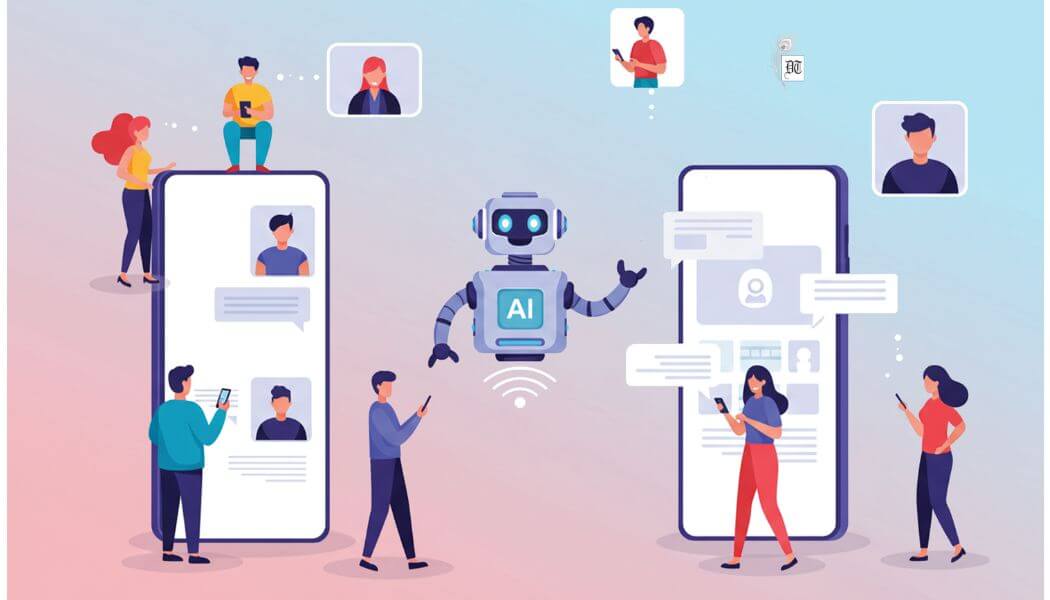
Humanity is characterised by the socio-cultural relationships we cultivate. We are driven to see and speak to one another, fostering a world of mutual engagement. Today’s advanced technology has altered the means of this engagement. Our relationship with some figures has become similar to a reader engaging with a story in a one-sided manner. Owing to AI-developed tools like chatbots and live chats, interactions are increasingly occurring virtually rather than physically. When reading a novel, one might feel connected to the character; when watching Hamlet, one takes a journey of sadness and doubt with him. However, when the experience ends, the reader realises the difference between fiction and reality. Many people become fans of actors, followers of celebrities, and subscribers to YouTubers. In these cases, the fan knows the public figure, but the public figure does not know the fan. This dynamic creates a one-sided relationship known as a parasocial condition.
The Cambridge Dictionary of English has defined this word as an adjective meaning “involving or relating to a connection that someone feels between themselves and a famous person they do not know, a character in a book, film, TV series, etc., or an artificial intelligence” (Cambridge Dictionary, 2025). The term was first coined by University of Chicago sociologists Donald Horton and Richard Wohl, who observed television viewers engaged in “para-social” relationships with on-screen personalities, which resembled the bonds they formed with “real” family and friends (BBC News).
Para-sociality is not entirely new; past generations have experienced it, and literary writings have explored such relationships. For example, Rin Usami’s Idol, Burning, portrays Akira’s one-sided relationship with her idol, Masaki Ueno. Akira thinks of Masaki as her saviour, spends day and night following and thinking about him, yet Masaki is unaware of Akira’s existence. Sci-fi Fantasy Lit Chick notes that Idol, Burning explores “the nature and complexities of parasocial relationships… Essentially, what fans often fall for is an image of their idols rather (than) a real human being” (Sci-fi Fantasy Lit Chick, 2023).
This parasocial relationship can be illustrated through factors such as: i) Narrative intimacy, ii) Cultural and generational continuity, and iii) Identity and belonging. In Indian mythological literature, readers share a deep bond with characters, often loving Ram and Sita while hating Ravan. Even the relationship between a devotee and God can be viewed as parasocial. However, the selection of “parasocial” as the WOTY 2025 by Cambridge signifies the prevalence and impact of new, tech-mediated forms of this relationship in the current reality, such as the bond between Akira and her idol, Masaki.
Collins Dictionary’s Word of the Year for 2025 is vibe coding, a term that highlights the growing influence of Artificial Intelligence (AI) on software development. Vibe coding is defined as an emerging software development approach that utilises AI to translate natural language into functional computer code (Collins Dictionary, 2025). The term was popularised by Andrej Karpathy, the former Director of AI at Tesla. According to Alex Beecroft, managing director of Collins, the selection of ‘vibe coding’ “perfectly captures how language is evolving alongside technology” (CNN, 2025). Another popular dictionary, Merriam-Webster, selected “slop” as the 2025 Word of the Year. They define it as “digital content of low quality that is usually produced in quantity by means of artificial intelligence. The dictionary writes that the flood of slop in 2025 included absurd videos, off-kilter advertising images, cheesy propaganda, fake news that looks pretty real, junky AI-written books, “workslop” reports that waste coworkers’ time… and lots of talking cats. People found it annoying, and people ate it up (Merriam-Webster, n.d.).
This year’s selection of the Words of the Year reflects human relationships with technology and how this relationship is evolving and becoming reciprocal. This is a time when we can’t think of a word that tops the list of words of the year without being related to technology, especially Artificial Intelligence.
References
1. Akinwotu, K. (2022, February 20). Facebook ‘lets vigilantes in Ethiopia incite ethnic killing’. The Guardian. Retrieved from https://www.theguardian.com/technology/2022/feb/20/facebook-lets-vigilantes-in-ethiopia-incite-ethnic-killing
2. BBC News. (n.d.). The history of ‘parasocial’ relationships. Retrieved from https://www.bbc.com/news/articles/cvgmv877746o
3. Cambridge Dictionary. (2025). Parasocial. In the Cambridge Dictionary. Retrieved from https://dictionary.cambridge.org/editorial/word-of-the-year
4. CNN (2025) CNN. (2025, November 6). ‘Vibe coding’ is Collins’ Word of the Year. Retrieved from https://edition.cnn.com/2025/11/06/tech/vibe-coding-collins-word-year-scli-intl
5. Collins Dictionary (2025) Collins Dictionary. (n.d.). Collins Word of the Year 2025: Vibe coding. Retrieved from https://www.collinsdictionary.com/woty
6. Horton, D., & Wohl, R. R. (1956). Mass Communication and Parasocial Interaction: Observations on Intimacy at a Distance. Psychiatry, 19(3), 215–229.
7. Knight, J. (2025). The Art of Rage Bait. [Specific reference to be completed with publisher/source, based on the search result showing the album title].
8. Merriam-Webster. (n.d.). Word of the Year: The Rise of ‘Slop.’ Retrieved from https://www.merriam-webster.com/wordplay/word-of-the-year
9. Oremus, C., Merrill, J., & Dwoskin, E. (2021, October 26). The Facebook Papers: How algorithms are driving the social network’s rage. The Washington Post.
10. Oxford Languages. (2025). Oxford Word of the Year 2025 is ‘Rage Bait’. Retrieved from https://corp.oup.com/word-of-the-year/
11. Sci-fi Fantasy Lit Chick. (2023, November 21). Book Review – “Idol, Burning” [Blog post]. Retrieved from https://scififantasylitchick.wordpress.com/2023/11/21/book-review-idol-burning/
12. Urban Dictionary. (n.d.). Rage bait. Retrieved from https://www.urbandictionary.com/define.php?term=Rage%20bait
Picture design by Anumita Roy

Aditya Kumar Panda is working at the National Translation Mission, Central Institute of Indian Languages, Mysore. He has expertise in Applied Linguistics and Translation Studies. Many of his papers and books have been published in national and international journals and publications. Please visit his publications here: Aditya Kumar Panda – Central Institute of Indian Languages (CIIL)

 By
By
 By
By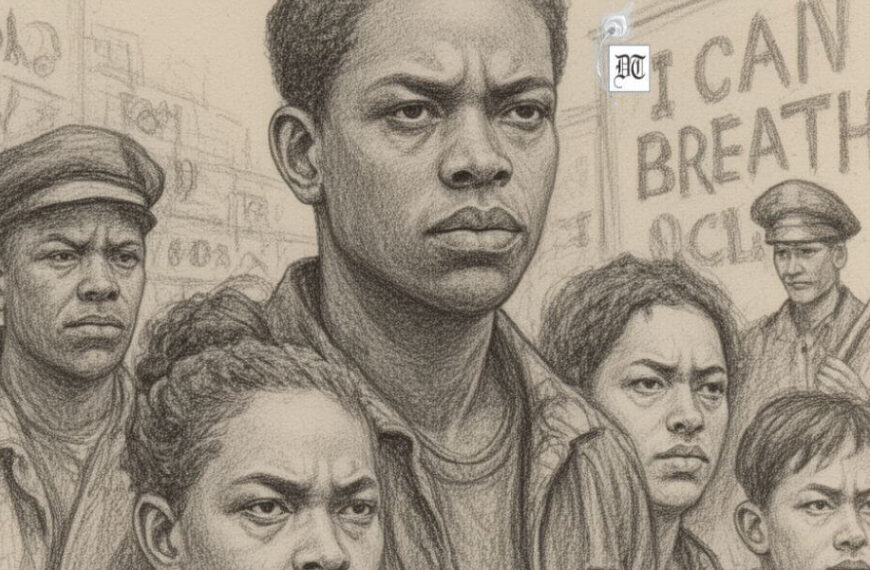
 By
By