
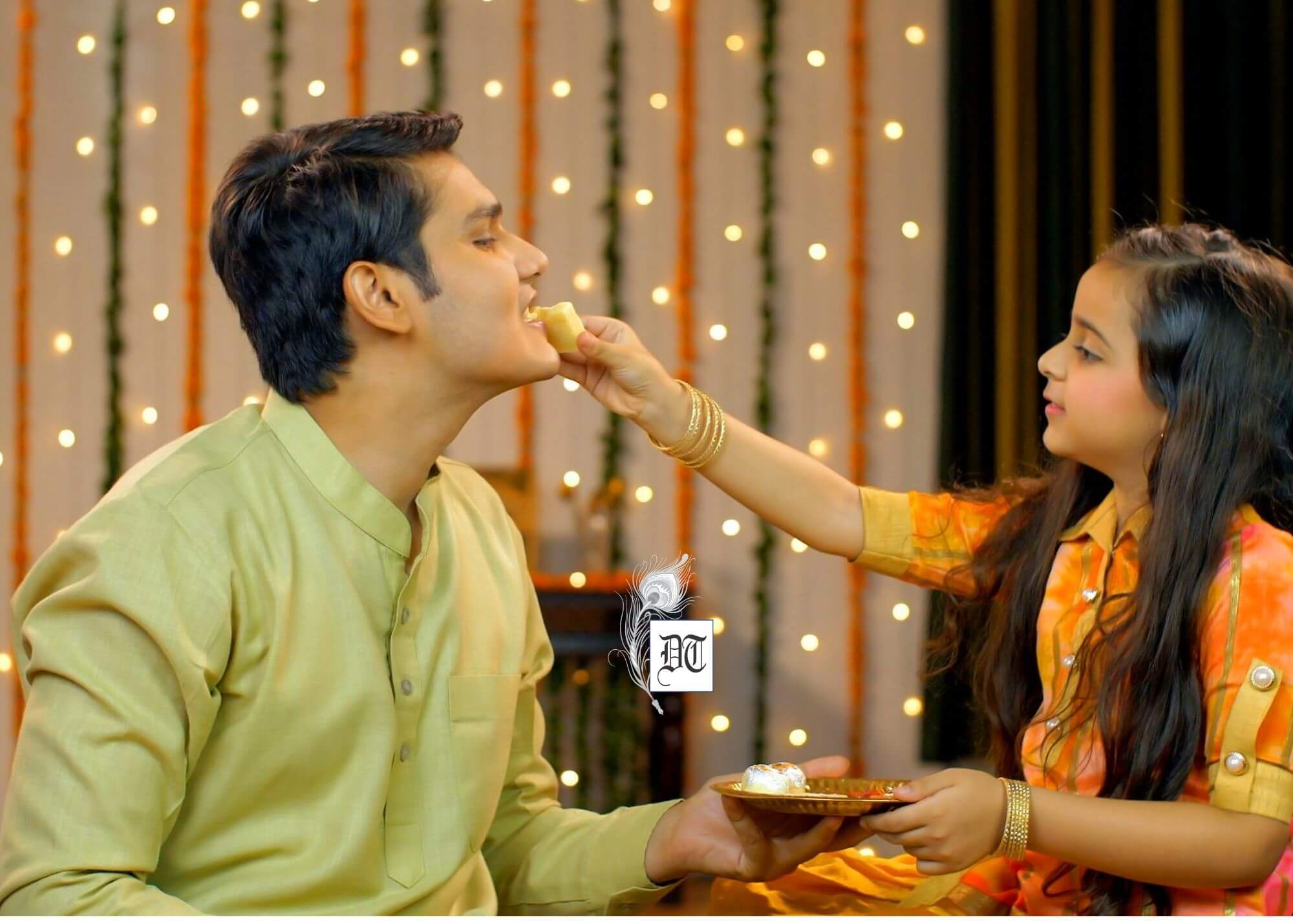

Ruchira reflects on the Bengali tradition of bhaiphoNta, a celebration of brothers’ lives, highlighting its emotional and religious significance, exclusively for Different Truths.
Although I am not into elaborate ritual worship with all its paraphernalia, some of its socio-religious aspects greatly appeal to me owing to their latent sentimental content and significance. One such ceremony is bhaiphoNta, known in different regions of the country by diverse names, e.g., bhai dooj, bhatri dwitiya, et al.
On this day, which arrives two days after Diwali, women of all age groups pray for the long lives of their brothers and cousins (male siblings). In a patriarchal, sexist society like ours, men have always enjoyed pride of place, and this tradition is just an indicator of this lofty ideology—my fondest memories of bhaiphoNta date back to the golden autumn days of my childhood. My sibling is way younger than me, but my parents cajoled me to give phoNta to the infant even though it was beyond his comprehension then.
It is interesting to note that there are a few quaint features of the bhaiphoNta of the Bongs. It is not restricted to applying tilak, tying a holy thread on the wrist, followed by arati. My parents would enthusiastically gather a handful of Durba (Bermuda grass) blades. This sturdy, resilient plant species is considered a symbol of eternity and longevity. A vital accompaniment is dhaan (unhusked grains of rice). Its bright golden hues are believed to usher in prosperity. After putting the phoNta on the brother’s forehead, the big sisters bless the younger brothers with these items.
Ward off Disease and Death
Also in our community, the scarlet roli is replaced by Chandan (sandalwood) paste. Mom would keep that handy too, so I didn’t even need to wriggle my little finger. Ah, yes, lest I forget, sisters must touch freshly plucked neem leaves on the brothers’ knees and shoulders! This is practiced in some households; it may not be rampant. Why? Because being a medicinal plant with antiseptic properties and bitter-tasting leaves Neem would act as an antidote to ward off disease and death.
One important point: in the case of an older brother, the dhaan-durba part is skipped. After all, you can’t bless an older brother! Can you? Then follows a spell of gift exchange and binge eating, a common phenomenon in all homes (ours included).
Through my adolescence and teenage years onward to youth, the same routine continued. Even after I settled down in matrimony, I would make it a point to land up at my parental home for the ceremony without fail.
Postal BhaiNphota
However, as the old saying goes, all good things must come to an end. So, it was in our case. The sibling grew up and left the nest in connection with higher studies, training, and career. As a result, we switched to postal bhaiphoNta mode. I have been familiar with this since childhood. Our family moved from one place to another owing to my dad’s transferable job. Hence his three doting sisters would assemble on the occasion, put the sacred sandalwood marks on a clean piece of paper, scribble good wishes alongside, and then mail it. My dad’s joy knew no bounds when they reached him.
Alas, after a few years — owing to the appearance of two important and powerful women in my sibling’s personal life and subsequent misunderstandings, feuds and rivalry that followed — this practice became passé.
Nonetheless, I fondly recall two instances when, despite the presence of ‘Flower Power’, we had a gala time to ourselves on bhaiphoNta. That particular year, we went to a swanky eatery in a mall, gorged on goodies, tippled a bit, and laughed ourselves hoarse, but managed to return home sober and as good as gold! On our last bhaiphoNta, Dad was in a nursing home with some geriatric issues. We exchanged gifts and good wishes on the hospital premises, giving the ‘binge’ part a miss. At that moment, neither of us had an inkling that our happy hours were numbered.
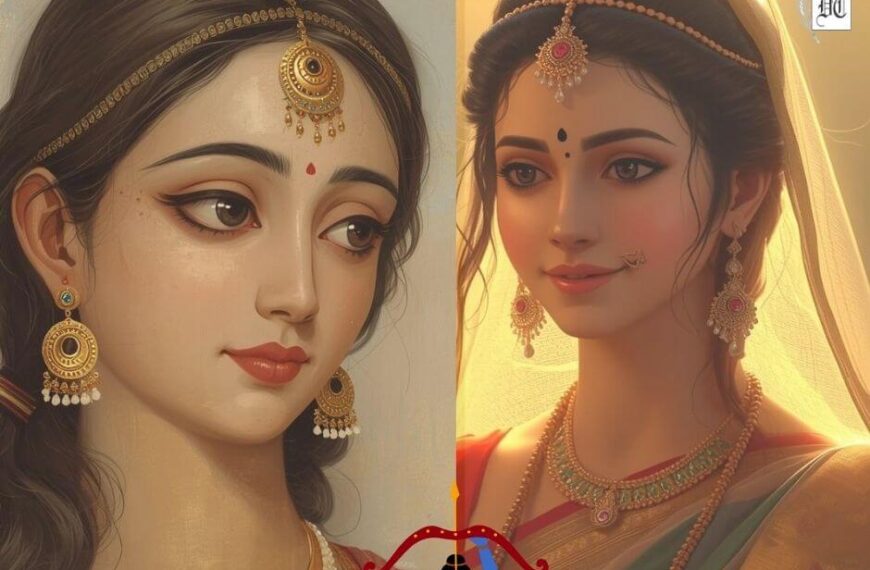
Picture design by Anumita Roy

Born in Guwahati and raised across Delhi and Punjab, Ruchira Adhikari Ghosh is an alumna of Sacred Heart Convent, Ludhiana. She holds a master’s degree in English literature from Punjab University, Chandigarh, and a postgraduate diploma in Journalism. With nearly 25 years of experience in print, web, and television media, she has carved a niche as a feature writer. Her writing focuses on women’s issues, food, travel, and literature, reflecting both versatility and depth.


 By
By
 By
By
 By
By