
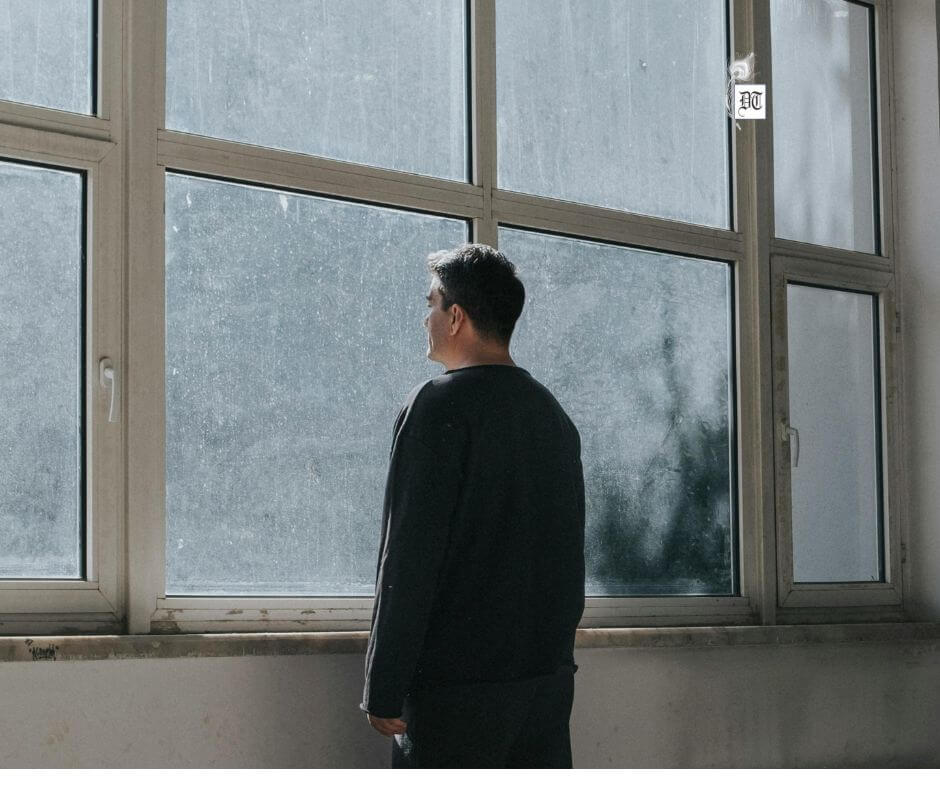
Monsoon whispers veil Sandeep’s secret: a granite crust masks the face. What haunts beneath? A short story by Vandana for Different Truths.
“Ah, you’ve arrived! Welcome, welcome.”
The psychologist gestured with a practised, respectful smile. “Please, lean back. Make yourself comfortable. I’ll call for tea—the weather has turned lovely, hasn’t it? There is something uniquely evocative about the monsoon, don’t you think?”
“Yes,” Sandeep replied softly. “Every season has its charm, but…”
“But if a season overstays or—if it gets ‘stuck’—the entire system falters,” the psychologist finished, her laugh lingering like a soft chime.
“Though it is just a flight of fancies. Such things don’t happen in reality, do they? Here, have some tea. Spicy, fragrant… a double delight in this rain.”
She paused, watching her client. “Say something, Sandeep. A smile alone won’t suffice in today’s weather.”
“I am wondering where to begin,” Sandeep said, drawing a long, jagged breath. “I only hope you don’t misunderstand me.”
“How could I? Beyond this room, we are friends. Within it, I am your doctor. You are safe here. Speak freely.”
Sandeep nodded, her gaze fixed on the steam coiling upward from our cups. “For the past few days… I’ve felt some sedimentation on my face, like a solid growth or a mould. When I look in the mirror, the sensation of a ‘crust’ grows stronger. Perhaps it is a delusion. Perhaps it is a mask.
You’ll think I’ve finally lost my mind.”
She continued, her voice gaining a desperate edge. “I try to wash it away, but this mould is like stonework or maybe granite. It isn’t just one layer; it’s a stack of them, mounted one upon the other. I try to break through—I try to laugh, to scream, to weep—but not a single crack appears. I can’t find an edge to peel it back. I am suffocating beneath this weight. Sometimes, I just want to give up.” Then its weight is unbearable; in fact, it’s painful to live with. It has become a regular battle for me…
“I look for my ‘original’ face, but it’s gone. I think back to the first time I smiled through a wound or hid a natural fear; I believe these masks were born then, from the need to bury the internal sting. And now? From these perfectly ‘intact’ faces and ‘safe’ homes, the outline of a coffin begins to emerge. God! What am I saying? If people heard the conversations I have with myself, they would make my life a misery.”
She let out a sharp, bitter laugh. “The books tell us to ‘speak the truth’. What a joke! Dare to speak it, and they’ll bury you on the spot. THEY! You know THEM! THEY are omnipresent! THEY won’t let you survive, I think so but people think otherwise…
You’ll be left carrying your own coffin because no one will give you two yards of earth to rest in peace. “It’s haunting and it haunts me…
(Sandeep touched the corners of her lips). “These words… they are my mother’s. Her eyes, her nose, her forehead. It’s as if her entire face is grafted onto mine. As if she is living through me. When people tell me, ‘You are exactly like her,’ I tremble. That tremor hasn’t left me. I am looking for my own face, but all I find is a photocopy to be pasted on when the world demands it.”
“Mother always said, ‘A sad face is a social sin,’ especially for us, meaning women. She always insisted I cover my forehead, because wise people can read your fate in the furrows of your brow. She used to hide her bitterness in the curls of her dark hair. She had a talent for it—a one-and-a-half-inch frown that could make a person vanish into thin air.”
“I have never learnt that,” Sandeep sighed. Om Namoh Shivay! Om Namoh Shivay!
“I never practised her craft. I prefer to remain genuine; that’s good for society and for me as well. You know I am trying to disown her craft…
I just listened to her and watched her with adoration. My mother’s presence remains my greatest challenge. To be fundamentally sensitive while wearing a face mask that looks tough… it is a contradiction. And living a contradiction is exhausting.”
“After all,” she mused, “we…we are given one face—or perhaps two, the feminine and the masculine. But if a face is permanently stamped upon you, it writes your destiny. You cannot claw it off. They call it the ‘lines of fate’, but I call it a prison.”
She moved in her chair, her thoughts drifting back to her youth. “Sandeep. That name existed on paper, but not in reality. I was just a ghost, looking at others’ faces to find my identity. I was caught between my mother’s city-bred indifference and my grandmother’s rural taunts. Amma would say, ‘Don’t be like your mother—she knows nothing of modesty or work. ‘So I learnt the chores. I became the ‘dutiful daughter’, so my mother could enjoy her favourite Hindi cinema and my father could boast of my marriageability.”
“But then, I saw a path. The girls at school spoke of it. ‘Your mother is educated,’ they’d say. ‘You could study for an M.A.!’ The thought took root. One evening, I sat down to study instead of doing the dishes. My mother was livid. ‘Your studies end tomorrow!’ she screamed. She broke everything she could reach… everything but my spirit.”
Sandeep looked at the psychologist, a sad smile touching those inherited lips. “Mother was mad in her way, and I was obsessive in mine. We were trapped in the same mould—the same mould. Throughout history, the moulds look the same from the outside, but the stories inside? They are different. Every era creates a new mould for women. I stay awake at night trying to calculate the difference. Otherwise… otherwise, everything is fine…
Picture design by Anumita Roy

Delhi-based author and researcher Vandana Garg holds a doctorate with distinction in linguistics from the Department of English Language & Cultural Studies. Her key 2024 book, Harold Pinter: A Study of Cultural Memory (Jewish Holocaust and Genocide), captures her major research. She has published the Hindi short story collection Refugiyon ki Ladki, delving into the 1947 Partition refugees’ struggles and aftermath. Her debut psychological thriller, Twilight Zone, launches in fall 2025.

 By
By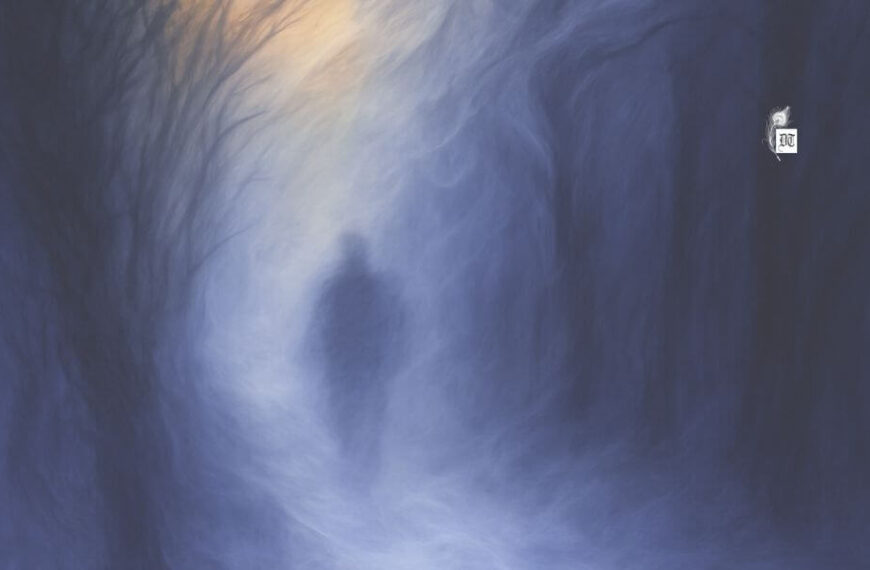

 By
By
Thank you for a thought-provoking read.
You’re very welcome! I’m glad it struck a chord and gave you something to chew on.