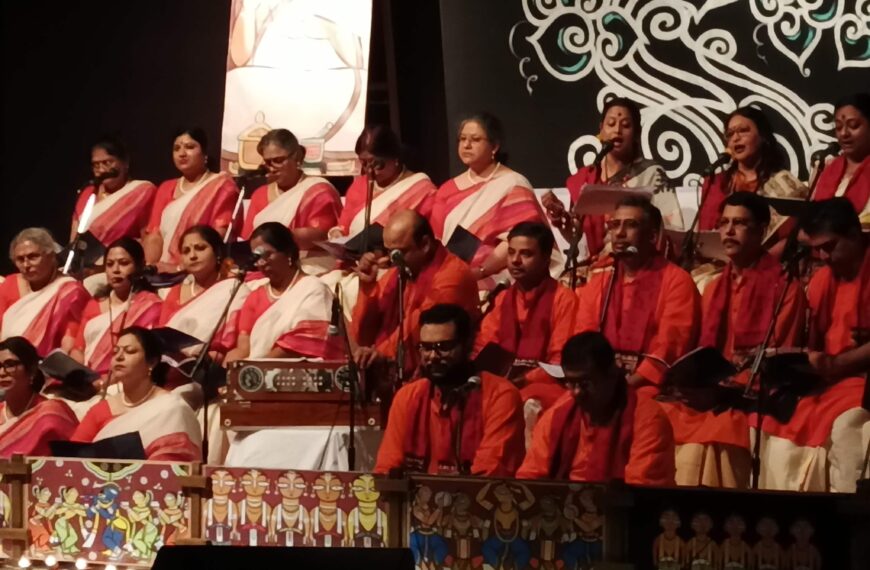

Ruchira tells us that Tagore’s profound love for the sun, a celestial muse illuminating his life and literary works, is an exclusive for Different Truths.
Tagore, the Nobel Laureate, was visibly enamoured with his name. In most Indian vernaculars, as well as the parent language, Sanskrit, Ravi (alternatively Rabi) denotes the resplendent Sun that has illuminated the planet Earth since the beginning of time. To avoid boredom and monotony, he made extensive use of synonyms for the sun in the vast plethora of his literary works.
Here’s an interesting anecdote: While writing a series of poems in Braja Buli during his teenage years, he decided to adopt a pen name, or pseudonym, to keep his identity concealed from his guardians and elders. He feared that his adult family members would ridicule him. He decided that the name must include “Sun,” so he zeroed in on Bhanu, a synonym for Sun. The final avatar was Bhanu (Rabi) Singha, meaning “Lion” (lord and master of the forest). Incidentally, “Nath” is another synonym for Lord, and lastly, “Thakur” (being the family surname).
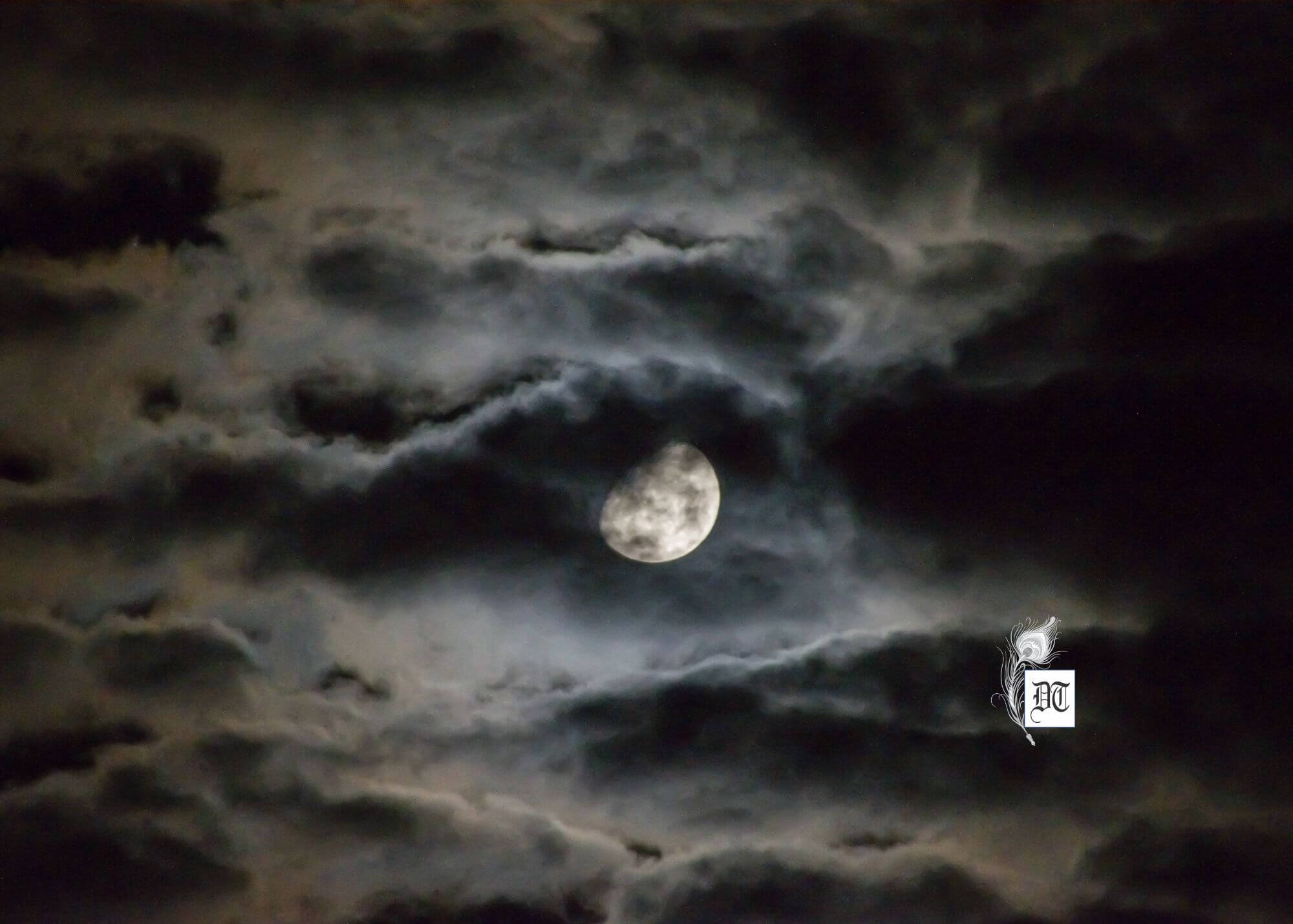
In one of his songs, Tagore writes, “Tapan Chandra tara gobhiro mondre gahiche shuno gaan…” (hear the somber, deep-throated melody being churned out by the innumerable stars, the sun, and the moon.)
In the highly popular Ananda Dhara Bohiche Bhubane, he describes how the Sun as well as the Moon drinks in depth from the perennial flow of pure joy (Pun kore Robi Shoshi anjali bhoriya).
Or consider this: “Groho Tarak Chandra Tapan byakulo druta begey koriche paan koriche snaan akshay kirane” (the celestial bodies immerse themselves and imbibe the never-ending flow of divine “bliss” into the depths of their being). Who hasn’t heard the vibrant and positive “Aji pratey Surya otha safal holo kaar (Who is the fortunate one for whom today’s sunrise has brought glad tidings)?
As is universally known, light is invariably linked with love, joy, and peace. In “Ki gabo ami ki shunabo…”, the Bard describes how the heavenly bodies traverse the vast and endless space, exuding divine love and compassion.
Interestingly, Tagore composed a few lyrics for children and youngsters with, you guessed it correctly, the sun as the pivot point. Songs like “Sara Jibon Dilo Alo Surya Groho Chand” emphasise how Divine mercy has always permeated into our lives in the form of the brilliant light of the sun, moon, and planets.
Another song, which is highly popular among kids (they often dance to its tune), happens to be “Megher kolay rode hesheche” (sunlight is filtering through the clouds, which are gradually drifting and melting away).
My personal favourite is “Akash Vora Surya tara…” wherein the restless wanderer (the poet himself) gazes in wonder at the firmament dotted with the radiant sun and innumerable stars and is mesmerised to listen to the throb of eternal life reverberating through the universe.
Apart from his lyrics, the “sun” motif is prevalent in Tagore’s poetry as well. In a highly significant, deeply philosophical poem, Prothom Dinner Surya (Sun of the First Morn), the Sun (portrayed as a living being) poses a question to the universe, which was then in its primordial stage: “Who art thou?” No response. Aeons later, at the end of a day, while resting on the brink of the western horizon and the ocean, the weary sun repeats his query. No answer yet again. Summing up: it is well-nigh impossible to unravel the mystery of the creation of the universe!!
Since the dawn of civilisation, the sun, with its universal presence and life-giving energy, has been considered a powerful symbol of unity and brotherhood, transcending diverse cultures and beliefs. And Tagore was no exception, a happy coincidence being that he happened to be named after the Luminous One!
Picture design by Anumita Roy

Born in Guwahati and raised across Delhi and Punjab, Ruchira Adhikari Ghosh is an alumna of Sacred Heart Convent, Ludhiana. She holds a master’s degree in English literature from Punjab University, Chandigarh, and a postgraduate diploma in Journalism. With nearly 25 years of experience in print, web, and television media, she has carved a niche as a feature writer. Her writing focuses on women’s issues, food, travel, and literature, reflecting both versatility and depth.

 By
By
 By
By
 By
By