
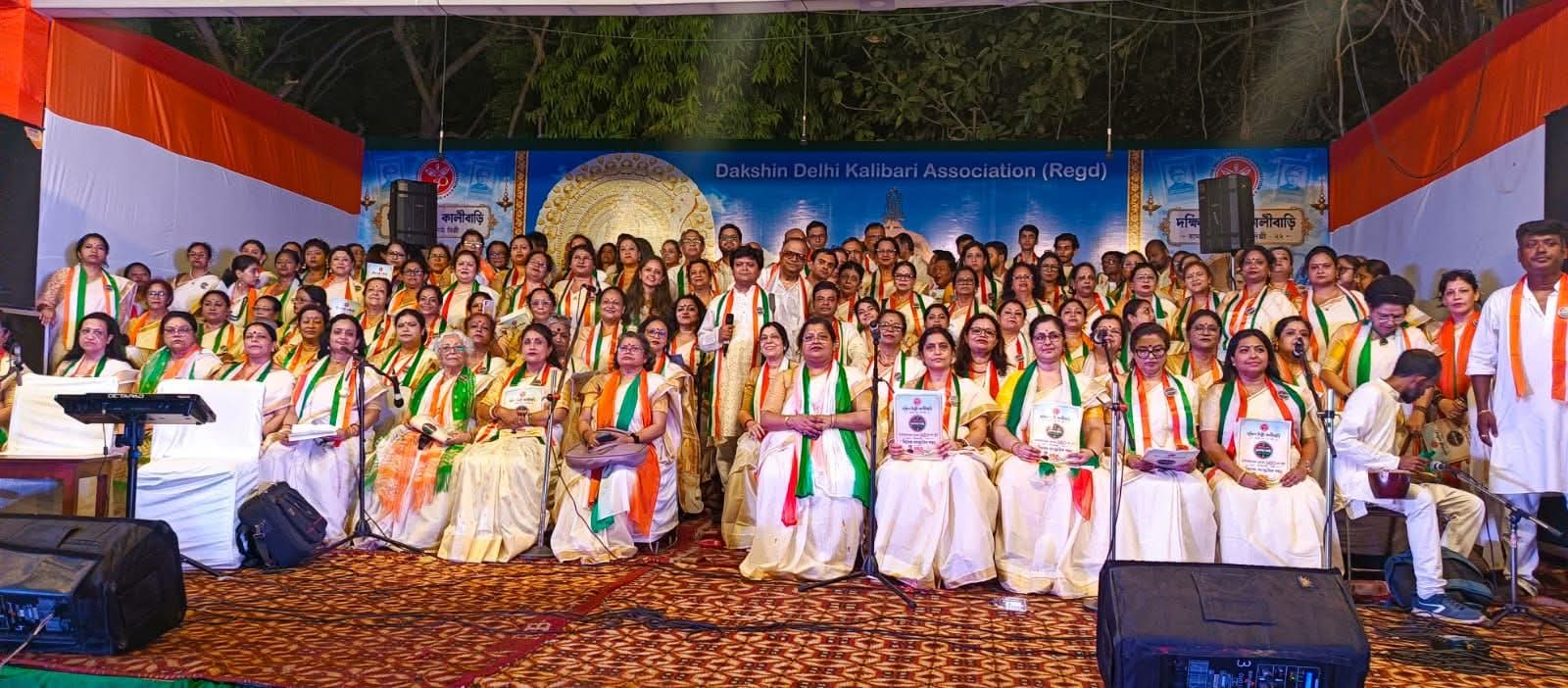

Ruchira and the team at DifferentTruths.com celebrate the enduring spirit of “Vande Mataram,” exploring its historic legacy and cultural significance.
AI Summary
· Commemorating History: The “Vande Mataram 150” event in New Delhi honoured the 150th anniversary of Bankim Chandra Chattopadhyay’s iconic National Song.
· Cultural Fusion: The performance featured a kaleidoscopic presentation, blending Tagore’s original melody with diverse musical arrangements and traditional dance forms.
· Patriotic Resonance: The evening bridged generations by uniting veteran history, youth, and timeless melodies, reinforcing national integration and cultural pride.
It is heartening to witness a distinct increase in socio-cultural activities in the National Capital and its adjoining areas, cutting across languages and social strata in recent years. Despite conflicts based on region, language, and faith, a growing sense of patriotism and national integration seems to be emerging across the country.
Most of us might be aware that our nation is currently nearly halfway through a year-long cultural event commemorating the 150th anniversary of our National Song, “Vande Mataram,” composed by the legendary Bengali author Shri Bankim Chandra Chattopadhyay in 1875.
For the uninitiated, this famous poem is an excerpt from Bankim Chandra’s magnum opus “Ananda Math” (translated as “Monastery of Peace”), a fictional narrative centered around a fierce uprising led by a group of sannyasis (ascetics) against the British forces. The story is set against the backdrop of the infamous Bengal Famine of 1770.
Did you know that “Vande Maataram” is also significantly connected to Nobel laureate Rabindranath Tagore? While Bankim Chandra Chatterjee penned the original lyrics, it was Tagore who composed the song’s iconic and captivating melody. This musical arrangement allowed the song to resonate with the masses and be sung widely during the freedom struggle. In fact, Tagore publicly sang “Vande Mataram” at the 12th annual session of the Indian National Congress in Kolkata in 1896.
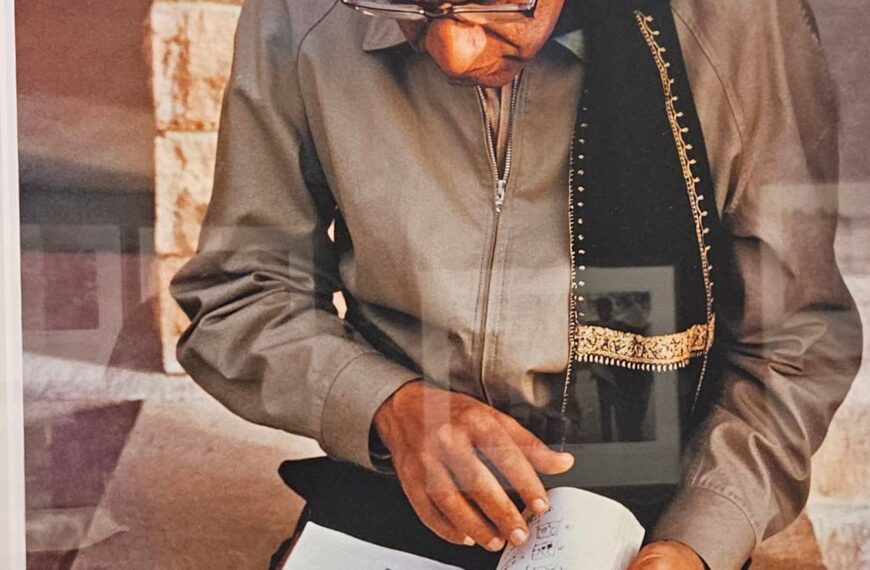
Last weekend, a grand musical extravaganza titled Vande Mataram 150 was staged at New Delhi’s Dakshin Dilli Kali Bari, which serves as both a cultural hotspot and a religious site in the city’s RK Puram locality. The date of the event was chosen to coincide with Chattopadhyay’s birthday (June 26, 1833). That evening, the 99-year-old INA veteran, Shri Rangaswamy Madhavan Pillai, who was an eyewitness to a crucial chapter of Indian history in the making, was present. The parents of the youthful Kargil martyr Vijayant were also present.
The evening’s presentation was kaleidoscopic. Conceptualised and directed by noted keyboardist Anirudh Choudhury, it effectively highlighted the crux of patriotism. A hundred and fifty dedicated singers performed various renditions of the song, starting with Tagore’s public performance decades ago, followed by the one sung by Hemanta Mukhopadhyay in the eponymous film, and culminating in the more common version we often hear.
The melodic vocals were accompanied by an impeccable, vigorous orchestra: an ensemble of esraj, guitar, octopod, flute, tabla, keyboard, and more.
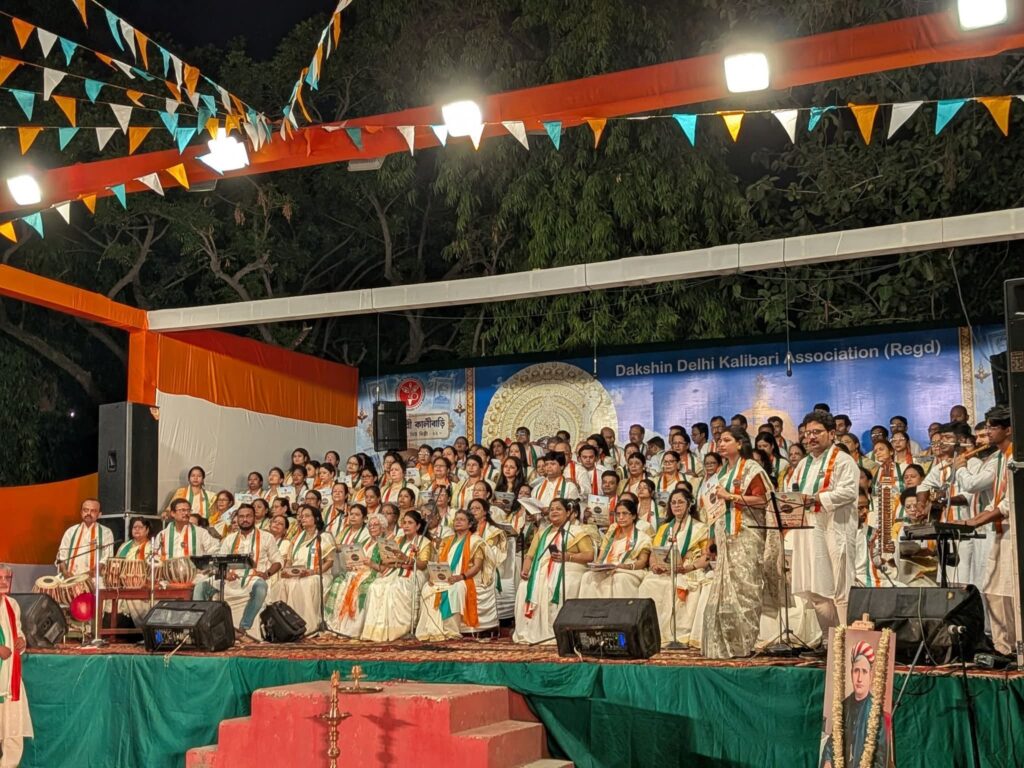
A significant contribution was made by flawless dance formations (by local artists) featuring pan-Indian themes and styles. The focus then shifted to ‘Des’ Raag, which is the foundation of most patriotic songs, including Vande Mataram. Interesting to note that it was one of Tagore’s favourites; the Bard used this raag extensively in his lyrical compositions, classified as “Swadesh.”
The rest of the evening was dedicated to AR Rahman. It’s not surprising that the patriotic themes in his works are quite popular. His outstanding songs, such as “Bharat hum ko jaan se pyaari hai” and “Ma tujhe salaam” (Rahman’s version of Vande Mataram), were on the agenda.
The finale came with the old but familiar mile sur mera tumhara in multiple vernaculars.
All said and done, the oppressive humidity notwithstanding, all the performers of the evening—singers, instrumentalists, and groups of budding dancers—did a highly commendable job. Let us look forward to more such scintillating shows in a not-too-distant future.
Photos sourced by the writer

Ruchira Adhikari Ghosh brings a liberal, wide-ranging outlook shaped by extensive travel across India and abroad. Educated at Holy Child School, New Delhi, Sacred Heart Convent, Ludhiana, and Panjab University, Chandigarh, she holds a Master’s in English Literature and a postgraduate diploma in Journalism and Mass Communication. With three decades in media, she writes on travel, books, music, performing arts, women’s issues, and especially food, drawing inspiration from rich life experiences. She is our Features Editor.


 By
By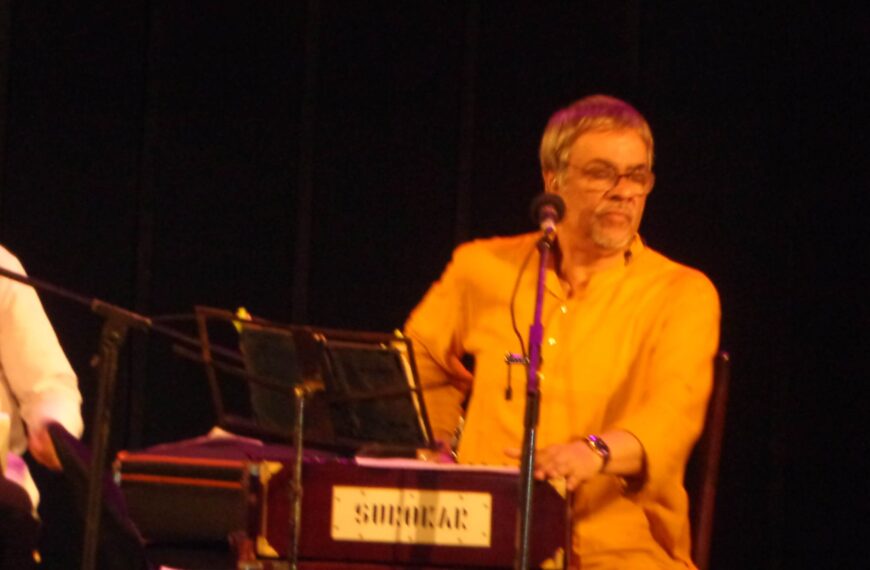
 By
By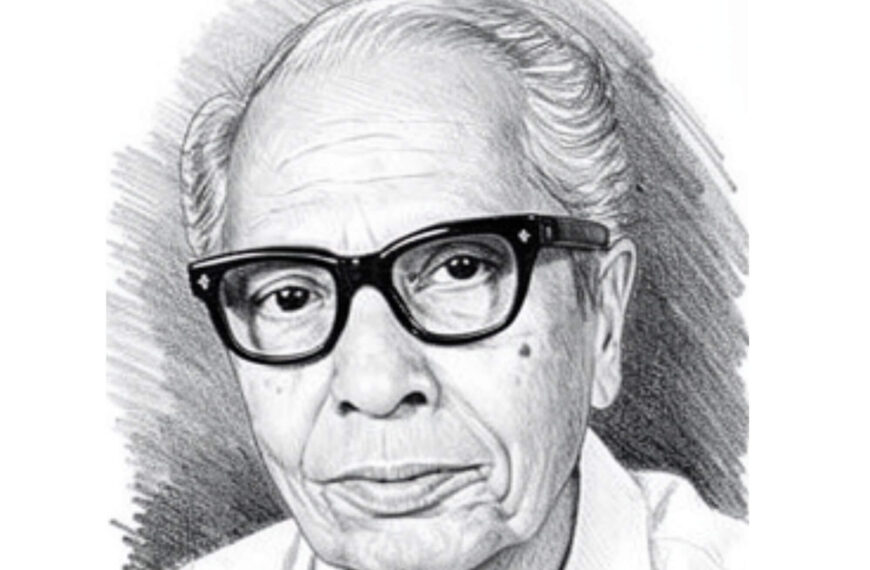
 By
By