
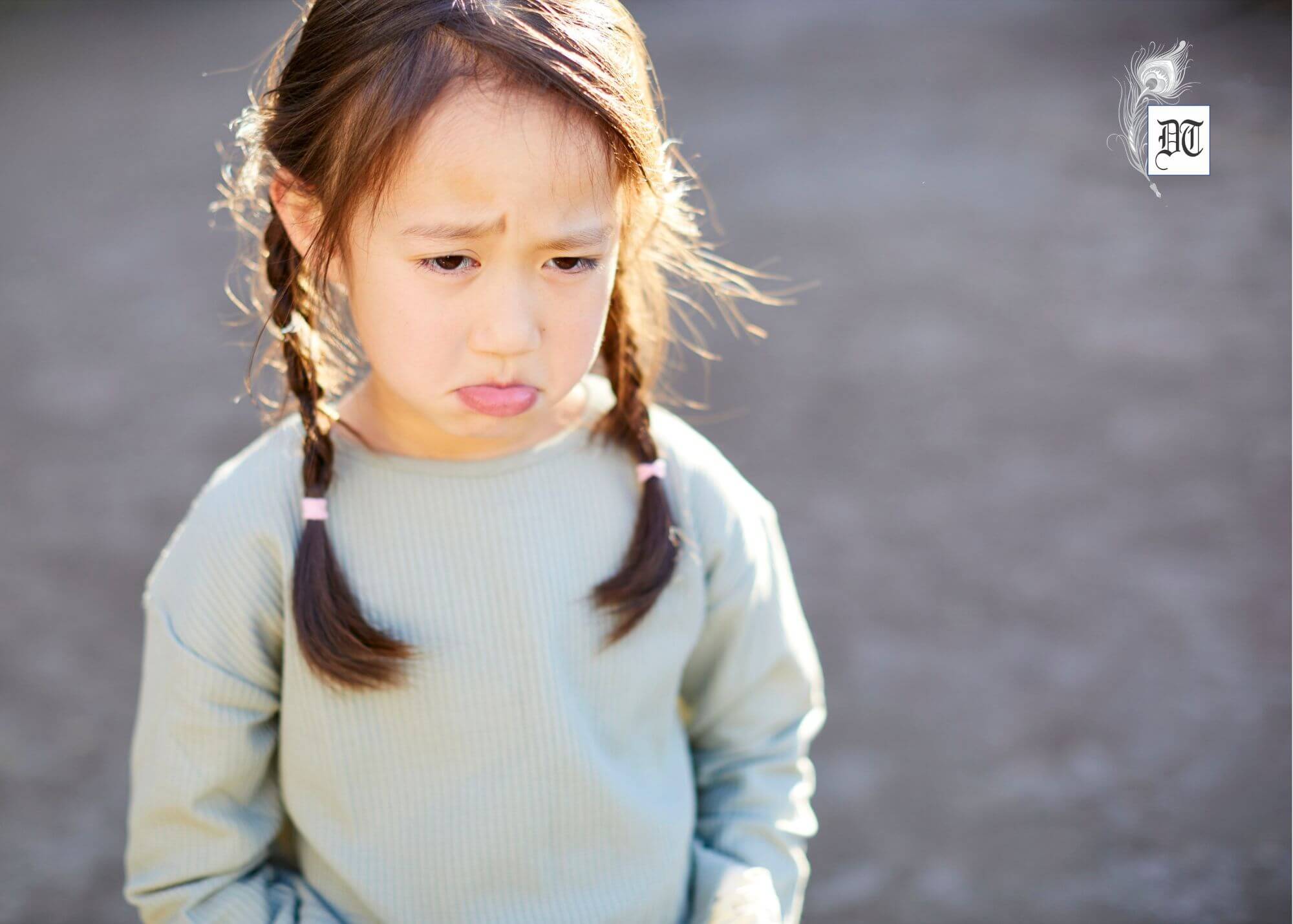
Rojina’s poignant narrative on DifferentTruths.com uncovers the silent erasure of daughters in rural Nepal, challenging deep-seated cultural invisibility and gender bias.
AI Summary
- The Uncounted: During a field study in Nepal, researchers discovered mothers often exclude daughters when asked for their total “child count”.
- Systemic Erasure: This “violence with no name” highlights how gender discrimination is normalised through language and generational tradition rather than hatred.
- The Call to Action: The essay emphasises that true equality begins by mentally and linguistically acknowledging a girl’s existence within her family.
“You have reached so far compared to me, but please hold your steps for a second and give me time. Look back – I am left behind.”
She never said these words out loud. She probably never even knew she had the right to. But she was there, right there on the other side of that window. Sitting quietly, wondering what was going on inside. She was also inside the four walls with us, in her mother’s lap. Warm. Breathing. Alive. And completely unaware that, in the mind of the very woman holding her, she does not fully count.
Somewhere, in a village that most of us will never visit, and those who visit might never notice, but she does exist – a girl who is alive, who breathes, who laughs, who grows, but who is never counted. Not counted by her grandparents. Not counted by her relatives. Not even counted by the woman who carried her for nine months and brought her into this world – her own mother.
A Field Excursion
It was a field excursion, and I had just enrolled for my master’s degree, travelling with my team to a rural community in Nepal. I was there to learn, to explore, and to assist in research. I had no idea that what I was about to encounter would shake something deep inside me.
That morning was ordinary. Breakfast. Getting ready. Walking to the field with my senior colleague. We had called a few women from the community for a focus group discussion.
The session began with simple introductions: name, age, marital status, and number of children. Simple enough.
The first woman spoke. Two children – both sons. The second – three sons. The third – a son. The fourth and the fifth sons, again and again. We listened carefully. After a while, a quiet thought crept in: “Does no one here have daughters?”
Then came the seventh woman. Around 74 years old. She had seen more of life than most people ever will.
She said, “I have seven children; three have passed away, and four are alive.”
We asked gently, “How many sons and daughters do you have?”
The elderly woman replied, “Four sons and three daughters.”
Confusing Numbers
For a moment, the numbers confused us. If she had said only four children were alive, how could she also have four sons and three daughters?
So, we asked again, carefully.
That was when she clarified: the three children who had passed away were her sons. She had four living sons and three living daughters – seven children in total.
The reason she had first said “four children” was that, in her mind, only her sons were counted as children. Her daughters were mentioned separately, but they were not included in the number when she was asked how many children she had.
My senior then said, as clearly as she could, “So you have seven children: four sons and three daughters, right?”
The elderly woman paused for a second. Then, with complete sincerity – no shame, no cruelty, only genuine confusion – she asked, “Oh… that means we have to count our daughters also?”
A Silence
What followed was a silence that neither of us could fill. And in that silence was something heavy, the weight of generations, of traditions, of a belief so deeply buried in daily life that it had become invisible.
We looked at each other. Something heavy had just entered the room and settled there.
But the silence did not last. Because the question born from the eldest woman in the room was quickly picked up by another woman, a mother of three children. With the same confusion, the same words echoed:
“You said to tell our name, age, marital status, and number of children… do we have to count daughters as well?”
Never Questioned
She was not asking out of cruelty. Not out of indifference. She asked out of genuine confusion, the kind that comes from growing up in a world where certain things are simply never questioned. One voice became two. Two became many. The question that started with “Do I?” became “Do we?”
And that shift from “I” to “we” told the whole story. This was not one woman’s confusion. This was a shared belief, passed from mother to daughter, generation to generation: that daughters do not fully count.
She existed, but was she allowed to?
Daughters were added.
After we answered, ‘Yes, of course, daughters count’, the women quietly corrected themselves. Numbers changed. Daughters were added. The true count finally appeared.
But the question that stayed, long after the session ended, was this: if those daughters had never been in the count, what else were they left out of?
Were they left out of decisions about education? About marriage? About food, about care, about being heard? If a mother doesn’t count her own daughter as her child, does the daughter grow up knowing she is uncounted, or does she never even know what she is missing?
“Maybe she laughed like her brother, played like him, smiled like him, talked like him. But if she did all that, why wasn’t she counted as a child, even by her own mother?”
A Nameless Violence
Yes, it is a violence with no name.
When we think of violence against women and girls, we often picture something visible: a bruise, a wound, a crime scene. Something we can point to and say, ‘That is wrong.’
But the violence of this nature leaves no bruise. It shows up in a number that is never spoken. In an introduction where a name is left out. In a mother’s mind, her daughter simply does not exist in the way her sons do.
This is the violence that is hardest to fight, because the people inside it often don’t see it. It is not rage. It is not hatred. It is something quieter and therefore far more dangerous: it is the normalising of erasure. It is erasing a girl’s existence so thoroughly that even she doesn’t know she has been erased.
Changed Laws
We have fought hard in recent years. Women now have property rights. They can pass citizenship to their children. Laws have changed. Courtrooms have changed. But laws cannot reach into the moment a mother counts her children and leaves one out.
Even today, somewhere, a girl is growing up in a home where her laughter fills the room, but her name is not spoken when the family is counted. She eats at the same table, sleeps under the same roof, and shares the same blood. But she does not exist in the same way.
The little girl who sat in her mother’s lap and the one silently watching from the other side of the window that day did not know what was happening around them. They did not know that the women in that room were being gently asked to count them, to include them, to see them as a whole child. They were just sitting there. Completely unaware of the weight of the moment.
But we know. And knowing means we can no longer look away.
“I could feel them. I could feel that they are me, and I am them.”
Change Through Seeing
That feeling, of recognising yourself in someone who has been forgotten, is the beginning of real change. Not change through policy alone. Change through seeing. Through counting. Through refusing to leave anyone out of the number.
We owe it to them and to every girl like them to count them. Not just in research forms. Not just in census data. But in our minds, our habits, our language, and our love.
Do we have to count our daughters also?
Yes. Always. Without hesitation.
Picture design by Anumita Roy

Rojina Sapkota, a student of Conflict, Peace, and Development Studies, is deeply passionate about gender justice, social inclusion, and community transformation. Alongside her academic pursuits, she works as a researcher at Pro Guidance Nepal. Her writings explore women’s rights, hidden social inequalities, and human dignity, emphasising themes of peacebuilding, policy reflection, and the pursuit of meaningful and sustainable social change in today’s evolving world.

 By
By
 By
By

I’m traumatized with the acknowledgement of horrific dark reality of Nepalese rural societies unearthened and brought into spotlight by the researcher/ writer. I lack accurate words to offer my appreciation and gratitude to fit the pressure and unparalleled risks and rush the writer must have felt during her research. ” Invisible Girl “, the topic for me suggested sometype of discrimination against girls in our patriarchal setting in the beginning but when I went thoroughly it was limited not alone to any discrimination only but deliberate acceptance of girl child’s absence despite their full being. I guess, no hoolywood movies can carry the complications of that absurd circumstances. Inequality, torture, violence, exploitation , injustice issues appear when we accept someone’s physical presence . Incidents happen because someone is there. Can we be just hypothetical on what might not have happened to them where presence itself is denied ; system protected denial.
Your first article is sure to blow everyone’s mind and calculations. It will raise lots of questions to those who claim of doing miracals in women’s right and advocacy. You pushed for rethink and restructure.
Well done!!! A brand new writer/ columnist has made grand debut in the market.
Best wishes!!!!