
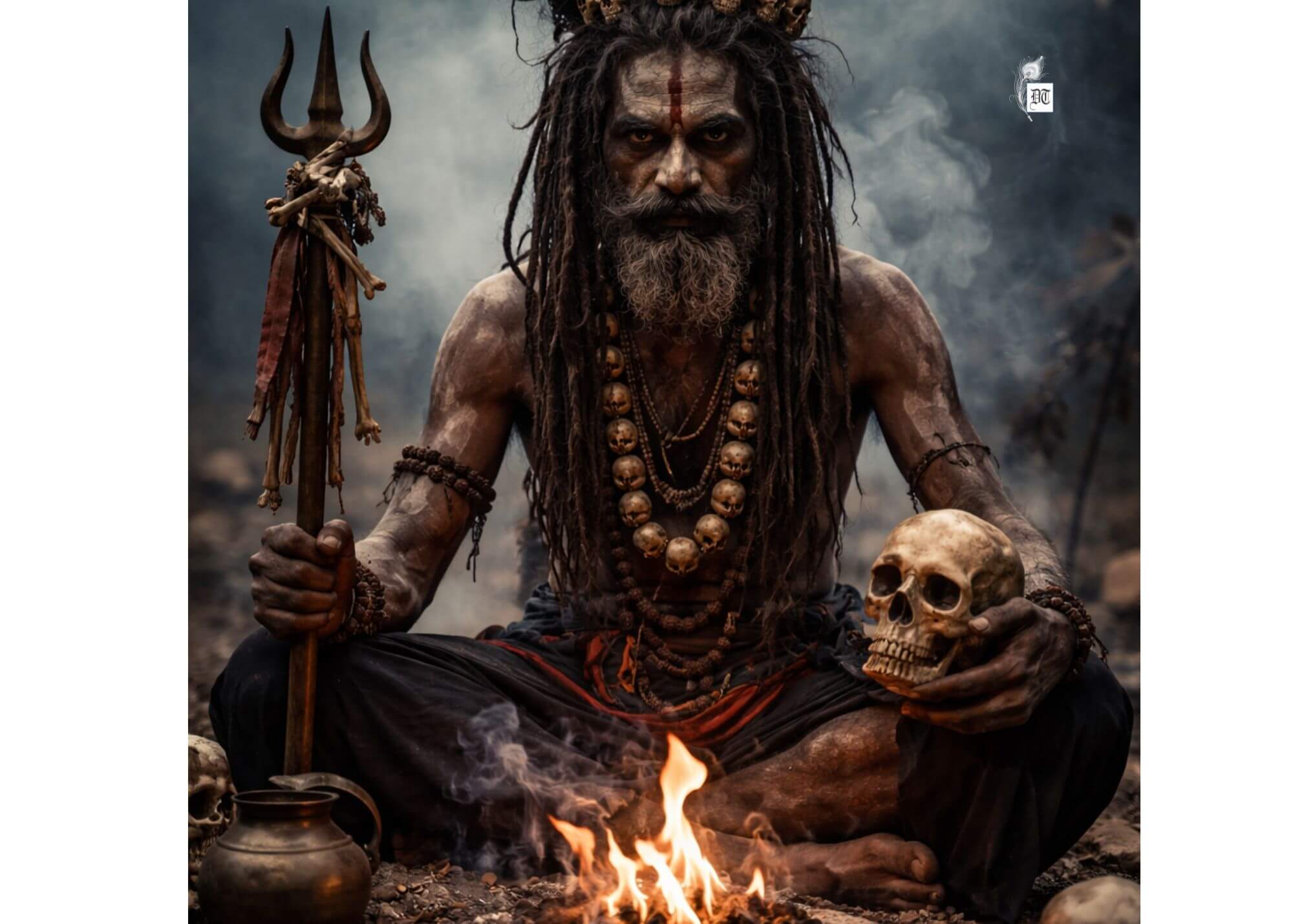
Mowmita explores the radical spiritualism of the Aghori in this gripping piece, exclusively for DifferentTruths.com, delving into life beyond death.

AI Summary
- The Path of Non-Duality: Explores the Aghori philosophy that everything is a manifestation of Shiva, erasing the lines between pure and profane.
- Death as a Teacher: Details their rituals in cremation grounds, using ash and skulls to confront impermanence and attain moksha.
- Social Mirror: Challenges modern taboos by transforming fear and social rejection into a courageous pursuit of spiritual liberation.
On the ghats of Varanasi, where the Ganges carries both prayers and ashes, a figure emerges from the smoke. Draped in ash from funeral pyres, his eyes burn with an intensity that unsettles and fascinates. To the outsider, he is terrifying. To the devotee, he is sacred. He is an Aghori.
The Aghori sect, a fringe order of ascetics within Hinduism, has long been shrouded in mystery. They are seekers of liberation, renouncing worldly attachments in ways so radical that society recoils. Their practices—meditating among corpses, using human skulls as bowls, consuming what others deem impure—are not acts of madness but deliberate steps toward transcendence. To understand the Aghori is to confront the boundaries of fear, morality, and faith.
Origins in Fire
The roots of the Aghori trace back to the 17th century, when Baba Keenaram, revered as the founding saint, wandered into Varanasi after years of spiritual quests. Legend says he met Lord Dattatreya, the divine teacher who embodies Brahma, Vishnu, and Shiva, and received the wisdom that shaped the sect. Keenaram’s teachings emphasised that everything in existence—pure or impure, beautiful or grotesque—is a manifestation of Shiva. To reject anything is to reject the divine.
This radical inclusivity became the cornerstone of Aghori philosophy. Where mainstream Hinduism often emphasises ritual purity, the Aghori embrace the opposite. They deliberately seek what society fears, believing that by confronting death, filth, and taboo, they dissolve illusion and attain moksha—liberation from the cycle of rebirth.
Life Among the Dead
The cremation ground is the Aghori’s temple. While others mourn, they meditate. While families avert their eyes from burning bodies, the Aghori sit calmly, chanting mantras to Shiva. For them, the pyre is not a place of sorrow but of truth. Death strips away pretence, reminding them that all flesh is temporary.
They smear themselves with ash from the pyres, a symbol of impermanence. They carry skulls, not as trophies but as sacred vessels. Some are said to consume flesh from the dead, though scholars debate how widespread this practice truly is. Whether literal or symbolic, the act embodies their rejection of fear.
To outsiders, these rituals appear grotesque. Yet to the Aghori, they are acts of devotion. By embracing what society rejects, they confront the ultimate reality: that life and death are inseparable, and both are divine.
Philosophy of Fearlessness
At the heart of Aghori belief lies a paradox: by embracing impurity, they achieve purity. They see no distinction between sacred and profane, clean and unclean. Everything is Shiva.
This philosophy demands fearlessness. To meditate beside a corpse, to eat what others find revolting, to live without possessions—these are not acts of insanity but of courage. The Aghori believe that only by stripping away fear and attachment can one glimpse the truth.
Their practices are also deeply symbolic. Consuming what is forbidden represents consuming the ego. Living among ashes represents living beyond illusion. In their radical rejection of norms, they embody a spiritual rebellion that is both terrifying and inspiring.
The Social Mirror
Society has always struggled to understand the Aghori. To many, they are outcasts, madmen, or even sorcerers. Stories abound of their powers—healing the sick, cursing the wicked, seeing beyond the veil of reality. Whether myth or truth, these tales reflect the awe they inspire.
Yet the Aghori are not entirely detached from the world. Some serve as healers, using herbs, rituals, and spiritual energy to cure ailments. Villagers often approach them for blessings, believing their fearlessness grants them divine authority.
In this way, the Aghori serve as a mirror to society. They embody what people fear most—death, impurity, taboo—and transform it into a source of strength. Their existence challenges the boundaries of morality, forcing others to question what is truly sacred.
Encounters with the Aghori
Travellers who meet the Aghori often describe the experience as unsettling yet unforgettable. Their eyes seem to pierce through illusion, their presence both magnetic and intimidating. Conversations with them reveal a philosophy that is simple yet profound: everything is one, everything is divine.
One traveller recalls sitting by the Ganges at night, watching an Aghori chant beside a burning pyre. “The flames lit his face,” he said, “and in that moment, I felt both terror and peace. He was not mourning the dead. He was celebrating the truth that death is only a doorway.”
Such encounters leave lasting impressions. The Aghori embody a truth most avoid: that life is fragile. And death is inevitable. By embracing this, they achieve a freedom that few dare to seek.
Misconceptions and Realities
Popular culture often sensationalises the Aghori, portraying them as cannibals or occultists. While some practices are extreme, many accounts are exaggerated. Scholars note that the sect is diverse, with some members living quietly as ascetics, focusing on meditation and devotion rather than shocking rituals.
The image of the flesh‑eating Aghori may be more myth than reality. What is undeniable, however, is their radical rejection of social norms. Whether through literal acts or symbolic gestures, they confront taboo to dissolve illusions.
The Thrill of Darkness
There is something undeniably thrilling about the Aghori. They walk where others fear to tread. They embrace what others reject. They live among ashes, reminding the world that death is not an end but a truth.
Their philosophy resonates in a modern age obsessed with comfort and denial. In a world that hides death behind hospital curtains and sanitises grief, the Aghori confront it head‑on. They remind us that fear is an illusion and that liberation lies beyond it.
Legacy and Lessons
The Aghori remain a small sect, but their influence is profound. They challenge society to question its boundaries, to confront its fears, to see divinity in all things. Their practices may shock, but their philosophy is universal: that liberation requires courage, and courage requires confronting the truth.
For the seeker, the Aghori offer a lesson: do not fear what is forbidden. Do not cling to illusion. Embrace the truth, however terrifying, and you will find freedom.
Conclusion: Ashes and Fire
The image of the Aghori lingers: a figure draped in ash, chanting beside the flames of a funeral pyre. To some, he is a madman. To others, a saint. To all, he is a reminder that life and death are inseparable, and both are divine.
In their radical rejection of fear, the Aghori embody a truth that society often forgets. They are shadows of fire and ash, seekers of liberation, rebels against illusion. Their story is not one of horror but of courage—a testament to the power of confronting what lies beyond fear.
Picture created by AI

Mowmita Sur is an educationist, author, poet, and content writer. She has received many accolades for her writings at both the national and international levels. She was awarded as one of the best 50 poets of India. Many of her published book gets effusive praise and good reviews. Her books are captivating, incredibly well-researched and evoke strong emotions. She writes witty fiction, non-fiction, horror and mysteries. Her characters are clever and fearless like her.

 By
By
 By
By
 By
By
 By
By