
Ruchira’s evocative account at DifferentTruths.com captures the brilliance of DAG’s “Typecasting”, a historic exhibition documenting India’s diverse ethnographic landscape.
AI Summary
· Colonial Lens: Showcases 200 rare photographs (1855–1920) curated by Sudeshna Guha, exploring how photography shaped social and racial classifications.
· Vast Panorama: Highlights diverse communities, from Northeast tribes to Southern Todas, alongside professional trades and affluent merchant families.
· Artistic Mastery: Features legendary photographers like Samuel Bourne and Lala Deen Dayal, utilising vintage techniques like albumen and silver-gelatin prints.
It was an impressive show, an event to remember. Lately, the Delhi Art Gallery (DAG) had organised a mega photo exhibition titled ‘Typecasting: Photographs from 1855-1920’. And by a sheer piece of good luck, the advertisement caught my eye. Finally, I managed to leg it to the resplendent Bikaner House, the venue of the exhibition.
Each day, historian Sudeshna Guha, an associate researcher at the Faculty of Asian and Middle Eastern Studies (FAMES) at the University of Cambridge and a Tagore Research Scholar at the National Museum in New Delhi, conducted a walk-through, guiding visitors around the awesome collection of historical photographs.
The exhibition promoted critical reflection on the classification systems and typologies that were established during the colonial period, which photography helped to present as real and natural.
Covering sixty-five years, the exhibition showcased 200 rare photographs and photographic materials from the early days of Indian photography.
I was puzzled, thinking of the master photographers—who have long since passed to a better world—who meticulously captured these moments and snippets from the everyday lives of the nameless, faceless, teeming millions decade after decade.
The show also made me wonder whether masses of Indians who were born and lived after the 1920s down to the present times would have known (read: discovered) India the way these ‘masters’ did.
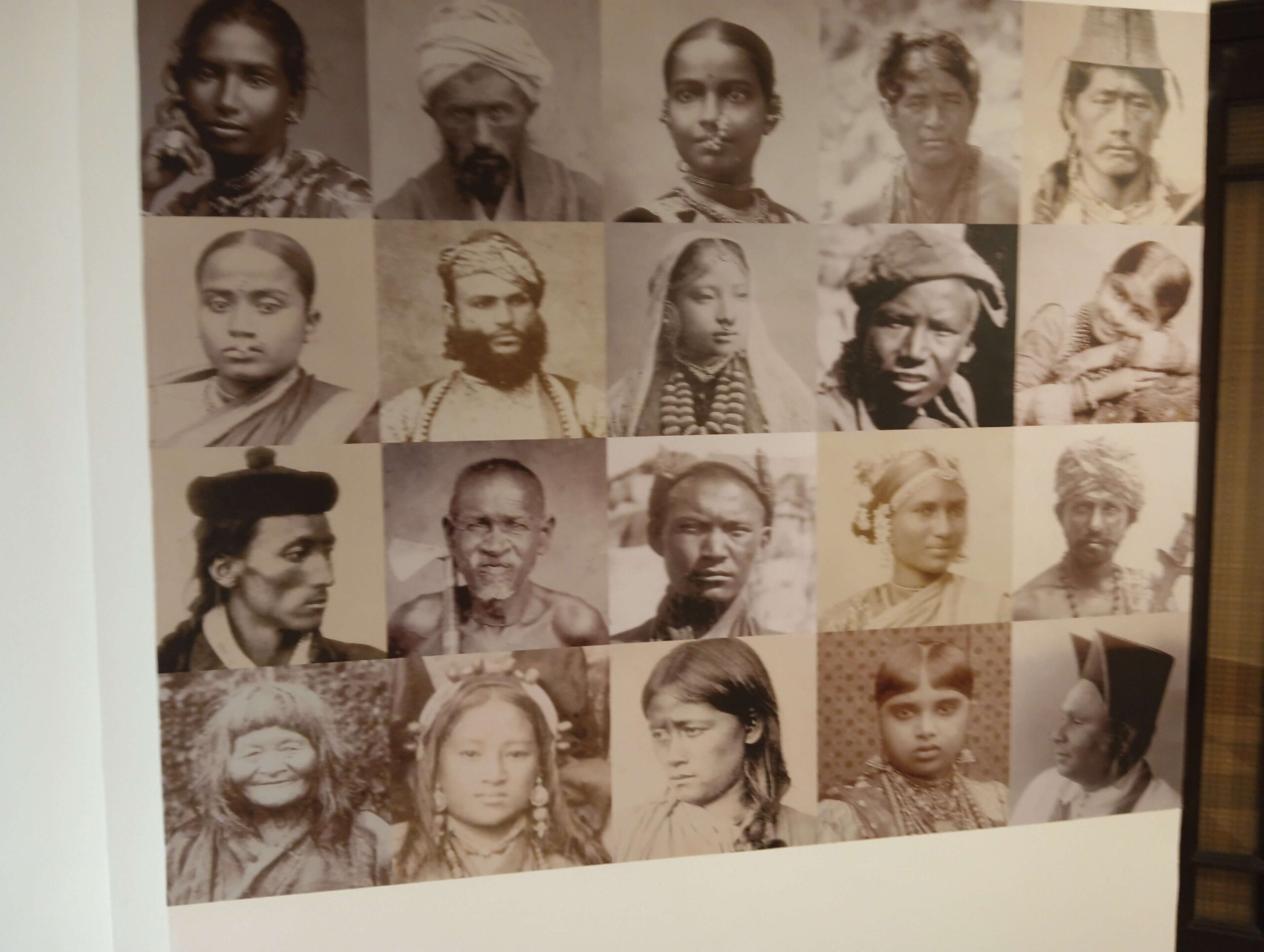
The photographs on display were nothing short of a panorama! There were gelatin and silver prints, cabinet cards, and postcards that spanned an extraordinary geographic and community range. The images encompass tribes, ‘races’, and trades, viz., the Lepchas and Bhutias of the Northeast and the Afridis of Khyber Pass in the Northwest, not forgetting the Todas inhabiting the picturesque Nilgiris in the South.
That’s not all. Numerous well-educated, affluent Parsis are depicted mingling with corpulent, wealthy Gujarati merchant families; beggars clad in rags; nautch (dancing) girls, famous as well as not-so-famous; coolies; carters; gunmen; labourers; barbers; and snake charmers muster strong in the landscape.
Since the ‘Sepia’-tinted exhibits – dating back more than a century – are still vibrant and attractive, one can easily conjecture that the master cameraman had evidently utilised the best technology available in that bygone era. In my heart of hearts, I paid a muted tribute to these.
That these Pukka sahibs (there were Indians in the fraternity, though) had in-depth insight and knowledge about folk culture is amply evident. The list of glitterati includes field photographers, namely, Benjamin Simpson, James Waterhouse, William Willoughby Hooper, and John Burke.
In addition, noted eminent photographers such as Samuel Bourne, Charles Shepherd, Darogha Abbas Ali, Lala Deen Dayal, GR Lambert and Co., Edward Taurines, and Hurrychand Chintamon – renowned for their specialised albumen and silver-gelatin prints – rub shoulders with those mentioned earlier.
There were two series which particularly caught my attention. Both focused on individuals rather than groups: headgear, caps, attire, jewellery and accessories; the facial expressions, gaze, wrinkles, and signs of struggle were moving indeed.
In a personal vein, the exhibition opened up new vistas of life before my eyes. Though I have travelled extensively across our motherland since childhood, and the diversity—limitless like the stars in the sky—left me amazed.
All said and done, the exhibition upheld how early ethnographic photography in India not only documented the country’s diversity but also aptly highlighted the socio-economic and ethnic groups.
Photos sourced by the columnist

Ruchira Adhikari Ghosh brings a liberal, wide-ranging outlook shaped by extensive travel across India and abroad. Educated at Holy Child School, New Delhi, Sacred Heart Convent, Ludhiana, and Panjab University, Chandigarh, she holds a Master’s in English Literature and a postgraduate diploma in Journalism and Mass Communication. With three decades in media, she writes on travel, books, music, performing arts, women’s issues, and especially food, drawing inspiration from rich life experiences. She is our Features Editor.

 By
By
 By
By