
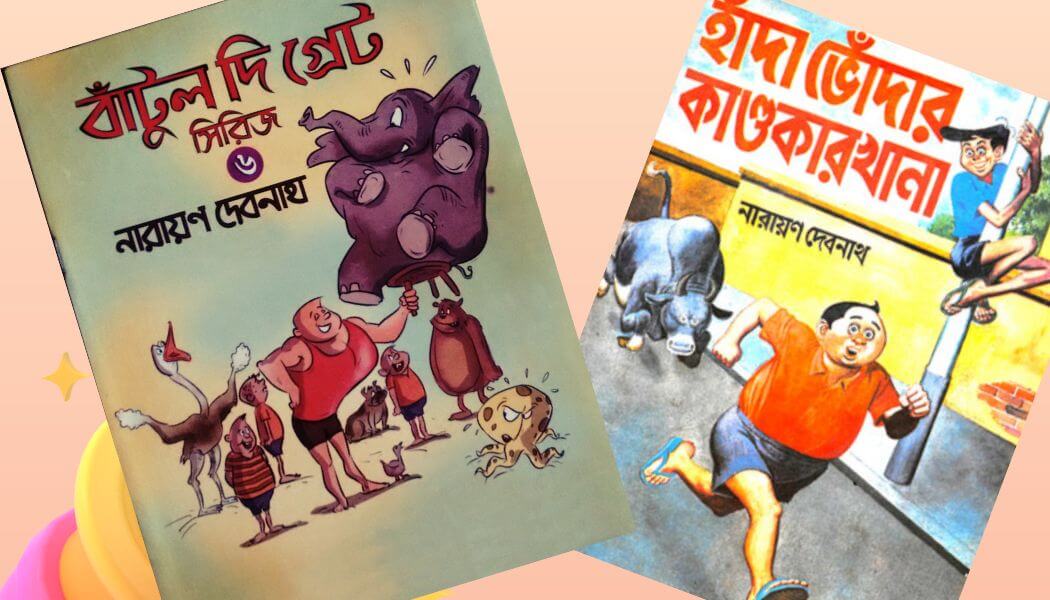
Mowmita reminisces on DifferentTruths.com about the enduring magic of Bengali comics, where ink-and-paper characters defined a golden, innocent childhood.
AI Summary
- Ink-and-Paper Friends: Iconic characters like Batul the Great and Nonte-Phonte provided companionship and laughter, transcending mere stories to become lifelong emotional anchors.
- Sensory Nostalgia: Childhood memories are intertwined with the scent of gondhoraj lebu, winter sun on rooftops, and the ritual of reading Shuktara magazines.
- Vanishing Magic: In a digital age, the author longs for the authentic, tactile joy of physical comics that modern screens fail to replicate.
Keywords: Bengali comics, Shuktara, Nonte-Phonte, Handa-Bhonda, childhood nostalgia, Batul the Great, Different Truths, Bengali literature, pujo sonkhya, cultural heritage.
Handa-Bhonda, Nonte-Phonte, Shuktara, and Gopal Bhanr—these are where childhood lived and where life still longs to return.
Some childhood companions never leave us. As we grow older and move away from the places that shaped us, they stay quietly in our hearts, waiting to return. For me, that companion is the world of Bengali comics—the friends made of ink and paper who filled my afternoons with laughter, mischief, and imagination. Now, far from Bengal, I find myself longing for those pages, those characters, and those golden days that seem so close but out of reach.
My childhood started with the lively world of Handa-Bhonda, the duo who always made me laugh. Their silly fights, pranks, and innocence reminded me of my own childhood games. They were more than comic characters; they felt like friends, showing the mischief we all had. Then came Nonte-Phonte, whose boarding school adventures felt so real that we often pictured ourselves in their place—with strict teachers, clever tricks, and a constant hunger for food. It all felt close to our own lives as children.
Then there was Batul the Great, a superhero like no other. He didn’t wear fancy costumes or use high-tech gadgets. He was simple, strong, and always funny—the kind of hero we could imagine living nearby. His wild strength and funny adventures made him unforgettable. And Shuktara, the magazine that brought these stories together, felt like a festival every time it arrived. The smell of new pages, the thrill of new stories, and the joy of finding new adventures became a childhood ritual.
Comics were more than just characters. They were about the atmosphere and the rituals around them. I remember winter afternoons with my mother sitting in the sun on the rooftop, knitting sweaters after a Sunday meal of mansher jhol bhaat (mutton curry and rice). The scent of gondhoraj lebu stayed on her fingers as the sunlight warmed her. Next to her, we lay with our comics, lost in Tenida’s world. His loud voice, wild stories, and group of friends felt as real as the oranges we ate, the sweaters we wore, and the laughter that filled the rooftop.
Those were golden days and golden memories. Happiness was simple then, and joy came from paper and ink. Friendship meant sharing laughter over a comic strip. We didn’t need screens or endless distractions. All we needed was a copy of Shuktara or Anandamela, and the world felt open to us.
Years later, I look back, searching for those friends who once filled my bookshelf. Where are they now? The world has changed, technology has taken over, and comics have faded away. Outside Bengal, it’s almost impossible to find them. Bookshops don’t have them, libraries don’t stock them, and even online, their magic is hard to find. I miss them not just for their stories, but for the innocence, laughter, and warmth they brought to my childhood.
Nostalgia is strange. You remember more than just the comics—you remember the world around them. You recall your mother knitting, the orange peel in her fingers, and siblings arguing over who would read first. You remember the winter sun on the rooftop, the taste of gondhoraj lebu, and the sound of laughter. Comics were more than stories; they were anchors to a time when life felt simpler and full of joy.
Sometimes I wonder if children today will ever know that feeling. Their heroes are on screens, their adventures are animated, and their laughter comes from digital memes. For us, it was different. Our heroes lived in ink, their adventures were hand-drawn, and our laughter was shared with friends beside us. There was something authentic about it—something that can’t be copied.
I revisit old memories with my comic friends, but I can’t touch them anymore. I can only feel them. They live in my heart, in my nostalgia, and in the stories I tell myself when life feels heavy. They remind me of who I was, where I came from, and the joy that once filled my days. Maybe that’s enough. Maybe comics were never meant to last in form but to last in spirit.
Durga Puja had its own magic, and with it came the puja sonkhya magazines that felt like treasures. I remember my mother, lost in detective tales and ghost stories from Nabakallol, reading on lazy evenings when the whole neighbourhood was dark from loadshedding. Lanterns were our only light, their flickering glow making shadows dance. In that dim light, our imaginations ran wild. We whispered about Bhrhamadatyi peeking from a neighbour’s balcony or Sakchunni watching us from the eucalyptus tree.
My mother was the reader, but those Bangla magazines and comics truly took us into imaginary worlds. They opened doors to places we had never seen, filling our minds with wonder, fear, and delight. Each story was more than just ink on paper—it was a journey, a spark that brightened our childhood evenings, mixing the real with the magical.
How could I ever forget Thakumar Jhuli or the cleverness of Gopal Bhanr? Those Bangla comics, storybooks, and pujo sonkhya were more than stories—they were companions, true friends who never let us down and brought us endless joy. They filled our childhood with laughter, wonder, and magic, adding colours to our days that no machine can match.
Life without Nonte-Phonte or Gopal Bhanr feels mechanical now, missing the mischief and warmth that once made us feel alive. I wish I could return to that golden age of Handa-Bhonda and Nonte-Phonte, when every page opened a door to imagination, and every character felt like a friend with a secret. We need their magic again, because without it, life loses its sparkle, and the child inside us waits, longing for the laughter of those old friends.
Picture design by Anumita Roy

Mowmita Sur is an educationist, author, poet, and content writer. She has received many accolades for her writings at both the national and international levels. She was awarded as one of the best 50 poets of India. Many of her published book gets effusive praise and good reviews. Her books are captivating, incredibly well-researched and evoke strong emotions. She writes witty fiction, non-fiction, horror and mysteries. Her characters are clever and fearless like her.

 By
By