
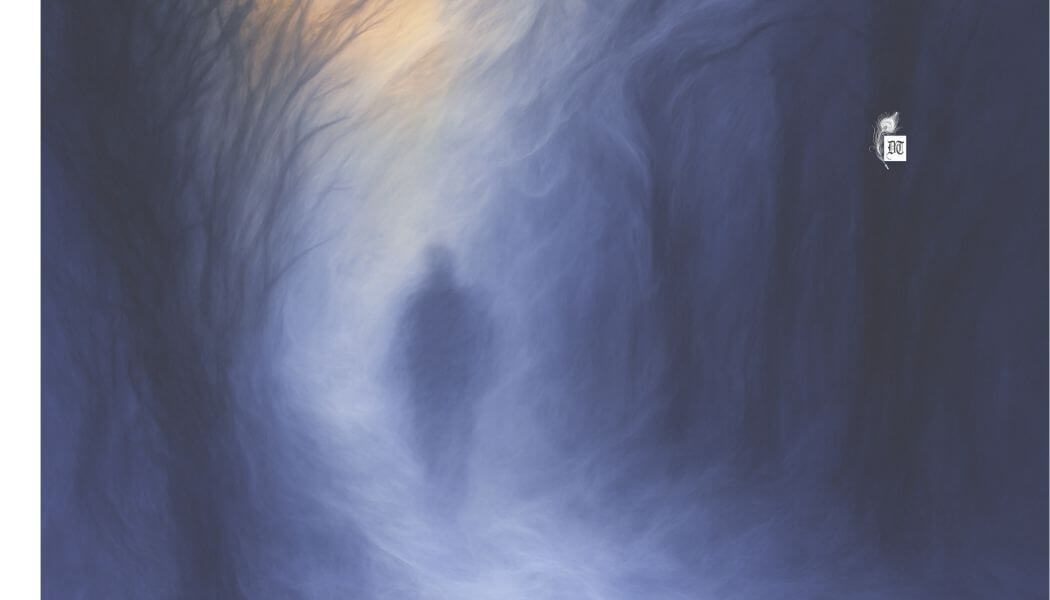
Vandana’s short story, in DifferentTruths.com—In a haze of ancestral scents, Gitanjali’s door creaks open to her long-lost brother. What secrets does his fleeting visit unearth, and why must he vanish before dawn?
AI Summary
- Atmospheric tale of sibling reunion steeped in ancestral scents and unspoken grief, evoking a crumbling family legacy.
- Gitanjali confronts isolation and neighbourly scorn after a fleeting, emotionally charged visit from her long-lost brother.
- Explores themes of fractured bonds, hidden wounds, and resilient pride amid rural India’s twilight mysteries.
The air within the house was a stagnant tapestry, woven from the cloyingly sweet scent of half-baked rotis and the acrid, carbonised sting of charred onions. This domestic haze drifted toward the neighbour’s fence, recoiling from their piles of unwashed porcelain only to settle back into the house’s deep-set fissures. These were ancestral scents; they would evaporate the moment a maid crossed the threshold, retreating into the dark alcoves of the subconscious to lie dormant for decades until a kindred spark summoned them back to life.
At the stroke of six, the train exhaled him onto the platform like a spent breath. He navigated the town’s arterial paths through a bruising, violet twilight, his shadow lengthening against the dust as he sought his brother at her in-law’s house. When he finally reached the weathered wood, his knock was not a command but a bruised whisper—the sound of a man defeated by his own arrival.
Startled by a cadence that did not belong to the metronome of her routine, Gitanjali called out, her voice thin with brittle trepidation. “Who is it at this hour? The master is away; return when the sun has reclaimed the road.”
From the porch’s gathering gloom came a voice, heavy and sodden with an ancient grief: “Gita, it is I. Unbar the door.”
Her mind buckled. Was her brother a ghost or a cruel delusion of the wind? When the bolt finally slid back with a metallic groan, she let out a cry more primal than human. “Brother! You? Without a herald?” The questions spilt from her in a frantic, disjointed torrent. She wept then—not with the practised restraint of an adult, but with the inconsolable wail of a child, a river of salt carrying the silt of every wound she had gathered since girlhood.
They sat together like two pillars of a crumbling temple. He seemed crushed under an invisible gravity, his resolve frequently splintering into quiet, jagged sobs. Their sorrow was a slow, rhythmic drip that lasted through the night and remained stirred into the morning’s tea—a bitter sediment they both chose to swallow. They spoke of the ancestral home, now a husk; the brittle, parchment age of their parents; and the fractured lives of siblings whose names felt like echoes in a canyon.
While they spoke, Gitanjali worked with feral intensity. She peeled and chopped onions, her knife striking the board with a rhythmic violence as if she could dice away the bitterness of her station. Whenever the conversation hit a wall of silence, her brother would grasp for a new, hollow topic, but she invariably circled back to her grievances—the vital truths still caught like fishbones in her throat.
After the meal, the water splashed loudly in the quiet house as her brother washed his hands, the sound unnaturally sharp. “One last tea,” he murmured, his voice dropping to a shameful whisper as he avoided the clock’s judgemental face. “And that is all. I must go. My return is already a matter of record.”
Panic flared in Gitanjali’s chest, hot and suffocating. “A single night? Is that the meagre span of your love? You have seen no one. The neighbours… they wear their taunts like jewellery. They whisper that I am a woman without origin, an apparition conjured from the ether. My children have no map of their bloodline, no maternal hearth to warm their hands by.”
He sat in a hollow silence, his knuckles white as bone around his teacup. All he could offer was a hollow vow: “I shall break my fast only when I reach the soil of home.”
“I will walk you to the station,” she pleaded, desperate to tether him to her world for a few moments more.
“No,” he said, the pragmatic weight of the patriarch returning to his shoulders. “The light is failing, and I know the path. Save your strength for the house.”
“Take this for the journey,” Gitanjali whispered, pressing a small, knotted cloth bag into his calloused hands. It felt heavier than mere bread; it felt as though she had packed every unspoken resentment and every scrap of leftover devotion into that small, humble bundle.
The following morning, a neighbour’s voice sliced through the humid air. “Gitanjali! Was that a phantom I saw at your gate yesterday?”
“No,” Gitanjali replied, her spine momentarily rigid, her voice blooming with a fragile, desperate pride.
“My elder brother came to call. He brought word of the estate.”
“And the rest? Your parents? Your ‘great lineage’?” The neighbour’s sneer was a tangible weight. “Did they lose the map, or merely the inclination?”
Gitanjali retreated, slamming the door against the world’s intrusion. She collapsed into a fit of sobbing
that shook the very foundations of her small, lonely house. Outside, the neighbours’ laughter lingered in the
dust—a mocking wake left behind by the train that had already carried her history away.
Picture design by Anumita Roy

Delhi-based author and researcher Vandana Garg holds a doctorate with distinction in linguistics from the Department of English Language & Cultural Studies. Her key 2024 book, Harold Pinter: A Study of Cultural Memory (Jewish Holocaust and Genocide), captures her major research. She has published the Hindi short story collection Refugiyon ki Ladki, delving into the 1947 Partition refugees’ struggles and aftermath. Her debut psychological thriller, Twilight Zone, launches in fall 2025.

 By
By
 By
By
 By
By
 By
By