
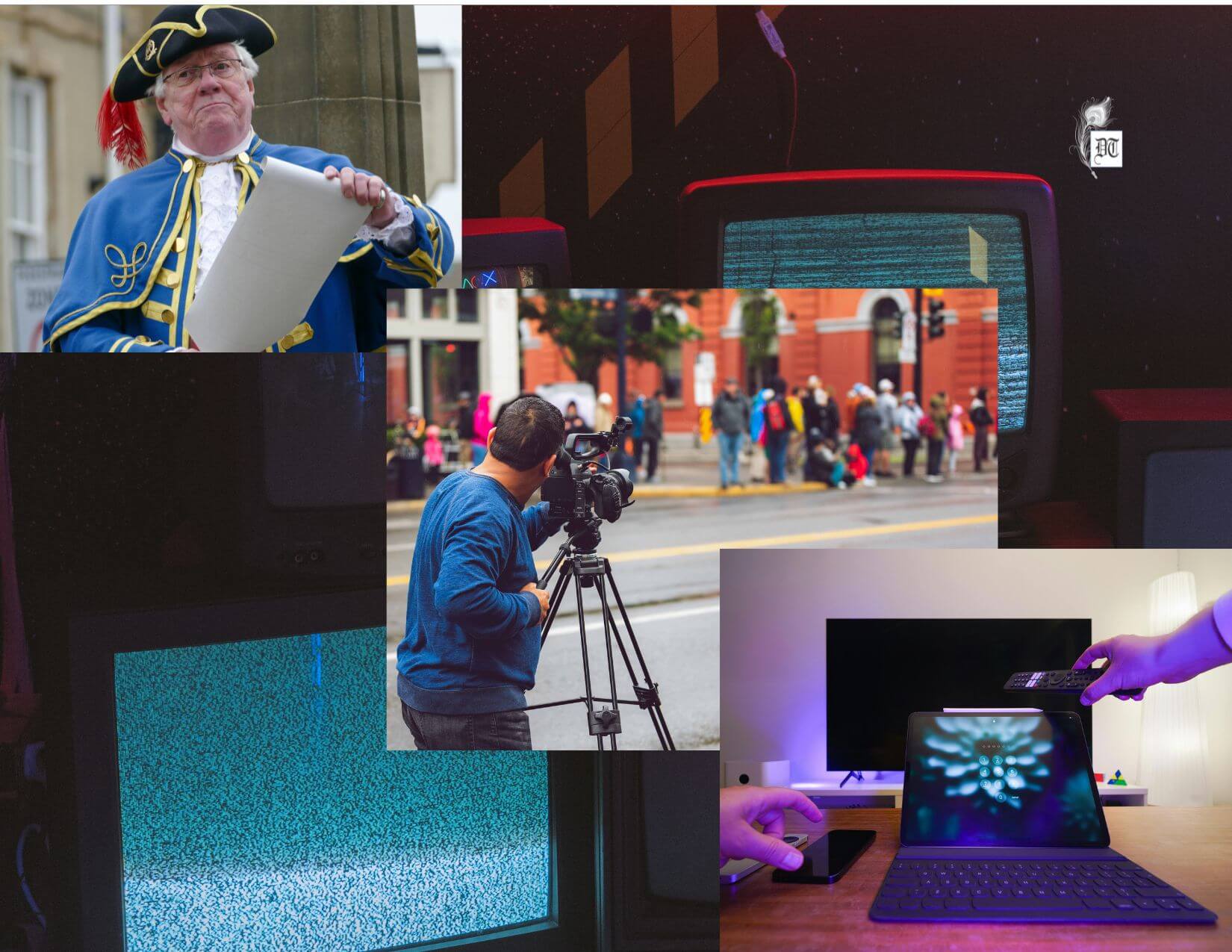

Sayantani at DifferentTruths.com explores power’s evolution: from silk-clad Maharajas’ proclamations to media magnets wielding scalable influence via #MeToo, TV, and algorithms.
AI Summary
- Power shifted from personal kings’ courts, amplified by poets and bells, to scalable media empires via TV channels exploding from 50 to 400.
- #MeToo exemplifies modern “media lords”: Tarana Burke’s empathy movement went viral, reshaping global politics, policy, and conversations on harassment.
- Future media thrives on trust, not bandwidth—breaking monopolies through subscriptions, credibility, and audience voices, ruling attention like ancient rulers commanded bodies.
Once upon a time, when the power wore silk, it sat, cross-legged, confidently on ivory thrones, spoke in proclamations, and announced itself with trumpets; who cared for a microphone when the ‘crown’ was the medium of broadcast?
His words spread through court poets, temple bells, and swift messengers.
Today, we witness a profound shift in how power is exerted and dispersed.
While once it was the sole domain of prosperous rulers and their personal spokespeople, power now finds expression through media channels that reach millions.
The nature of influence has changed as it moved from the royal courts to modern television studios. The emperor’s command was emphasised by the resounding circle of temple bells as an exemplification to reach across the villagers. Today, all the echo has shifted to the enormity and algorithm of social media.
Now, let’s jump ahead a century.
Tweets are the way to circulate messages, and the messengers now speak under studio lights, in a glamorous, chic environment.
One of the striking examples of a widely spread message is the new era that began with the viral #MeToo hashtag campaign.
The hashtag was first an empathy movement started by the activist Tarana Burke, particularly for the young women of colour who were survivors of sexual harassment. It was created to find a path to healing and be by the lone survivors.
Later, it spread like fire and fundamentally shifted the conversation about sexual harassment worldwide, reaching the highest levels of politics and leading to policy changes in various countries.
It’s an unbelievable example of how today’s media can shape people, politics, and policy, and it embodies the true power of media magnets.
This is the era of the media lord – soft power with hard consequences.
Power was Personal
In the past, power was personal.
Pre-colonial India understood power well. Kings ruled over land and people. Their kingdoms were filled with stories of virtues and victories, guarded as closely as their treasures.
Colonialism broke down old systems but did not erase them. The British changed the system of hereditary power and introduced new institutions. They used print media as the new court record, first for the empire and then for the country.
When Bal Gangadhar Tilak founded publications such as ‘Kesari’ in the late 19th century, resistance to colonial dominance began to take shape. Indigenous-owned presses emerged to challenge the normalised imperial storytelling, which served as a beacon of hope against the colonial system.
Scalable Power
At present, the power is scalable.
In the present era, television has done what the kingdoms failed to do: it has expanded authority.
When satellite TV entered the common household in the 90s, there was no need to rule a province; ruling the perceptions of millions of living rooms was quite enough.
According to UNESCO-backed media research and early-2000s research, multinational conglomerates largely controlled media output. India followed the same arc, but only the more boisterous version.
According to the Ministry of Information and Broadcasting, the number of television news channels grew from approximately 50 to 400. Quantity increased, and control became potent.
As the emperors needed soldiers, the media needed distributors to reign over the territory.
Royal Announcements to Prime-Time Showdowns
It was considered sacred whatever the Maharaja announced in his courtroom; the media maharajas’ questions too remain unquestioned most of the time.
The narrative is just everywhere.
Many reputable surveys show that trust in journalism is declining. People are not less informed; they are differently informed by heavily opinionated news coverage.
Back to Square One
Are we again back to square one?
We cannot say that nothing has changed. Globally, people’s mindsets have changed extremely fast, and audiences today can speak back, unlike in yesterday’s kingdom courts:
· Subscription-based media preference is a worldwide trend now.
· People have broken the media houses’ and their leaders’ monopoly.
· Power-based journalism is still there, but credibility makes the loudest echo.
Maharajas ruled the human bodies, but today’s media rules human attention. The authority who once wore silk now embraced graphics.
It’s like the same powerful command in a different costume.
The Maharajas were ruled by their birthright, and the bandwidth rules the media. Yet the next global era will be ruled by hope and trust.
And it is inconvenient to buy trust because it comes with courage, consistency and a silent wave.
Picture design by Anumita Roy

Sayantani Mukhopadhyay is a writer with a bold passion for journalism and empowerment. She holds a background in English Literature, Human Resource Management, and Mass Communication and Journalism. Her work blends critical inquiry with people-focused insights, centring on sustainability, social issues, and conscious living. Through authentic and research-driven storytelling, she strives to amplify voices, challenge norms, and inspire collective awareness and action.



 By
By
 By
By

 By
By