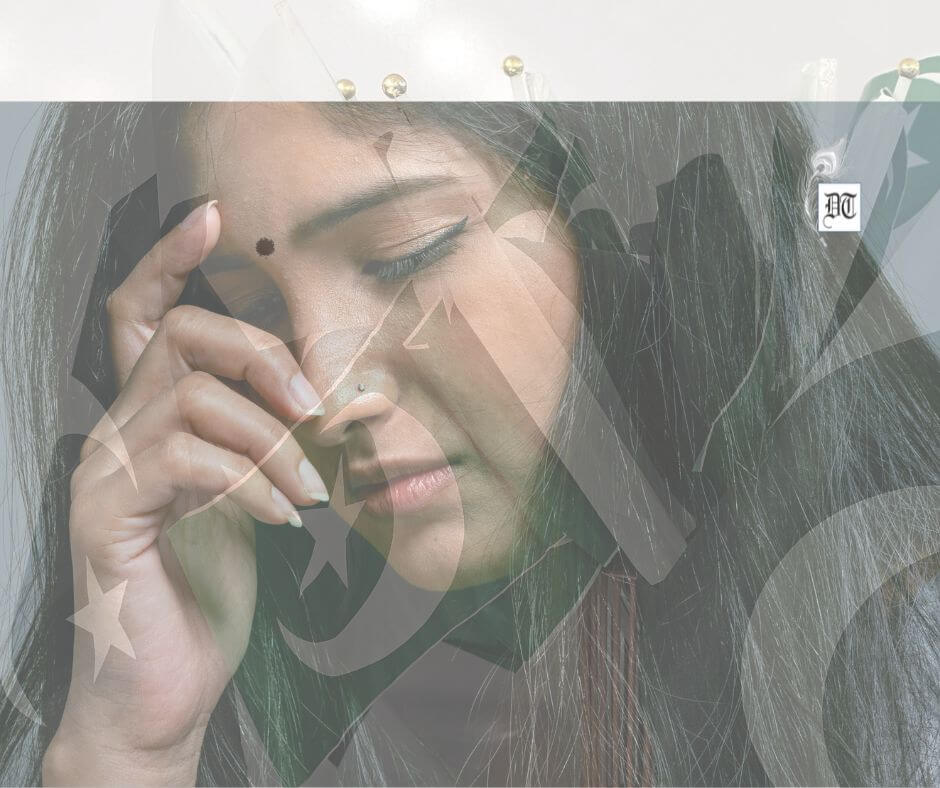
In an exclusive expose, Dr Ritu unveils the shocking plight of Hindu women in Pakistan on DifferentTruths.com—from Partition trauma to forced conversions in 2025.
AI Summary:
- Explores Hindu women’s vulnerability in Pakistan via a decade-wise analysis of Partition violence, legal gaps, and forced conversions.
- Integrates feminist theory, human rights data, and literature like Train to Pakistan to reveal systemic patriarchal-religious oppression.
- Argues for urgent reforms to protect minority women’s precarious citizenship.
Abstract
The socio-historical condition of Hindu women in Pakistan reflects a layered continuum of gendered vulnerability shaped by Partition, religious majoritarianism, and entrenched patriarchy. From pre-Partition cultural coexistence to post-1947 marginalisation, and from constitutional guarantees to contemporary crises of forced conversion and coerced marriage, Hindu women occupy a structurally precarious position within Pakistani society.
This paper employs a qualitative, decade-wise sociological analysis integrating historical records, human rights documentation, feminist theory, and literary representations to examine the evolving cultural status, legal positioning, and gendered victimisation of Hindu women in Pakistan from 1947 to 2025. It situates forced conversion and forced Nikah not as isolated crimes but as systemic practices enabled by legal ambiguities, feudal power structures, and judicial complicity.
Drawing upon feminist sociological frameworks, postcolonial gender theory, and intersectional analysis, the study argues that Hindu women’s bodies function as symbolic battlegrounds where religious dominance, patriarchal authority, and political silence intersect. Literary texts such as Train to Pakistan and Cracking India are treated as cultural archives that illuminate embodied trauma and affective dimensions of violence often absent from statistical discourse.
The paper concludes that the predicament of Hindu women in Pakistan cannot be understood through singular lenses of gender or minority rights alone. Rather, it represents a convergence of structural exclusions that renders constitutional citizenship largely symbolic. The study contributes to South Asian gender studies by foregrounding the experiences of minority women within debates on nationalism, religion, and human rights.
Introduction: Gender, Nation, and Embodied Citizenship
Political histories tend to privilege borders, treaties, and institutions; sociological inquiry, however, reveals how these abstractions are inscribed upon living bodies. The Partition of India in 1947, often narrated as a geopolitical rupture or an administrative failure of colonial withdrawal, must also be understood as a profoundly gendered transformation. For Hindu women who remained in Pakistan, Partition inaugurated not merely displacement but a prolonged condition of vulnerability—social, legal, and corporeal.
Hindu women in Pakistan occupy an intersectional position defined by gender, religion, and class. As women, they are subject to patriarchal norms; as Hindus, they belong to a religious minority within an Islamic republic; and as members of largely lower-caste and economically marginalised communities, they remain structurally disadvantaged. Their marginalisation is neither episodic nor accidental; it is reproduced through law, custom, institutional apathy, and social silence.
This paper examines the condition of Hindu women in Pakistan from pre-Partition coexistence to contemporary crises of forced conversion and coerced marriage. By adopting a decade-wise analytical framework and integrating sociological theory with literary representation, the study argues that Hindu women’s bodies have become sites where religious majoritarianism and patriarchal control converge, rendering citizenship precarious and dignity conditional.
Methodology and Theoretical Framework
This study employs a qualitative, interdisciplinary methodology that combines sociological analysis, feminist theory, historical documentation, and literary criticism. Primary material is drawn from reports published by Amnesty International, Minority Rights Group International, the United States Commission on International Religious Freedom (USCIRF), and United Nations bodies. Secondary sources include feminist historiography, constitutional texts, and peer-reviewed scholarship on gender, religion, and nationalism in South Asia.
A decade-wise analytical framework is employed to trace shifts in the cultural, legal, and social positioning of Hindu women in Pakistan from the pre-1947 period to 2025. Feminist concepts such as Kandiyoti’s (1988) notion of patriarchal bargaining, intersectionality, and postcolonial theories of gendered nationalism inform the analysis.
Literary texts are treated not as illustrative anecdotes but as cultural-sociological archives, offering insight into affective and embodied dimensions of violence often obscured in legal or statistical discourse. This methodological triangulation enables a holistic examination of structural oppression as both lived experience and institutional practice.
Pre-Partition Gender Relations and Cultural Pluralism
Before 1947, regions that now form Pakistan—particularly Sindh and Punjab—were characterised by cultural syncretism and negotiated coexistence. Hindu women lived within patriarchal social systems shaped by caste, kinship, and domesticity; yet religious identity did not render their existence inherently unsafe.
In Sindh, shared linguistic traditions, festivals, and everyday interactions fostered a pluralistic social order. While women across communities faced restrictions on mobility and autonomy, these constraints were largely cultural rather than communal. As Talbot and Singh (2009) observe, pre-Partition society allowed “negotiated identities rather than persecuted ones.”
Crucially, women’s bodies were not yet politicised as symbols of communal honour. Patriarchy regulated women, but religion had not yet weaponised femininity. This distinction is essential for understanding how Partition transformed gender relations from domestic governance to political vulnerability.
Partition and Gendered Violence
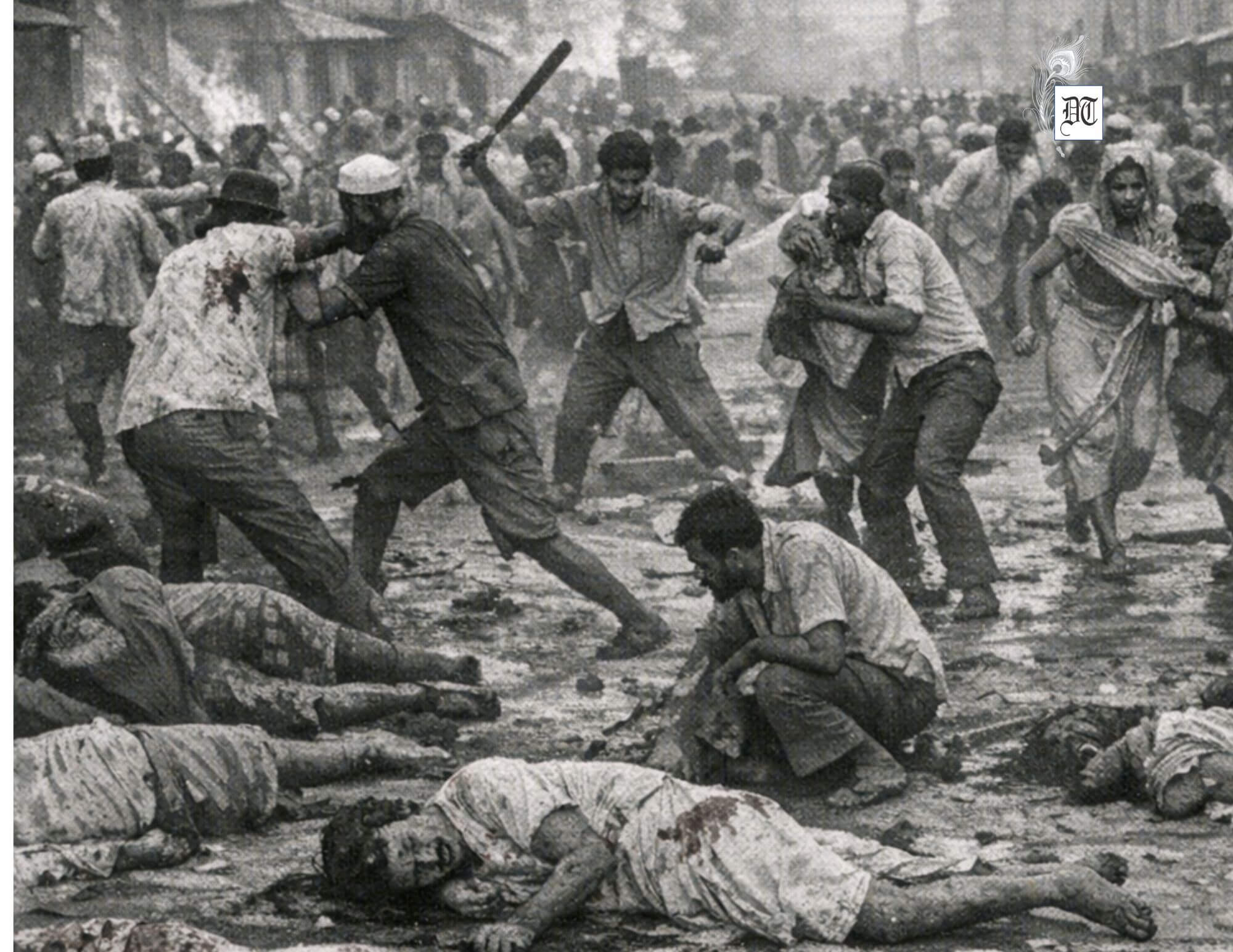
Partition violently disrupted this equilibrium. As borders hardened, women’s bodies became symbolic sites upon which communal revenge was enacted. Hindu women in Pakistan faced abduction, rape, forced conversion, and coerced marriage—forms of violence that feminist historians have conceptualised as sexualised nationalism (Butalia, 1998).
These acts were not merely criminal but ideological. Women were targeted not for individual transgressions but for their communal identity. The violation of women became a means of humiliating the rival community and asserting masculine dominance.
Literary representations offer critical insight into this phenomenon. Khushwant Singh’s Train to Pakistan portrays women as silent casualties of male violence, their suffering subsumed under nationalist rhetoric. Equally compelling is Bapsi Sidhwa’s observation in Cracking India: “The crack in the land ran through people’s hearts.”
For women, that crack ran through the body itself. Such narratives, though fictional, mirror documented histories of mass abductions and the systematic silencing of women’s agency during post-Partition recovery processes.
Minority Citizenship in Early Pakistan (1947–1960s)
The immediate post-Partition decades witnessed a steady erosion of Hindu women’s social security. Large-scale migration left behind fragmented communities, weakened kinship networks, and economic precarity. Women—particularly widows and unmarried girls—faced heightened exposure to exploitation.
Although Pakistan’s early constitutional framework promised religious freedom, the declaration of Islam as the state religion gradually redefined citizenship. Minorities were tolerated but not fully integrated. For Hindu women, this translated into shrinking access to education, employment, and legal recourse.
They existed in a liminal space—present yet peripheral, visible yet voiceless. Citizenship remained nominal, contingent upon silence and conformity rather than rights and protection.
Islamisation and Institutional Marginalisation (1970s–1990s)
The Islamisation policies introduced during General Zia-ul-Haq’s regime profoundly altered Pakistan’s socio-legal landscape. Law, education, and public morality increasingly reflected conservative interpretations of Islam, narrowing civic space for religious minorities.
Hindu women experienced marginalisation through a triple bind:
· Patriarchal subordination of women
· Religious marginalisation as Hindus
· Economic vulnerability is largely in lower-caste communities
Blasphemy laws and weak minority protections fostered a climate of fear. Even unsubstantiated accusations could result in social ostracism or violence. Silence became a survival strategy. Kandiyoti’s (1988) concept of patriarchal bargaining is instructive here, though Hindu women had limited capacity to negotiate within a system structurally stacked against them.
Forced Conversion and Forced Marriage in the 21st Century
Structural Patterns of Abuse: From the early 2000s onwards, forced conversion and forced Nikah emerged as the most pervasive violations confronting Hindu women, particularly in Sindh. Recent peer-reviewed studies (Ahmed, 2021; Riaz & Pasha, 2023) identify forced conversion as a gendered practice of religious nationalism, disproportionately targeting minority girls.
Human rights organisations estimate that approximately 1,000 minority girls are forcibly converted annually, most of them Hindu (Minority Rights Group International, 2024). These cases often follow a predictable pattern: abduction, sexual violence, coerced religious declaration, and judicial validation.
Legal ambiguities surrounding the age of consent, the primacy of religious testimony, and the absence of minority-sensitive jurisprudence enable perpetrators while rendering families powerless. Courts frequently accept verbal declarations of consent without psychological evaluation or independent verification (UNHRC, 2024).
Illustrative Contemporary Cases: Cases from Matari, Badin, and Sanghar districts in 2025 reveal how courts continue to prioritise religious conversion over age verification or parental testimony. Such judicial practices effectively legitimise coercion under the guise of consent (Amnesty International, 2022).
These incidents are not aberrations; they are manifestations of structural violence, sustained by feudal patronage, clerical authority, and institutional indifference.
Forced Marriage as a Mechanism of Control
In this context, marriage functions less as companionship and more as conquest. Feminist sociologists argue that forced marriage operates as a mechanism of social discipline, reinforcing patriarchal and religious hierarchies (Kandiyoti, 1988; Shaheed, 2022).
For Hindu women, forced marriage often entails erasure of faith, family, and identity. Conversion becomes territorial rather than spiritual, marking the female body as a site of domination and symbolic assimilation.
Literary Representation and Cultural Memory
Literary texts preserve dimensions of suffering that law and statistics cannot. Bapsi Sidhwa’s Cracking India portrays women as “fragile borders,” their bodies crossed and claimed during communal conflict. Such representations function as cultural memory, revealing the continuity of gendered violence beyond discrete historical moments.
By treating literature as sociological evidence, this study underscores how narrative captures affective truths—fear, silence, dispossession—that remain largely absent from formal documentation.
Decade-Wise Overview
Table: Decade-wise Status of Hindu Women in Pakistan
Period Status
Pre-1947 Patriarchal but culturally secure
1947–1960s Displacement and enforced silence
1970s–1990s Legal and institutional marginalisation
2000s Increased documentation of abuse
2010s–2025 Systematic forced conversions
Scholarly Contribution and Implications
This study contributes to South Asian gender studies by foregrounding Hindu women in Pakistan as a distinct analytical category often subsumed within generalised minority discourse. By integrating feminist sociology with literary analysis, it demonstrates how gendered violence operates simultaneously through legal systems, cultural norms, and narrative silences. It challenges the temporal containment of Partition trauma by tracing its afterlives into contemporary institutional practices.
Limitations of the Study
This study relies primarily on secondary data, human rights documentation, and reported cases, which may underrepresent unreported incidents due to fear, stigma, and institutional barriers. The absence of large-scale ethnographic fieldwork limits access to first-hand testimonies. Future research may incorporate oral histories and community-based studies to further deepen understanding.
Conclusion
The predicament of Hindu women in Pakistan cannot be understood through singular frameworks of gender or minority rights. It is the convergence of patriarchy, religious majoritarianism, and state ambivalence that renders their citizenship precarious. Legal reform without institutional accountability remains insufficient. Until forced conversions are criminalised, consent is legally safeguarded, and minority women are protected beyond constitutional rhetoric, Hindu women will continue to inhabit a space of structural vulnerability.
References
· Ahmed, S. (2021). Gendered nationalism and religious conversion in Pakistan. Journal of South Asian Studies, 44(3), 421–437.
· Amnesty International. (2022). Pakistan: Forced conversions and marriages of minority women.
· Butalia, U. (1998). The other side of silence. Duke University Press.
· Constitution of Pakistan. (1973). Government of Pakistan.
· Kandiyoti, D. (1988). Bargaining with patriarchy. Gender & Society, 2(3), 274–290.
· Minority Rights Group International. (2024). Searching for security: Minorities in Pakistan.
· Riaz, A., & Pasha, M. K. (2023). Religious nationalism and minority women in South Asia. Third World Quarterly, 44(6), 1093–1110.
· Shaheed, F. (2022). Gender, religion and the state in Pakistan. Feminist Review, 130(1), 45–61.
· Sidhwa, B. (1988). Cracking India. Penguin Books.
· Singh, K. (1956). Train to Pakistan. Chatto & Windus.
· Talbot, I., & Singh, G. (2009). The Partition of India. Cambridge University Press.
· USCIRF. (2023). Annual report on Pakistan.
· United Nations Human Rights Council. (2024). Joint statement on forced religious conversions in Pakistan.
Picture design by Anumita Roy

Dr Ritu Kamra Kumar is an acclaimed academic, poet, and writer with over 400 publications in national media. A retired Principal and English Professor, she has authored eight books and 70+ research papers. Recognised as an “Empowered Woman” by The Hindustan Times, she is an Indian Woman Achiever Award recipient. A sought-after speaker and workshop leader, her extensive contributions to literature and education earned her prestigious honours from the District Administration and Delhi Book Fair.
 By
By
 By
By
 By
By