
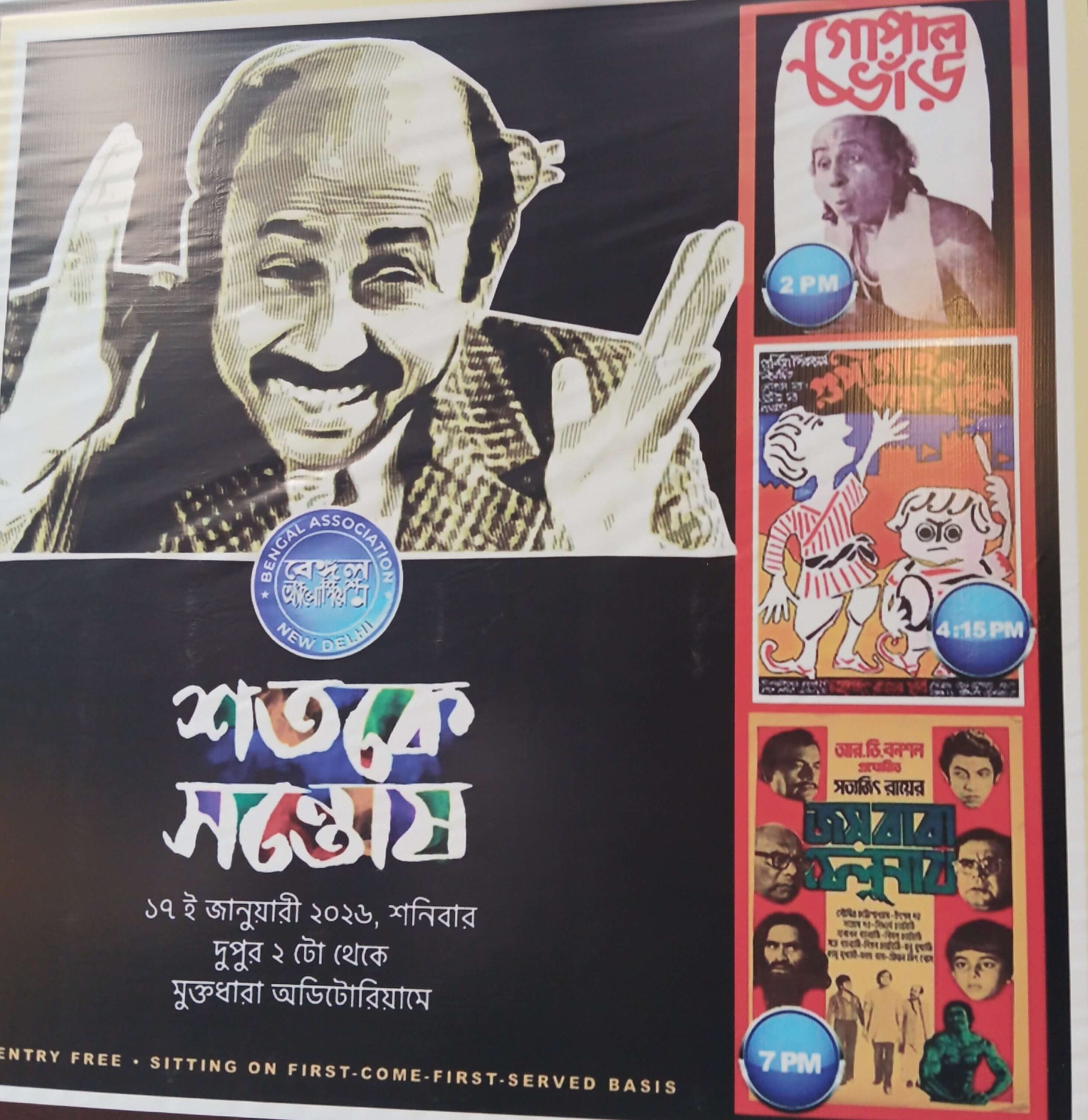

Ruchira celebrates the legendary Santosh Dutta’s centenary: a tribute to the iconic actor who immortalised Jatayu and defined Tollywood’s golden comedy, for Different Truths.
Had he lived, the veteran comedian of Tollywood, Santosh Dutta, would have turned a century in December, which has just passed.
His appearance was unmistakable: a bald pate, broad forehead, big nose, a caterpillar moustache (in most cases), and pearly teeth exposed in a perpetual grin; his wisecracks blended seamlessly with his personality.
Like me, kids of the 60s and 70s were entertained by his semi-comical dual roles as the king of Shundi and Halla in the groundbreaking film Gupi Gayen Bagha Bayen (GGBB).
A few years later, in the 1973 blockbuster Marjina Abdallah, based on the iconic Alibaba and the Forty Thieves from The Arabian Nights, Dutta portrayed the honest and good-natured Alibaba.
Then, during the early 1980s in Hirak Rajar Deshe, a sequel to GGBB, he is portrayed as an eccentric scientist with a grandiose name and title – Gobeshok Gobuchondro Gyanotirtho Gyanorotno Gyanambudhi Gyanochuramoni – in addition to a small appearance as the ruler of Shundi, whose daughters are now wives of Gupi-Bagha.
In Ogo Bodhu Sundori, Uttam Kumar’s swan song and a takeoff on the Hollywood classic My Fair Lady, discerning viewers might have instantly recognised Abalakanta (played by Dutta) as the Indian avatar of Col. Pickering, a fellow linguist and close associate of Prof Henry Higgins.
However, undeniably, the best part of Dutta’s career took off under the tutelage of Satyajit Ray, who cast him as Jatayu (pen name of Lalmohan Ganguly), the genial, amiable gentleman, an author turned ardent fan turned close companion of the ace sleuth Feluda (Pradosh C. Mitra).
Throughout the Feluda flicks, namely Sonar Kella and Joybaba Felunath, we learn how he writes adventure novels prolifically, and they are widely published and read; yet they contain numerous factual errors. To give the devil his due, when Feluda points out the howlers and flaws, Jatayu graciously accepts them and promises to rectify them as soon as possible in the very next edition.
We discover how Jatayu has a low level of general knowledge. He candidly admits his poor knowledge of the English language as well. His spoken Hindi is again pathetic. Nonetheless, Jatayu smugly substitutes Bengali words, idioms and phrases to communicate with people around him.
Feluda and Topshe (Tapesh is a cousin cum assistant) are frequently shown smothering their guffaws lest the former’s pride be wounded, since they bear no grudge or ill will against him.
Though depicted as dimwitted, almost a nincompoop, Jatayu rises to the occasion many a time, using firearms, if need be, to save his companions.
At the finale of each adventure, he collects and safely pockets a weapon or life-saving device as a memento of the great adventure he has had.
Having said that, Dutta essayed significant roles in films like Tapan Sinha’s Harmonium. Likewise, in Ray’s Mahapurush, Prof Nani, a sceptical, rationalist friend of the family, successfully exposes the fraudulent godman, Birinchi Baba.
Incidentally, to celebrate the actor’s centenary, Delhi’s Bengal Association recently organised a day-long event – screening three of his conspicuous films.
All in all, it was a truly well-deserved tribute to actor Santosh Dutta, who, although never in the limelight, delivered several memorable performances that left an indelible impact on the minds of viewers.
Visual sourced by the author

Ruchira Adhikari Ghosh brings a liberal, wide-ranging outlook shaped by extensive travel across India and abroad. Educated at Holy Child School, New Delhi, Sacred Heart Convent, Ludhiana, and Panjab University, Chandigarh, she holds a Master’s in English Literature and a postgraduate diploma in Journalism and Mass Communication. With three decades in media, she writes on travel, books, music, performing arts, women’s issues, and especially food, drawing inspiration from rich life experiences. She is our Features Editor.


 By
By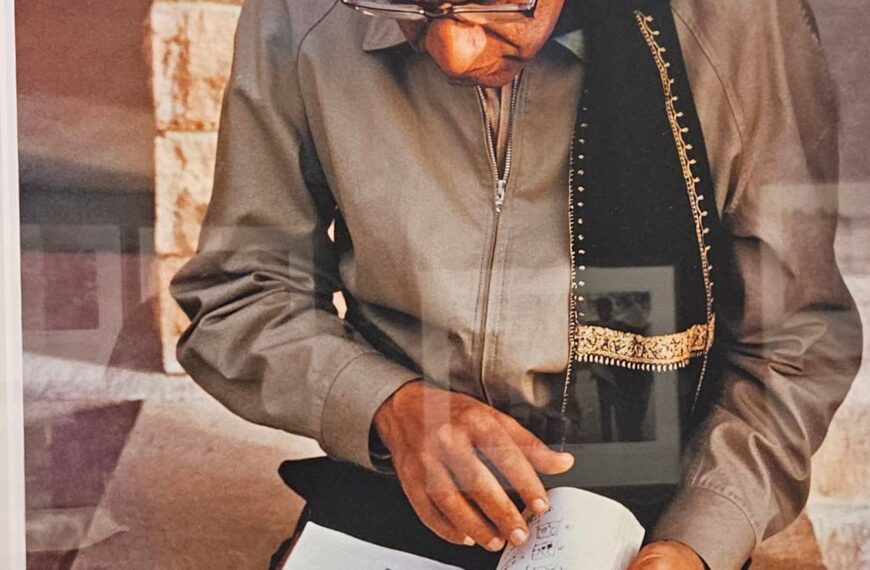
 By
By
Excellent write up, great to read about our. beloved jotayu ❤️