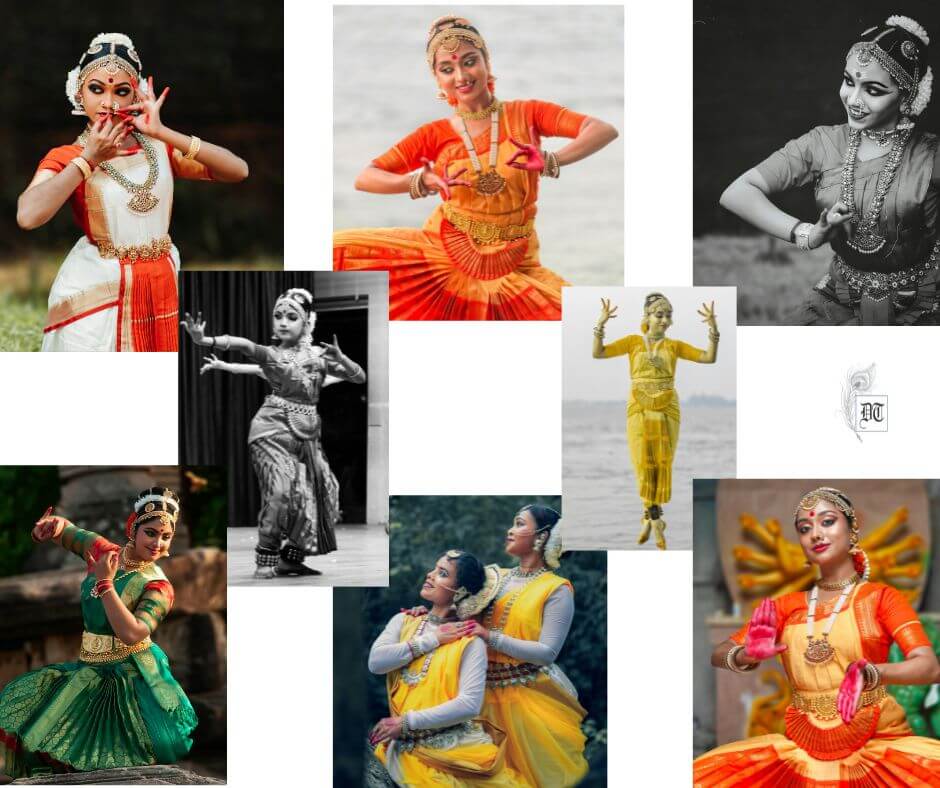
Sohini elucidates that ancient India worshipped eight scorching-hot female archetypes of raw lust and power. They never vanished—just swapped ghungroos for AirPods, exclusively for Different Truths.
Long before relationship statuses were reduced to emojis and algorithms, Indian aesthetics classified women not by virtue or virginity but by emotional intelligence. Enter the Ashtanayika—eight female archetypes codified in Sanskrit poetics, temple sculpture, miniature painting, and classical dance. These women were not passive muses; they were complex, desiring, angry, strategic, erotic, lonely, and proud. In other words, they were inconveniently real.
What’s remarkable is not that the Ashtanayikas existed, but that we have spent centuries pretending they don’t. Because if you strip away the veena, ghungroos, and moonlit forests, you’ll recognise them instantly. They didn’t disappear. They updated. They got Wi-Fi.
Let’s meet them—then and now.
Vasakasajja: The Woman Who Prepares
She bathes, adorns herself, perfumes the room, and waits. Contrary to patriarchal misreadings, the Vasakasajja is not “waiting to be chosen”. She has chosen. She prepares herself and the space for pleasure with agency and anticipation. She knows desire needs atmosphere.
Modern counterpart:
She owns silk robes, scented candles, and a playlist called ‘Foreplay’. She doesn’t dress “for him”—she dresses to feel desirable herself. Instagram might call her curated; the Natya Shastra would call her sovereign. If romance were theatre, she’d be both producer and lead.
2. Virahotkanthita: The Woman Who Waits and Worries
Her lover is late. Anxiety replaces anticipation. Every sound at the door is hope; every silence, despair. The Virahotkanthita is not dramatic—she is emotionally awake. She knows absence has texture.
Modern counterpart:
She checks WhatsApp “last seen” like it’s fate. She’s refreshed emails, reread old messages, and invented entire narratives over blue ticks. She is not needy; she is simply trapped between expectation and disappointment—a state modern dating thrives on.
3. Abhisarika: The Woman Who Goes
She defies storms, snakes, darkness, and gossip. The Abhisarika goes out to meet her lover. On her own. At night. Alone. This was so threatening to social order that she later became mythologised, sanitised, or punished.
Modern counterpart:
She travels solo, dates unapologetically, takes emotional risks, and is still judged for it. She’s asked why she’s “so bold” when all she did was want something enough to pursue it. Her courage remains misunderstood because autonomous female desire still terrifies society.
4. Vipralabdha: The Woman Who Was Stood Up
The lover promised. Didn’t show. The Vipralabdha is wounded dignity incarnate. No melodrama—just the shame of having believed. Ancient texts acknowledge this humiliation without blaming the woman for trusting.
Modern counterpart:
She was ghosted. Or breadcrumbed. Or “something came up.” She refuses to double-text after the third unanswered message. She learns the modern lesson no shastra prepared her for: silence is today’s cleanest cruelty.
5. Khandita: The Furious Woman
She knows. She doesn’t need proof; she has intuition sharpened by experience. The Khandita confronts betrayal with icy sarcasm or open rage. She is not hysterical. She is precise.
Modern counterpart:
She has screenshots. Time stamps. Mutuals who accidentally tagged him. Her anger is labelled “too much” while his betrayal is passed off as “a mistake.” The Khandita exposes the oldest gender bias: men err, women overreact.
6. Kalahantarita: The Woman After the Fight
A quarrel. Pride intervenes. Now separation festers. The Kalahantarita regrets, sulks, and rehearses speeches she’ll never give. Ego fights longing in a stalemate.
Modern counterpart:
She’s soft-blocking, unfollowing, re-following, and posting cryptic captions. She wants him to notice her absence without having to risk rejection again. She masters the fine art of emotional stalemates that modern relationships are built on.
7. Proshitapatika: The Woman in Long Separation
Her lover is away—travel, duty, exile. The Proshitapatika lives with absence stretched into time. Desire doesn’t fade; it ferments into poetry.
Modern counterpart:
She does long-distance love across time zones, professions, and ambitions. She lives between video calls and delayed replies. She learns the quiet, devastating truth: technology shortens distance but intensifies longing.
8. Svadhinapatika: The Woman in Control
Her lover is devoted to her pleasure. He waits, obeys, and desires on her terms. The Svadhinapatika is the apex of erotic autonomy—so radical that later societies quietly sidelined her.
Modern counterpart:
She is emotionally fulfilled, sexually satisfied, and unapologetically herself. She doesn’t chase; she is chosen repeatedly. Society still finds her unsettling—because nothing disturbs patriarchy more than a woman who needs no drama to validate her worth.
Why This Still Matters
The Ashtanayikas prove one inconvenient truth: ancient India understood female interiority better than many modern cultures pretending to have “progressed”. These women weren’t saints, sinners, wives, or whores. They were emotional beings with layered desires.
What changed wasn’t women. It was society’s tolerance for women who spoke loudly.
Over time, sexuality was sanitised into bhakti, anger was pathologised, and autonomy was moral-policed. The same women once celebrated in art were later rebranded as problematic. Today, they survive—but under hashtags instead of shlokas, in therapy rooms instead of temples.
The tragedy is not that the Ashtanayikas are outdated.
The tragedy is that we still haven’t caught up to them.
Eight women. One truth.
Desire evolves. Patriarchy rebrands.
And women, as always, adapt—and endure—with style.
Picture designed by Anumita Roy

Sohini Roychowdhury is a renowned Bharatanatyam dancer, choreographer, artistic director, speaker, social activist, and professor of Natyashastra. She founded Sohinimoksha World Dance & Communications in Madrid/Berlin/Kolkata/New York. A visiting professor of dance at 17 universities worldwide, she won several awards, including the “Mahatma Gandhi Pravasi Samman” by The House of Lords, the Priyadarshini Award for Outstanding Achievement in Arts, and the Governor’s Commendation for Distinguished World Artiste. She has also authored several books, including ‘Dancing with the Gods’.

 By
By
 By
By
 By
By