
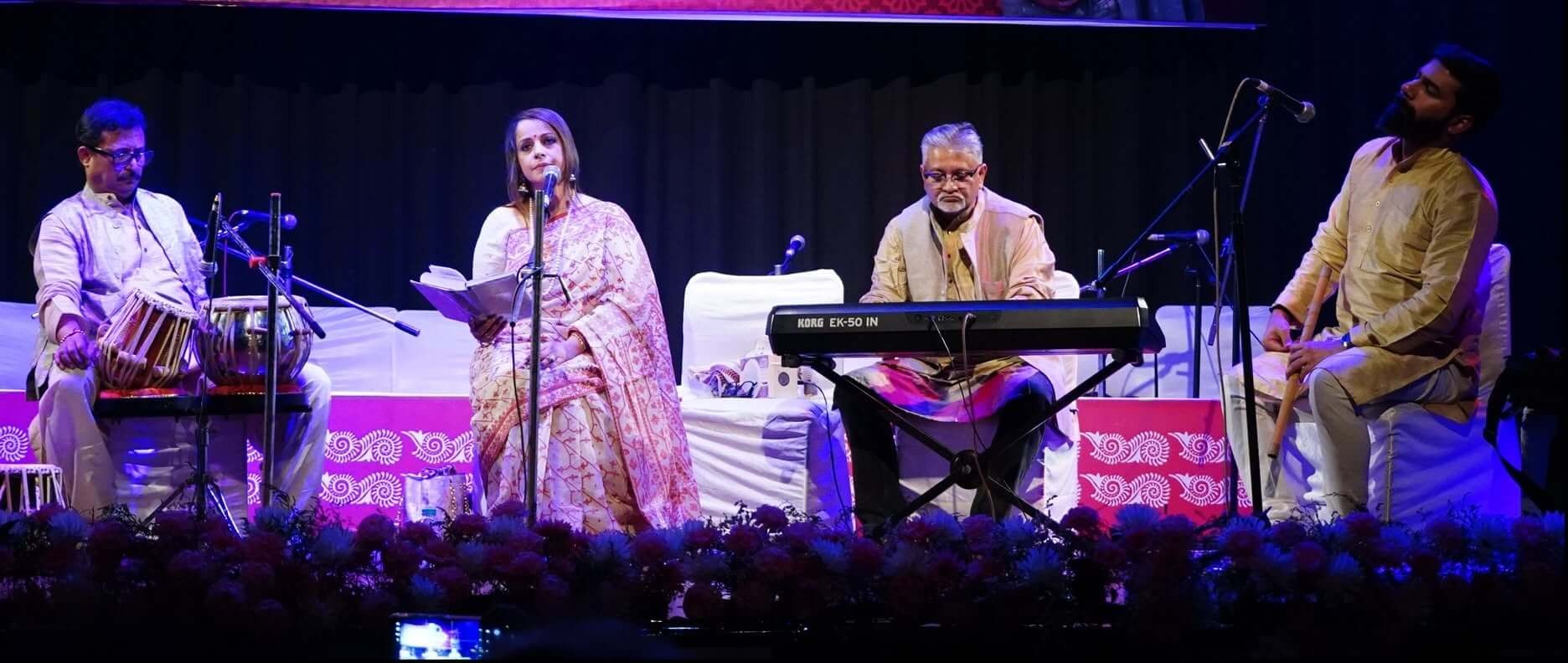

Ruchira reviews Anandadhara’s soul-stirring tribute to Rabindranath Tagore’s Gitabitan, mesmerising Delhi with timeless melodies, celebrity magic, and pure ananda, for Different Truths.
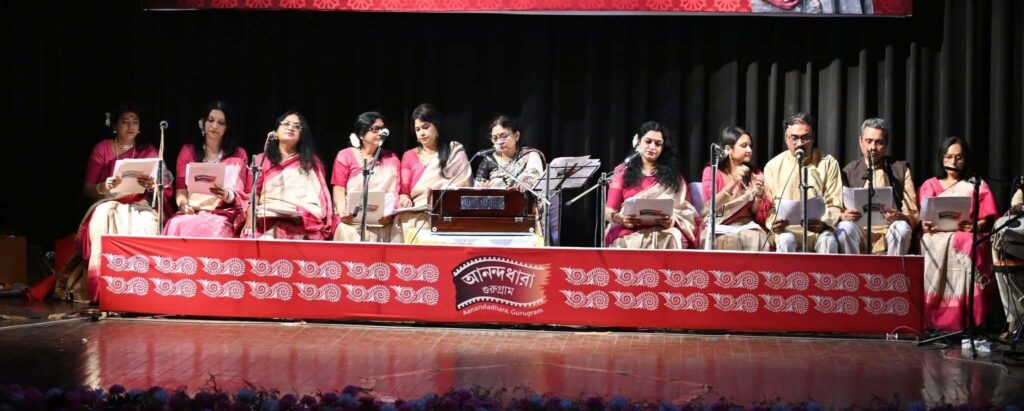
Their indomitable dedication and devotion to the Bard of Jorasanko are highly laudable. Yes, I am talking about the Gurugram-based musical group (should I call it a choir?) Anandadhara, who presented Gitabitaner Pata Theke a bouquet of Tagore’s lyrics from the iconic Gitabitan.
On a chilly November weekend evening, music enthusiasts in and around the Metropolis gathered at the usual venue, Bipin Chandra Pal Auditorium, in the Capital’s mini-Kolkata, Chittaranjan Park.
On the list was one of my favourites, ‘Jago Jago re Jago Sangeet’, which depicted how music creates a symphony between mortal humans and the divine. Another soul-stirring number was “Bohe Nirontoro Ananta Ananda Dhara,” which describes the eternal flow of pure bliss that pervades the universe. Then came songs like Tumi Hothath Hawai Veshe, Asha Dhan and the romantic, intensely passionate Barata Peyechi Monay Monay.
It’s worth noting that all aspects of the Gitabitan were meticulously touched upon. Some notable pieces being Prothom Aadi Tobo Shakti (culled from “Puja” genre), “Oyee Bhuvana Mono Mohini ” (puja cum swadesh /patriotism), Amaar Praner Poray (prem), which is the youthful Robi’s fond remembrance of his Muse – older sibling Jyotirindranath’s wife Kadambini–who took her own life, leaving the poet shell-shocked. In the Bichitro (variety) section, we had the immensely popular “Krishnakoli Aami Tare Boli.” For a discerning audience, this may serve as a striking reminder of poet Wordsworth’s “Solitary Reaper,” although set in a different part of the world.
The next portion featured a variety of lyrics related to Prakriti, which encompasses nature and the seasons. These included “Fagun Hawaye Hawaye” (spring), “Esho Shyamala Sundaro” (monsoon), and “Aaj Dhaner Khete Roudro Chhayaye,” along with “Amala Dhabala Paale Legeche,” both of which pertain to the post-monsoon or autumn season.
Next on the list was a song from the giti-nritya-natya (song dance drama combo), e.g., Jawl jawl aagun–from the play Sarojini composed by Jyotirindranath and set to music by ‘Robi’. Another remarkable presentation was the Ananda-Prakriti dialogue from the dance drama Chandalika, by means of which Tagore had lampooned the odious practice of untouchability that was rampant throughout the country in bygone centuries.
Slowly and steadily, the program transitioned to “Bhanu Singher Padabali,” which is generally viewed as a milestone in Tagore’s creative journey. Inspired by medieval poet Vidyapati’s compositions, Tagore penned these lyrics in the sonorous Maithaili-Brajabuli dialects, adding a new spark and flavour to his work. Two items in this slot included Gahana Kusuma Kunja Majhe, besides the melancholy Bhara Badara and Maha Bhadara. Finally, the audience was captivated by the spirited song “Oi Moha Manob Ashe,” which held out hope for global peace and brotherhood among Mankind! (Incidentally, this was composed when the world was being torn asunder by World War II)
Some of the songs were accompanied by budding but talented dancers who took their job seriously. Efficient elocutionist duo, Debashis and Chitrita Guha Neogi, did a laudable job–flawlessly reciting Tagore’s poems and prose excerpts. Instrumentalists Asim Das (Tabla), Pankaj Mishra (flute) and Anirudh Chowdhury (keyboard) also gave a commendable performance. Mahua Pramanik, the lead singer of Anandadhara, also thrilled the viewers with her soul-stirring solos.
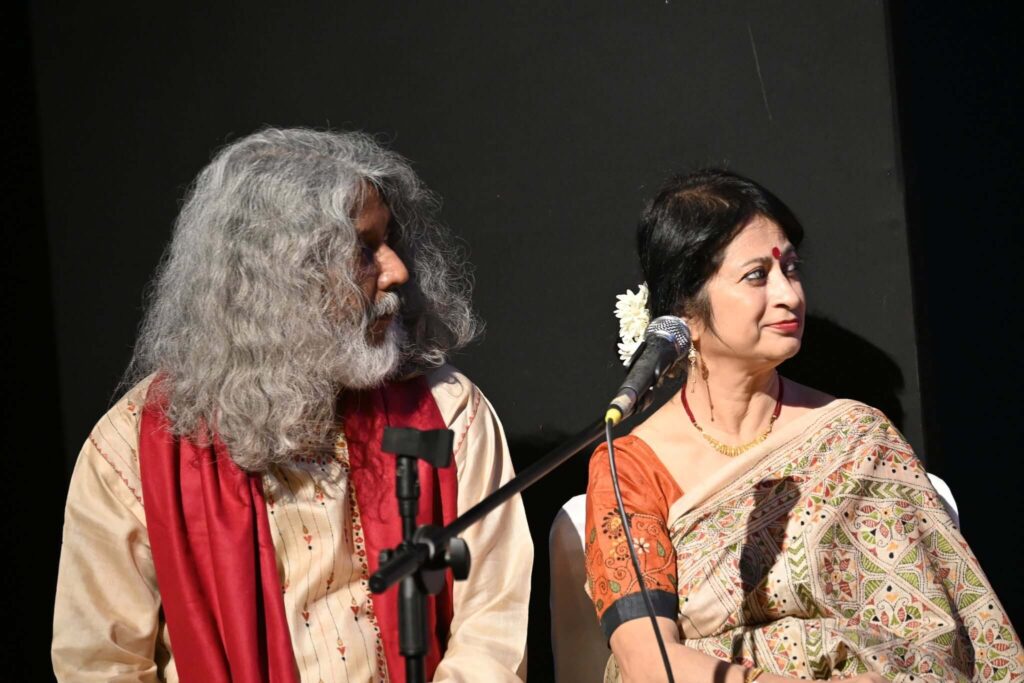
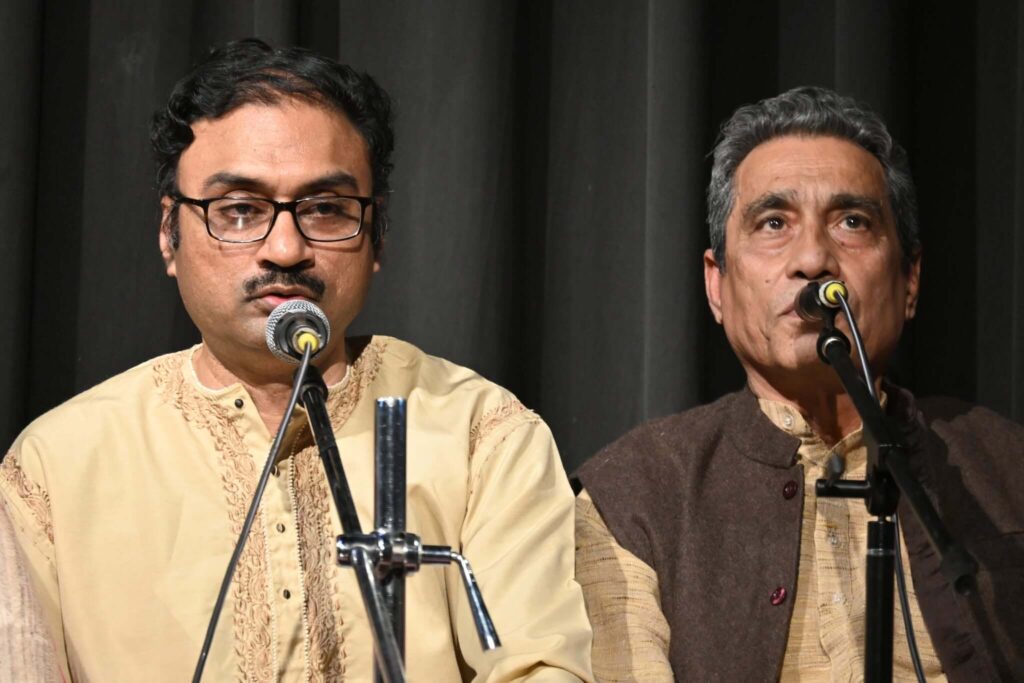
The star attraction of the evening was, of course, the Kolkata-based celebrity crooner Shreya Guha Thakurta, who had flown down to the city to charm the audience. Her remarkable songs included “Amare Tumi Oshesh Korecho” and “Jodi E Amaar Hriday Duar,” among many others.
To sum up, it was an ambience of perfect harmony between the chorus singers and the guest artist, highlighting Tagore’s spiritual thoughts above all else.
Pictures procured by the author

Ruchira Adhikari Ghosh brings a liberal, wide-ranging outlook shaped by extensive travel across India and abroad. Educated at Holy Child School, New Delhi, Sacred Heart Convent, Ludhiana, and Panjab University, Chandigarh, she holds a Master’s in English Literature and a postgraduate diploma in Journalism and Mass Communication. With three decades in media, she writes on travel, books, music, performing arts, women’s issues, and especially food, drawing inspiration from rich life experiences. She is our Features Editor.



 By
By
 By
By

 By
By