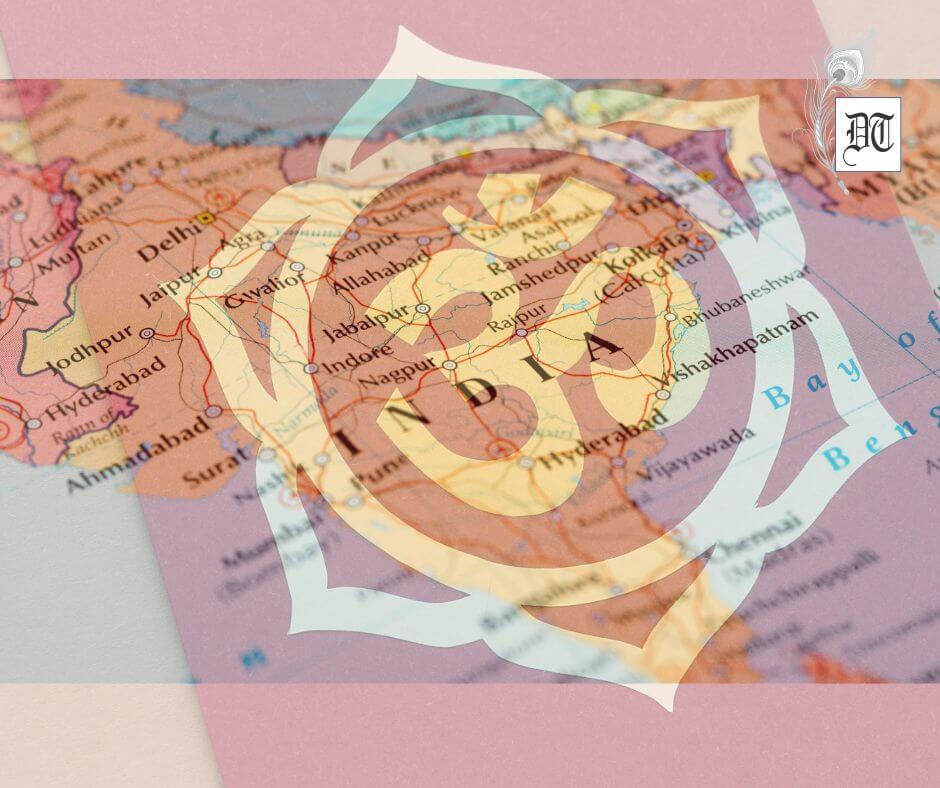
Rita elucidates an explosive debate about Hindu Rashtra that challenges India’s secular foundation, testing the Supreme Court’s Basic Structure Doctrine against powerful political aspirations for Different Truths.
The possibility of transforming India into a ‘Hindu Rashtra’ is a complex, ongoing, and highly debated issue, dependent on India’s existing Constitution, its pluralistic society, and various political ideologies.
Here are the key points to consider:
1. The Constitutional Position
Secular State: The Preamble of India’s Constitution describes the country as a Sovereign, Socialist, Secular, Democratic Republic. The term Secular was added to the Preamble by the 42nd Amendment in 1976.
Freedom of Religion: Articles 25 to 28 of the Constitution guarantee all citizens the freedom to practice and propagate their religion. Under this framework, the State does not have an official religion and treats all religions equally.
Obstacles to Change: To formally declare India a ‘Hindu Rashtra’ would require altering the basic structure of the Constitution. The Supreme Court’s ‘Basic Structure Doctrine’ holds that while Parliament can amend the Constitution, it cannot change its fundamental framework. Many legal experts view India’s secular nature as an integral part of its basic structure.
2. Political and Ideological Landscape
Proponents: Certain right-wing Hindu nationalist groups, including the Rashtriya Swayamsevak Sangh (RSS) and its affiliates (including the ruling BJP, whose party constitution, however, describes its commitment to national unity), have long advocated for establishing India as a ‘Hindu Rashtra’. They argue that this doesn’t mean a theocratic state but rather recognising the dominance of Indian culture and grounding India’s national identity in this cultural foundation.
Opponents: Congress and other opposition parties, along with numerous civil society leaders, academics, and religious minority groups, strongly oppose this idea. They argue that establishing a ‘Hindu Rashtra’ would undermine the core constitutional values of democracy, pluralism, and the rights of minorities.
Current Reality: Despite the Hindu majority (around 80% according to the 2011 census), the Constitution’s secular character and the country’s vast multi-cultural, multi-religious identity pose significant barriers to its constitutional realisation.
3. How a Change Could Theoretically Happen
Theoretically, the path to changing the Constitution’s secular character would involve:
i. Overwhelming Majority: A constitutional amendment requires a massive majority (a two-thirds majority) in both houses of Parliament (Lok Sabha and Rajya Sabha).
ii. Legal Challenge: Any such amendment would be challenged in the Supreme Court, where its validity would be tested against the Basic Structure Doctrine.
In summary, from a legal and constitutional standpoint, declaring India a ‘Hindu Rashtra’ within the existing framework is extremely difficult and would require a major constitutional overhaul or revolution. However, the political and social debate both for and against this concept remains a prominent and sensitive issue in India.
Picture design by Anumita Roy

Born in Shillong, Rita Biswas Pandey’s diverse career spans education and corporate life. A North Eastern Hill University graduate, she holds multiple certifications in social welfare and computer studies. Retiring from UPS to pursue her passion, now a Delhi resident, is a published author (Tinkonya, Yuddha and Kabita somogro ). She also enjoys singing, poetry recitation,sketches, cooking, photography, Blogging and vlogging, sharing her life with her husband, Vinod, and their beloved pet, Titu.

 By
By