

Ruchira dwells on unwritten customs—from gift-giving to food exchange—that are not superstitions, but powerful, humane remnants of a golden era of cooperation, exclusively for Different Truths.
These are not superstitions; instead, these unwritten practices are humane and touching.
I am completely averse to all sorts of superstitions, period. I find them highly obnoxious and inhuman. However, I’m not a holy cow; the beliefs I occasionally follow stem from concern for my loved ones and friends.
Yet, I diligently adhere to certain unwritten, understated, and hidden practices because they resonate with my sentiments. Let’s examine a few.
When we Indians—cutting across all social classes and faiths—go casually visiting people in their homes, and more particularly if invited for an informal meal, we always bring little gifts for the hosts or at least for the children in the house, if there are any. I appreciate this gesture from everyone who practices it.
I must confess that I have deviated from this custom a couple of times, simply because I rushed straight from work to my host’s home with no opportunity to pick up a little something for them. If there are kids around, I usually bring chocolates, and if the adult hosts have a sweet tooth, I bring sweets (if they don’t have blood sugar issues).
There are exceptions; for instance, the spouse of one of my best friends is crazy about crispy, crunchy aloo lachhas. After noticing it several times, I carried a large pack for him during a private visit, and believe me, he was delighted beyond measure!
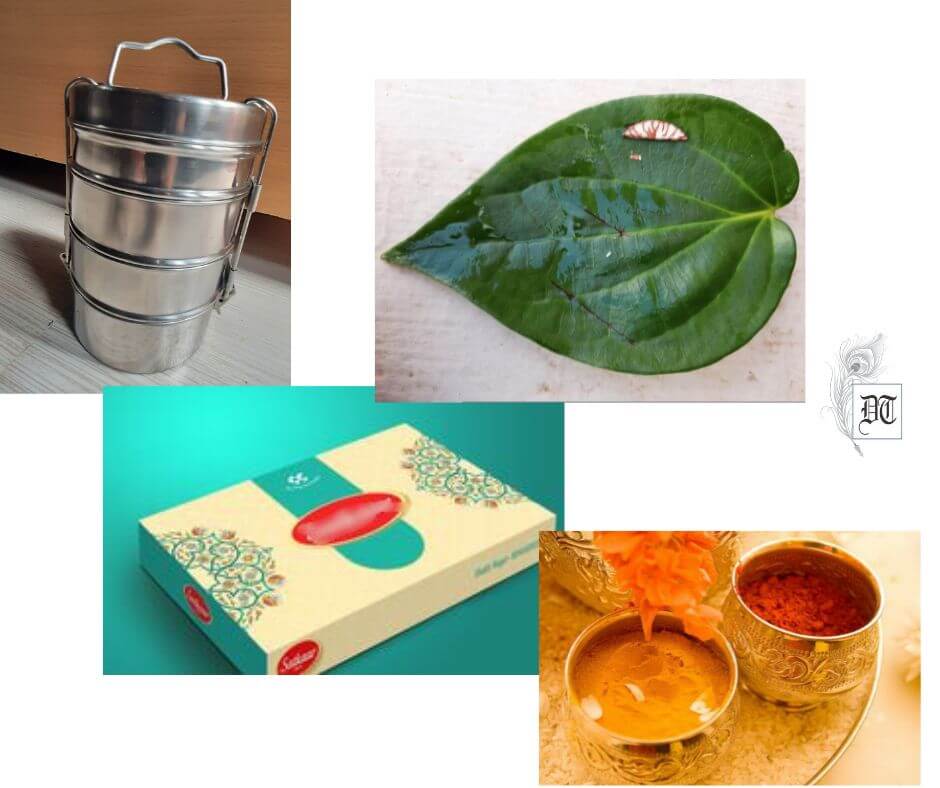
Another quaint habit I admire is this: if a female relative, acquaintance, or friendly neighbourhood aunt brings you a portion of cooked food (like curry), snacks, or confectionery, the container or tiffin box must never be returned empty under any circumstances. This is believed to be a simple primaeval law of give and take, with the underlying idea of forging and maintaining close, cordial ties. Viewed differently, this exchange becomes a kaleidoscope of culinary arts, as people endeavour to showcase their best and most successful dishes, secretly hoping to gain appreciation.
I fondly remember how Manjusha Pathak, our dear neighbour in Surya Nagar (Delhi NCR), would drool over my mom’s maacher jhol and kalia. Being a probashi (non-resident) Bengali, she was not good at preparing our dishes, but she was a master chef of mutton and venison dishes. Since our parents did not eat these types of meat, my siblings and I always looked forward to those exchanges.
Moving on, I would like to discuss the traditional ways of inviting people to social occasions and rites of passage, particularly weddings. The traditional Assamese custom includes offering pan tambul (betel leaf, betel nut, aniseed, etc.) to guests along with the wedding invitation. In the south, the method of invitation includes marking a red spot (tika/bindi) on the foreheads of the intended invitees.
In some cases, during the invitation process, married women (suhagan) smear each other’s hair parting with Sindoor or Kumkum as a way of wishing each other good luck and a blissful conjugal life. In several communities, invitation cards must invariably be accompanied by sweets.
Thirdly, among Bengalis, the pronami or exchange of clothing between the families of the bride and groom is a significant gesture. Originally, the bride had to touch the feet of her spouse’s elderly relatives to seek their blessings and offer the gift (pronam: revered salutations or greetings). The groom would perform an identical ritual with his new in-laws.
Nowadays, gifted clothing items are often sent in bulk with individual tags for each family member—uncles, aunts, grandparents, and siblings. The bride and groom performing these honours is becoming rather outdated. Despite how symbolic and sentimental this gesture may seem, one must overlook the underlying complications.
Often, squabbles, bickering, and disputes arise between female family members over the pattern, texture, colour or design of some saris which happen to capture everyone’s fancy. Occasionally, snide comments emerge from irked mothers-in-law (mothers of the groom), who criticise their samdhi (in-laws) for being niggardly or low class due to the (perceived?) low quality of the gifts.
All said and done, these little customs are remnants of a golden era characterised by lofty ideals and value systems prevalent in undivided families and close-knit societies—focused on sharing, empathy, and cooperation.
Picture design by Anumita Roy

Ruchira Adhikari Ghosh brings a liberal, wide-ranging outlook shaped by extensive travel across India and abroad. Educated at Holy Child School, New Delhi, Sacred Heart Convent, Ludhiana, and Panjab University, Chandigarh, she holds a Master’s in English Literature and a postgraduate diploma in Journalism and Mass Communication. With three decades in media, she writes on travel, books, music, performing arts, women’s issues, and especially food, drawing inspiration from rich life experiences. She is our Features Editor.


 By
By
 By
By
 By
By
 By
By