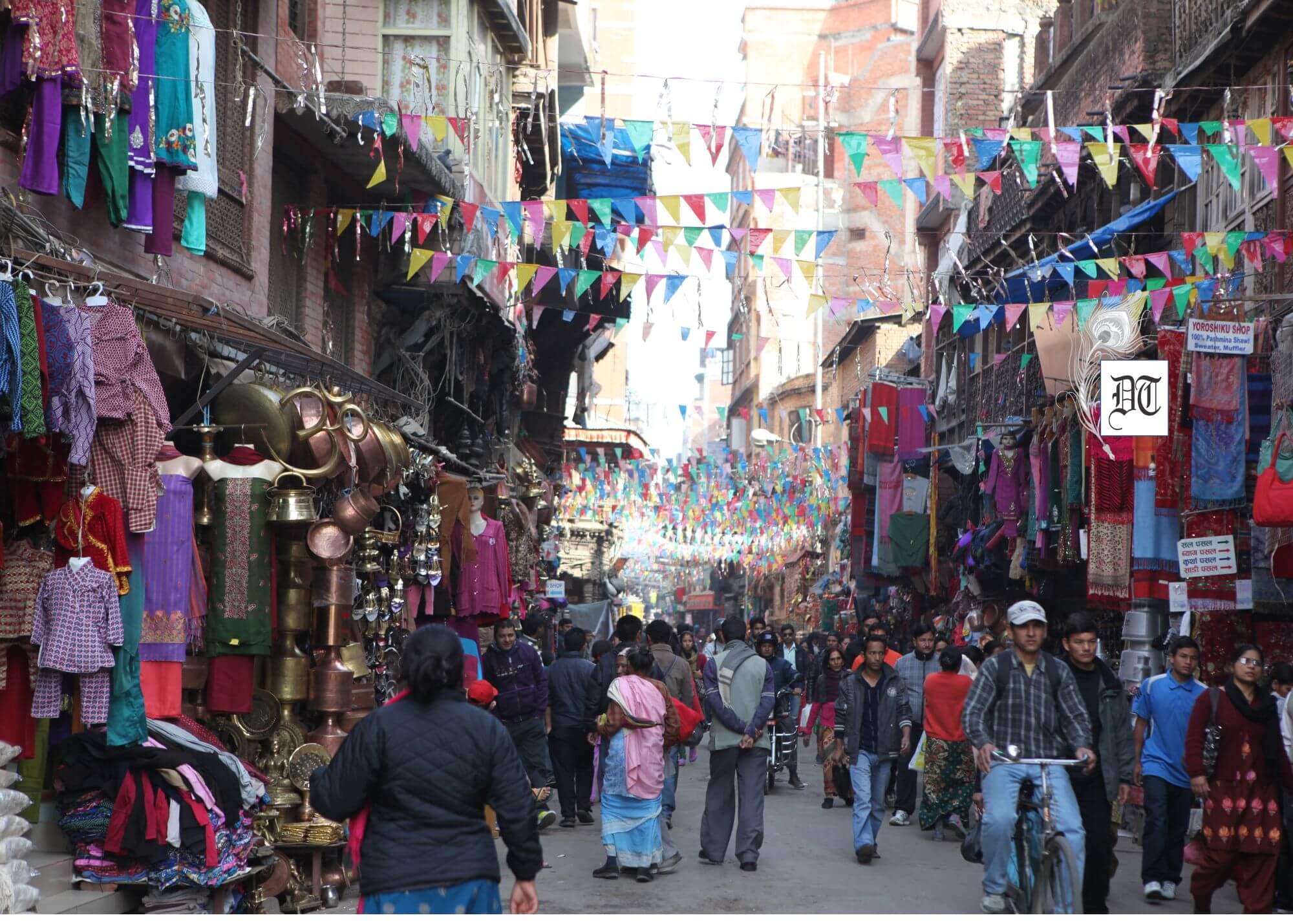
Rita opines that Nepal’s economy faces a defining moment, shaped by structural weaknesses, trade imbalances, political instability, and heavy reliance on remittances, exclusively for Different Truths.

Nepal’s economy stands at a critical juncture, facing a complex interplay of challenges that have built up over time. It’s not a crisis but rather a culmination of deep-rooted issues, from structural imbalances to persistent governance problems. This moment presents a precarious crossroads, where the country’s financial stability is threatened by a heavy reliance on external factors, a significant trade imbalance, and domestic political hurdles.
The Pillars of the Economy and Their Fragility
The Remittance Economy: The lifeline of Nepal’s economy is arguably the vast flow of remittances. Money sent home by millions of Nepalis working abroad has become the backbone of the nation, accounting for a substantial portion of its GDP. These funds have been instrumental in alleviating poverty, increasing household consumption, and providing a crucial source of foreign exchange.
However, this heavy reliance creates a fragile and vulnerable economy. It is highly susceptible to external shocks, such as a global economic downturn or a drop in oil prices in the Middle East, which could severely impact the income of Nepali migrant workers. This dependency also stifles domestic job creation, as many skilled and unskilled labourers seek opportunities elsewhere, leading to a consumption-oriented economy rather than a production-driven one.
A Widening Trade Deficit: Another major challenge is Nepal’s significant trade deficit, where the value of imports far exceeds the value of exports. This is driven by several factors: weak domestic production across key sectors like agriculture and manufacturing, a lack of export diversification, and a growing consumer demand for imported goods, often fuelled by remittance income. The country’s landlocked geography further exacerbates this issue, adding logistical complexities and costs to international trade.
The Tourism Sector’s Rocky Recovery: Tourism has long been a vital source of foreign exchange for Nepal, famed for its stunning landscapes and cultural heritage. However, the sector has faced significant challenges in recent years. The aftermath of the COVID-19 pandemic severely impacted tourist arrivals, and while recovery is underway, the industry remains vulnerable to political instability and inadequate infrastructure, including airport connectivity and road networks.
Deep-Rooted Structural Problems
Political Instability and Governance: The country’s financial challenges are compounded by persistent political instability and governance issues. Frequent changes in government and a history of bureaucratic inefficiency make it difficult to implement and sustain long-term economic policies. Furthermore, corruption remains a significant deterrent to both foreign and domestic investment, undermining confidence and hindering sustainable growth.
Challenges in the Financial Sector: Nepal’s financial sector is also grappling with its own set of issues. There has been an increasing trend of non-performing loans (NPLs), which puts pressure on banks and financial institutions. At the same time, the banking system has experienced periods of low credit demand from the private sector, leading to excess liquidity. This paradox of capital being available but not being effectively channelled into productive economic activities reflects a deeper lack of investor confidence and a sluggish business environment.
Social and Political Impact
Public Discontent and Protest: The economic strain has fuelled widespread public discontent. The youth, in particular, are deeply frustrated by high unemployment rates and a lack of opportunities. This anger has manifested in recent protests, which are a clear symptom of the public’s disillusionment with political leaders who are seen as failing to deliver on their promises of prosperity and stability.
The Brain Drain: This economic and political environment has led to a significant “brain drain,” where many young, skilled, and educated Nepalis are leaving the country in search of better prospects abroad. This exodus depletes the nation’s human capital, leaving critical sectors with labour shortages and hindering the country’s potential for innovation and development.
The Path Forward: Despite the significant challenges, a path toward a more stable and prosperous future exists. The solution lies in proactive and long-term reforms.
First, Nepal must focus on economic diversification to reduce its over-reliance on remittances. This means investing in and boosting domestic production in key areas like hydropower, agriculture, and manufacturing, which can create local jobs and reduce the trade deficit.
Second, addressing the issues of political stability and good governance is paramount. Implementing consistent, long-term economic policies and actively fighting corruption will be essential to create a favourable environment for both domestic and foreign investment.
In conclusion, while Nepal’s financial situation is at a critical juncture, it is not without hope. By tackling its structural problems and embracing long-term, sustainable reforms, the country can move beyond its current vulnerabilities and set a course toward a more resilient and prosperous future.
Picture design by Anumita Roy

Born in Shillong, Rita Biswas Pandey’s diverse career spans education and corporate life. A North Eastern Hill University graduate, she holds multiple certifications in social welfare and computer studies. Retiring from UPS to pursue her passion, now a Delhi resident, is a published author (Tinkonya, Yuddha and Kabita somogro ). She also enjoys singing, poetry recitation,sketches, cooking, photography, Blogging and vlogging, sharing her life with her husband, Vinod, and their beloved pet, Titu.



 By
By
 By
By
 By
By