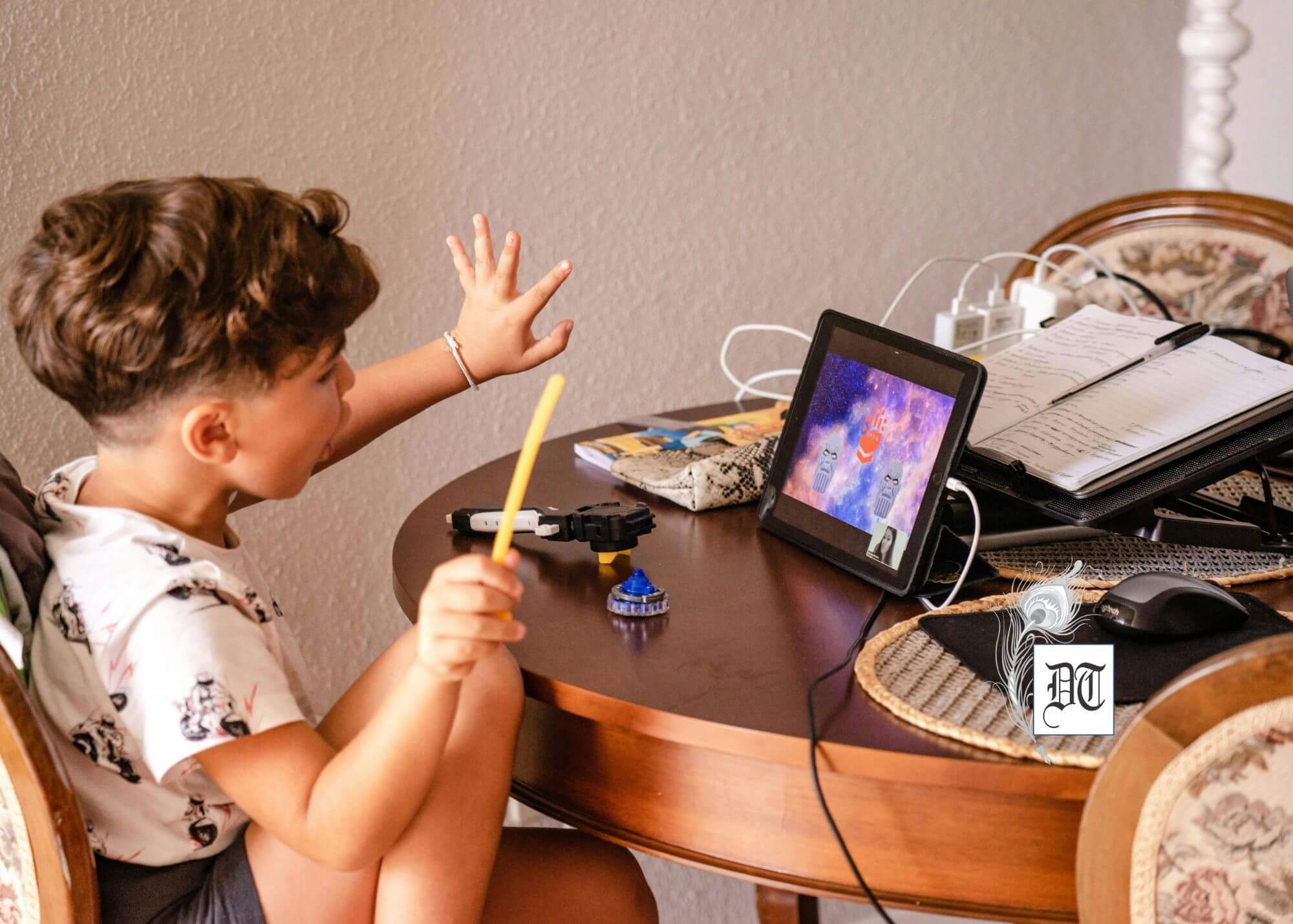
Veena opines that too much screen time mimics autism-like symptoms in children. Stories, not screens, build brains. Balance, not bans, is the answer, exclusively for Different Truths.
If parenting in the digital age had a slogan, it would probably be: “Just one more video.” From Peppa Pig to YouTube Kids, screens promise quiet—precious commodities in households with young children. But scientists now warn that the cost of those precious moments might be far higher than we realise.
A recent paper on “virtual autism” (Garg et al., 2024) describes how excessive exposure to screens can mimic, and in some cases worsen, autism-like symptoms in children. The authors note that “social withdrawal, communication issues, physical inactivity, attention problems, and developmental delays” are all linked to too much screen time. Put simply, when screens raise our children, their development may pay the price.
And the numbers are sobering. In 2012, the global prevalence of autism spectrum disorder (ASD) was estimated at 61.9 per 10,000. Today, more than two million people may have ASD in India alone. While true autism is a neurodevelopmental condition with genetic roots, researchers argue that virtual autism is an environmental hazard—born not of DNA, but of dopamine hits from glowing screens.
What happens when screens replace people?
The risks outlined in the paper read like a cautionary tale. Every parent already suspects impaired social skills, language delays, reduced physical activity, sleep disruption, and even emotional and behavioural issues. As the authors conclude, “Preventing virtual autism requires a holistic approach involving parents, educators, and policymakers.”
That may sound heavy, but it’s really about balance. Technology isn’t the villain; overuse is. A toddler, a stack of books, and an accidental experiment.
Here’s where I take off my journalist’s hat and put on my mother’s. I have a three-year-old son, bright-eyed and endlessly curious. Like every modern parent, I’ve wrestled with the question: how much screen time is too much? The reality: even “a little” quickly becomes “a lot.” So instead of fighting screens with lectures, we decided to try something simple: stories. Every evening, before bedtime, we started a habit of reading aloud together. Sometimes it was a picture book, a short story, the same dog-eared title three nights in a row. My son can’t yet read or write, but he listens, giggles, interrupts, asks questions, and sometimes invents endings of his own.
This personal experiment blossomed into Peekabliss, our family’s habit-formation initiative around shared book-reading (yes, we even put it online— https://www.youtube.com/@Peek-A-BlissbyNavVeena).
Building a book-reading habit the easy way: Peekabliss by Nav & Veena
Parents often ask: But how do you get a toddler to prefer books over screens? The secret is in making small changes stick. Here’s what worked for us:
• Make it obvious. We kept books in his play area, not tucked away in shelves. They were as visible as his toys. I ensure every guest who visits us reads to Nav if she/he is comfortable.
• Make it attractive. We chose colourful books with animals and sounds he already loved. He looked forward to story time like a treat. All my friends are requested to gift only and only books to my son if at all. It keeps the child excited about which new book he will receive, and the anticipation keeps the interest alive.
• Make it easy. Just five minutes a night. Some nights, only one page. The key was consistency, not volume.
• Make it satisfying. We turned it into a cosy ritual: cuddles, silly voices, laughter. He began to associate reading with joy.
• Habit stacking. We attached story time to an existing routine: after or along with every meal (my son’s slogan is ‘ I love to Read & Eat’), and before bed. That way, it became automatic. The result? Instead of “One more video, Mama,” my son now says, “Read the elephant book.”
What can parents and teachers do?
The researchers behind virtual autism outline preventive measures that sound strikingly like what worked for us:
• Set gentle screen limits.
• Curate age-appropriate content.
• Encourage physical activity and play.
• Model healthy behaviour.
• Foster social, in-person interaction.
• Seek expert guidance if needed.
And teachers are partners in this work too. Classrooms can nurture reading habits with daily storytelling circles, shared narratives, and creative play—no gadgets required.
Why stories still win
Screens will remain part of our children’s lives—it would be naïve to imagine otherwise. But the antidote to virtual autism isn’t abstinence, it’s balance. And balance is easiest to strike when we replace empty digital calories with nourishing alternatives.
As Garg and colleagues remind us, “recognising risks from extended screen time and promoting proactive prevention” is essential. But prevention doesn’t have to feel like punishment. It can feel like a bedtime giggle, a silly rhyme, or a whispered “Once upon a time.”
In the end, the magic of childhood isn’t built on pixels. It’s built on presence. And sometimes, the most radical thing we can give our children in a digital world is not another app, but our own attention.
Picture design by Anumita Roy

Veena Singh is a Social and Behaviour Change (SBC) Specialist with over 15 years of experience with UNICEF and global partners. She has led impactful communication strategies across health, education, nutrition, and gender, with expertise in advocacy, youth engagement, and community mobilisation. Her work spans public health emergencies, gender-based violence, and social norm change. A sociologist and polyglot, Veena brings a multilingual, inclusive approach to her work. She is also a trained Kathak dancer and mental health volunteer.



 By
By
 By
By