
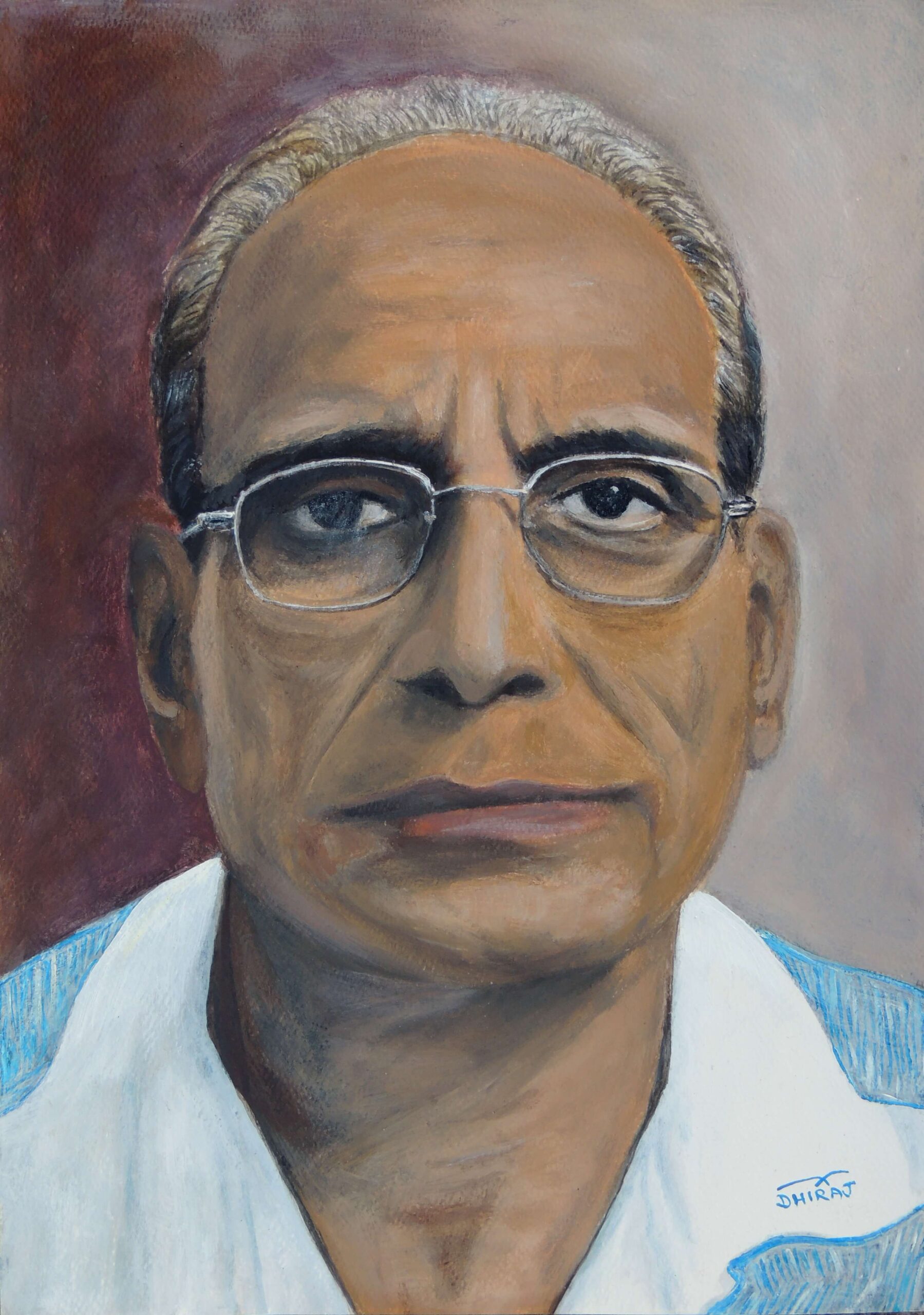

Dr Dhiraj confesses that his father’s passing left a void; his serene gaze and fading warmth linger, shaping my eternal memories and unanswered questions, exclusively for Different Truths.
My father passed away recently. That Sunday early morning, my mother’s voice carried an unusual edge when she called my name. She often called me, day or night, to assist her with my bedridden, ailing father. But this time, there was something urgent in her voice that I leapt from my bed, rushed down the stairs, and reached his room. When I came face to face with him, my father’s eyes were fixed on me. His face looked calm, almost serene. I held him in my hands, patted his face, and called out again and again, “Daddy, Daddy… what happened?”. I was sure—just now, he would respond. But he lay there, staring at me, his gaze fixed on me, his face peaceful, almost smiling. My mother was speaking to me hysterically, something which I don’t remember now. I touched his throat; it felt warm. I felt his pulse, but later realised it was only my own heartbeat thudding in my fingers in denial of whatever had happened to him.
Within minutes, my brother and our family doctor arrived and pronounced what my heart refused to accept: he was gone. Still in denial, I rushed to a known nearby heart specialist for reassurance. He confirmed it, too. My father’s last moments had unfolded in my hands—a moment I will carry forever. What remains with me is the image of his calm face in those final moments, his gaze fixed on me, his warmth fading in my hands.
I knew this day would come, and I always told myself that when it did, I would be strong and bold enough to face it. But now, when it has actually happened, no philosophy, no scripture, no logic can cushion the blow. Some moments in life carve themselves so deeply into your memory that even years later, you can replay them in slow motion. For me, it was this moment: my father’s last breath, leaving his body in my hands.
My father’s passing was not just the end of a life; for me, sadly, it was an abrupt end. He had to go, and he is gone, but his departure felt like the sudden end of a play, a story without a final act. The silence that followed was heavy with unanswered questions. The What’s, Why’s, and How’s of his suffering and his final moments lingered, and I knew there would never be an answer. It’s a truth you only fully grasp when they are gone. When they leave, a void opens up inside you that can never be filled. You would carry that wound to your own cremation, forever questioning yourself: Did I do enough? Could I have done more? Did I leave anything unattended that might have helped him?
For long, I kept waiting to wake up, to find him in his bed, just as he was, but this wasn’t a dream. It was a brutal reality. The physical presence of his suffering is gone, yet its echo remains. The echoes of his stifled groans still fill my ears. I sleep very lightly now, full of dreams and clouds. The house is quieter, but my mind is louder with memories.
Life since then feels disoriented. The worldly so called religious rituals of mourning may have been over, but in my mind, other rituals replay endlessly - the small, unspoken acts of care: helping him drink water, taking him to the washroom, adjusting his pillow, switching his AC on or off, feeding him soup or medicines he didn’t want, even just peeking into his room to check on him. These small, unspoken acts of care and love are now sacred memories. The daily routines that once felt demanding have become a precious void. These fragments, once ordinary, now carry the weight of eternity.
For years, my father battled fragile health. And in the last few years, his persistent stomach ache puzzled the best doctors in the region. Tests, scans, and consultations with decorated specialists - none revealed the cause. Some suggested the pain was psychosomatic. But for him, the pain was real. It drained his will to eat or drink, convinced that every morsel would worsen his agony. Feeding him became an everyday struggle, along with the endless cycle of medicines that dulled but never healed. The cause remained a mystery. The specialists prescribed medicines, offered theories, and ran endless tests, yet the pain never left him. Then came the deterioration of memory, speech, and recognition. With blurred vision and a frail body, he lay on his bed day and night. Watching him fade was not just painful for him, but excruciating for us. Each day felt like watching him slip further away while being unable to stop the tide.
Relatives and friends who visited often whispered, ‘May God relieve him!’ At first, their words stung, but then I knew they weren’t being cruel. They meant mercy. And yet, no matter how rational this sounds, no one is ever ready to let go of a parent—at any age. No matter a parent’s condition, even when they are confined to a bed, they remain a source of immeasurable worth.
People used to ask me his age when he was alive. I don’t understand! What is the right age to lose a parent—eighty, ninety, a hundred? Which number ever feels enough? People often console the bereaved with words like, “At least he lived a long life”, or “It was his time.” But when it happens to you, these phrases sound hollow. I ask—what is the right age at which one can say, with peace, now I can bid farewell to my father or mother? Is it easier at ninety than it was at eighty? Does the pain lessen with each added year? Or, it is the truth that no number ever makes us ready—because no matter how old we become, we remain someone’s child, and that bond lies beyond calendars and logic. A parent, no matter how ill, remains precious. Even when reduced to dependency, even when their care feels heavy, their presence is irreplaceable.
Our Indian values teach us to revere our parents as gods, but the true weight of this belief strikes only in their absence. It is in the silence where their voice once was, in the space they leave behind, that we begin to wonder if we truly cherished them enough. Only when they are gone do we realise what they really meant to our existence. Their presence is the quiet heartbeat behind our own, and when it stops, something within us pauses too. Losing a parent is unlike any other loss – it is not just the passing of a person; it is the death of a part of yourself!
Portrait painted by the author

Dr Dhiraj Sharma, faculty in Management Studies at Punjabi University, Patiala, writes at the intersection of economy, finance, governance, culture, literature, and social change. His interdisciplinary work examines how individuals and institutions adapt to economic and societal shifts. Beyond academia, he pursues creative writing—fiction, non-fiction, poetry—and excels as an avid birder, nature/wildlife photographer, and painter in realistic/semi-impressionist styles. He actively supports government/NGO initiatives for bird watching, butterfly monitoring, and natural habitat conservation. He is our Associate Editor: Economy, Finance and Governance.
 By
By
 By
By
 By
By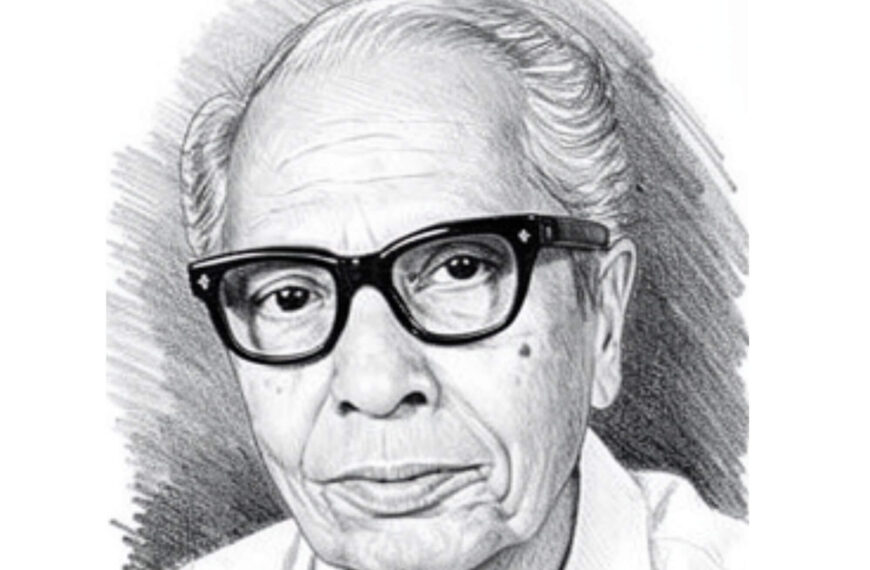
 By
By
Dear Dr Dhiraj, truly a touching essay! One of the finest piece of writings to have read in a long while. Took me back in memory … making me recollect the times I had spent with my own father. My own emotions and thoughts were and still are very much the same; similar to what you have experienced and expressed.
Regards,
Prakash