
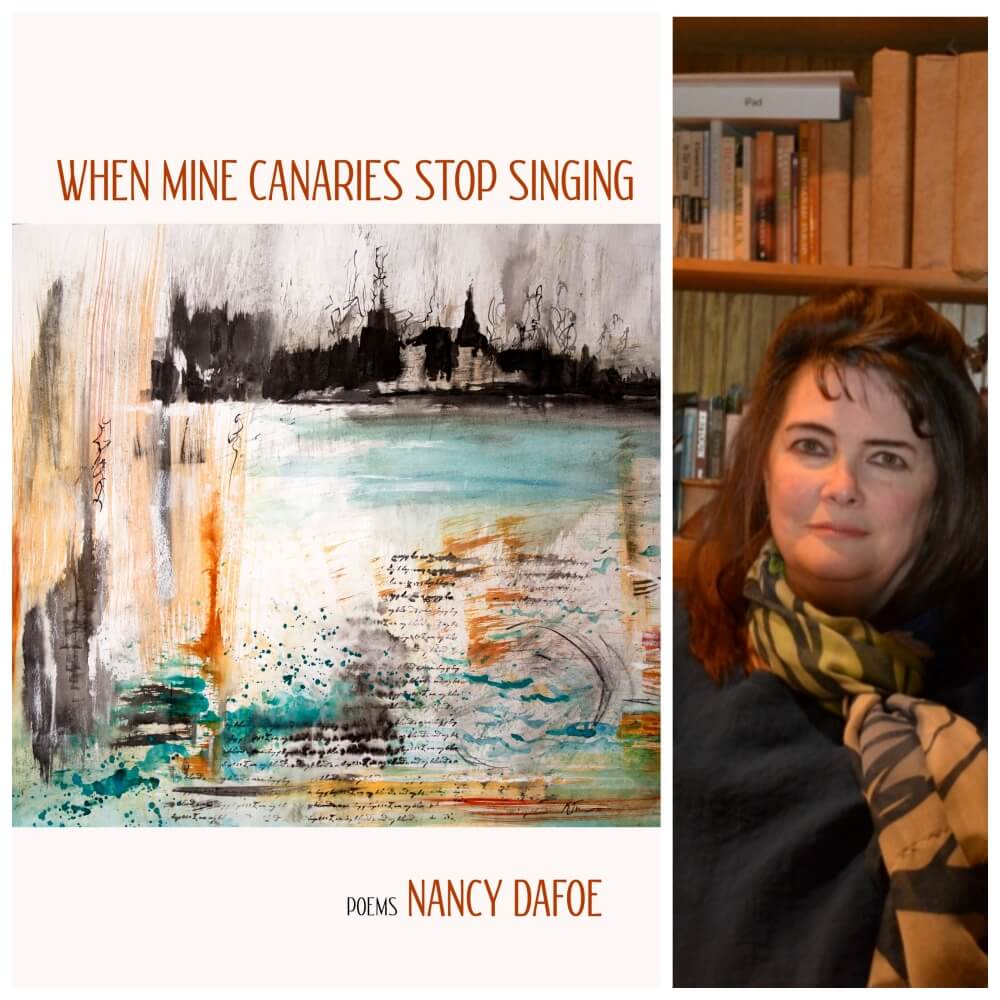
Megha reviews Nancy Dafoe’s poetry collection, which is a haunting, lyrical alarm on the climate crisis, echoing nature’s grief and demanding urgent environmental action, exclusively for Different Truths.

The poetry collection “When the Mine Canaries Stop Singing” is a clarion call wrapped up in poetry, deftly conveying a message of the senseless destruction of our ecosystems through the incessant greed of mankind. Through a collection of 31 poems, the poet feverishly describes the ill effects of global warming, leading to rising seas, flooding, and unexplained changes in seasons. Dafoe also mentions the plundering of natural resources by humans, leading to an imbalance in our habitat, causing dire effects on flora and fauna.
The book opens with a stark message of a decrease in the population of the mayfly and butterflies in our habitat—a warning for the poor health of our planet, where the fragile insects are the first to disappear. The health of a biome is always measured by the population of its delicate species, such as butterflies and mayflies. Dafoe aptly brings out the threat to mayflies and points out the paradox of the oldest living fly that now sits at the precipice of extinction.
Dafoe further explains the impending threat to the diminishing population of beavers through the poem, Take the Beaver, a natural dam maker. The author skillfully explains the harrowing effects of people’s senseless actions on the earth and its ecological system as it degrades alarmingly over the years. The reckless actions have brought us to the intersection of survival and the extinction of various species. This brilliant collection is a call to action to our race about their irresponsible actions leading us to the destruction of our Gaia. The poet poignantly expresses concern about the damage caused to Earth through the following lines.
It’s getting hotter across the planet,
and grasses have turned sizzling brown
as if to please a blistering sun with their burning.
In the poem, It’s Getting Hotter, Dafoe has captured the concern of the rising temperatures and rampant change in the seasons as effects of Global warming. The collection is a rallying cry about the detrimental effects of pollution, forced migration and other hazards of global warming, caused by the negligent actions, causing irreversible harm to our natural system.
Earth is getting hotter,
and all of mankind is moving,
constantly moving in progress
toward conflict and desolation.

– even the stars would reduce
all to ash before they got close.
Readers are steeped in the beautiful exploration of childhood and innocence, doused in the bounty of nature through the poem, Chasing the Light.
Before opening our small fists
and releasing those living lanterns,
we imagined life as fairy constellations
mirrored in the bones of our wrists
In the poem, More than Seven Wonders, Dafoe brilliantly compares and contrasts the achievements of mankind to indescribable and indecipherable beauty seeped in nature and brings us to the eternal truth that even though mankind has given stunning architectures like the seven wonders yet the magnificent beauty in nature will outlive us all.
While man’s monuments—too often built
with slave labor—are awe-inspiring to see,
it would be wise to put them in perspective
and offer nature’s versions of our light shows
by witnessing the Northern Lights or
Iguazu Falls for power and beauty.
Dafoe alludes to the fact of the absence of empathy and compassion in us through the poem Our Blue Water Planet is Burning. Dafoe explains in detail the inconspicuous nature of our existence and survival when compared to the vast expanse of the expanding universe.
Furthermore, the poem Listen to the Girl brings our attention to the global climate activist Greta Thunberg, who, despite her tender age, was able to advocate for the adverse effects of climate change. Dafoe uses this poem as an advocacy tool for fighting the effects of climate change through the following lines in her poem.
Even at the age of eight,
Greta Thunberg could not understand
why so little was being done
to help the planet,
so she jumped into the fray,
living by her word
as she asks each of us to do.
Dafoe stresses the vital importance of her voice carrying and her resilience in carrying the message against all odds.
The poem, Stranded on a Rooftop, Shivering, talks about the harmful effects of hurricanes and other weather phenomena, causing violent weather changes that are adversely affecting 40 per cent of the three billion people living near the coast. The poet brings our focus to the mass displacement of people directly affected by rising seas and the drowning of the coastal areas. The poet uses poetry as a wake-up call to warn people about the harmful effects of rising temperatures.
Through the poem We Had Better Write About Trees, the poet highlights an urgent need to plant more treesto make up for the loss of whole forests, as we lack oxygen to breathe. The poet turns our awareness to the wisdom imparted to us by our poetry ancestors, Adrienne Rich and Victoria Chang, as they draw a stark comparison between the lifecycle of a tree to our life cycle. The poet masterfully captures the need of the hour to prevent global deforestation because of man’s rapacity. Trees, like our ancestors, carry a deep-seated message of resilience and survival through the odds.
Adrienne Rich advises, if we want to be heard,
we had better write about trees, its roots
suggestive, its limbs straining to break away,

and the birth and falling of its leaves a reminder
of cyclic renewal even in death, if only we begin
considering ourselves part of this whole.
Dafoe draws attention to the “most indestructible animal” in her poem, Hope for Water Bears, which is widely considered to be the tardigrade, also known as a water bear or moss piglet, due to its remarkable ability to survive extreme conditions that would kill most other organisms. The poet pitifully refers to the inextinguishable animal living on the face of the earth in the absence of art, music, or anything creative.
The poet also instils the message in her readers through the poem “Where Hope Resides”. She brings out the message of hope and how the collective action of our race can still hold the solution to this seemingly irreversible situation.
Continue scientific discoveries
and improve our efficiencies
to better manage our carbon
footprints, and excessive wastes.

We are able to identify
ancestral enzymes at key moments
in history. We can, if we dare,
create solutions for survival.
Through the poem, A Nursery Rhyme Signal, the poet cautiously draws the picture of the devastation of the planet and its ecosystem caused by the relentless greed and insolence of our race. Another example of thoughtlessness is well portrayed in the poem, A River Still Runs Through It, where the poet explains the turning of the Mississippi river into a vast barren spans of garbage made of stuck boats and barges, the color of river changes from the cerulean blue to brown due to the seepage of the fertilizers and industrial waste from the agro-industries.
The poet, through the various poems in her collection, has tried to draw focus towards the detrimental effects of climate change, filled with the avarice and indifference of mankind towards the health of the habitat and its gradual decline, thus putting the survival of other species at risk.
At the tail end of the collection, through the poem Arbiter of Justice, the poet refers to Nemesis, who is the goddess of retribution, divine justice, and vengeance, who punishes those who commit hubris (excessive pride or arrogance) or break the natural order of things. Nemesis is a powerful figure who ensures that those who transgress the natural order or the gods’ laws face consequences. Furthermore, in the poem When the World Was Young, Dafoe, through her efforts, tries to bring forth the awareness of readers towards the mindless devastation due to our selfishness. The poet’s following lines from the poem convey the message.
When the world is no longer young, humans,
just 0.01% of living things, caused the loss
of 83% of all wild animals and plant life.
When the world is no longer young,
human ignorance, greed, and disregard
are bringing about one outcome.
Dafoe closes the collection with the poignant poem Once Fallen on Earth, where she conveys the dystopian message about the space race heading towards the search for another habitable planet after ransacking our Gaia, which was once flourishing.
Nancy Dafoe has meticulously conveyed the message of the climate crisis and its ill effects on Earth, driven by the endless hunger of our kind. Through various researched facts stated through poems, she masterfully conveys the dire message of humans causing destruction and pillaging of natural resources, leading to the disruption of the ecosystems.
I highly recommend this collection to anyone who still cares about the planet, our Gaia, our mother, who has sustained us for millions of years. A vital message superbly conveyed through poetry.
Cover photo sourced by the reviewer

Megha Sood is an award-winning Asian-American poet, author, editor, and literary activist based in New Jersey. A Literary Partner with Stanford University’s “Life in Quarantine,” she is the author of four poetry collections, including My Body Lives Like a Threat (2022) and Language of the Wound is Love (2025). Her work has appeared in over 900 outlets, including MS Magazine, PBS, and NYPL. Her anthology The Medusa Project was launched to the moon with NASA in 2025.

 By
By
 By
By
 By
By
 By
By
Thank you so much for accepting the book review and bringing the works of Nancy Dafoe’s eco-poetry to Different Truths readers. I appreciate your support.
Thank you, Megha, for this lovely review.