
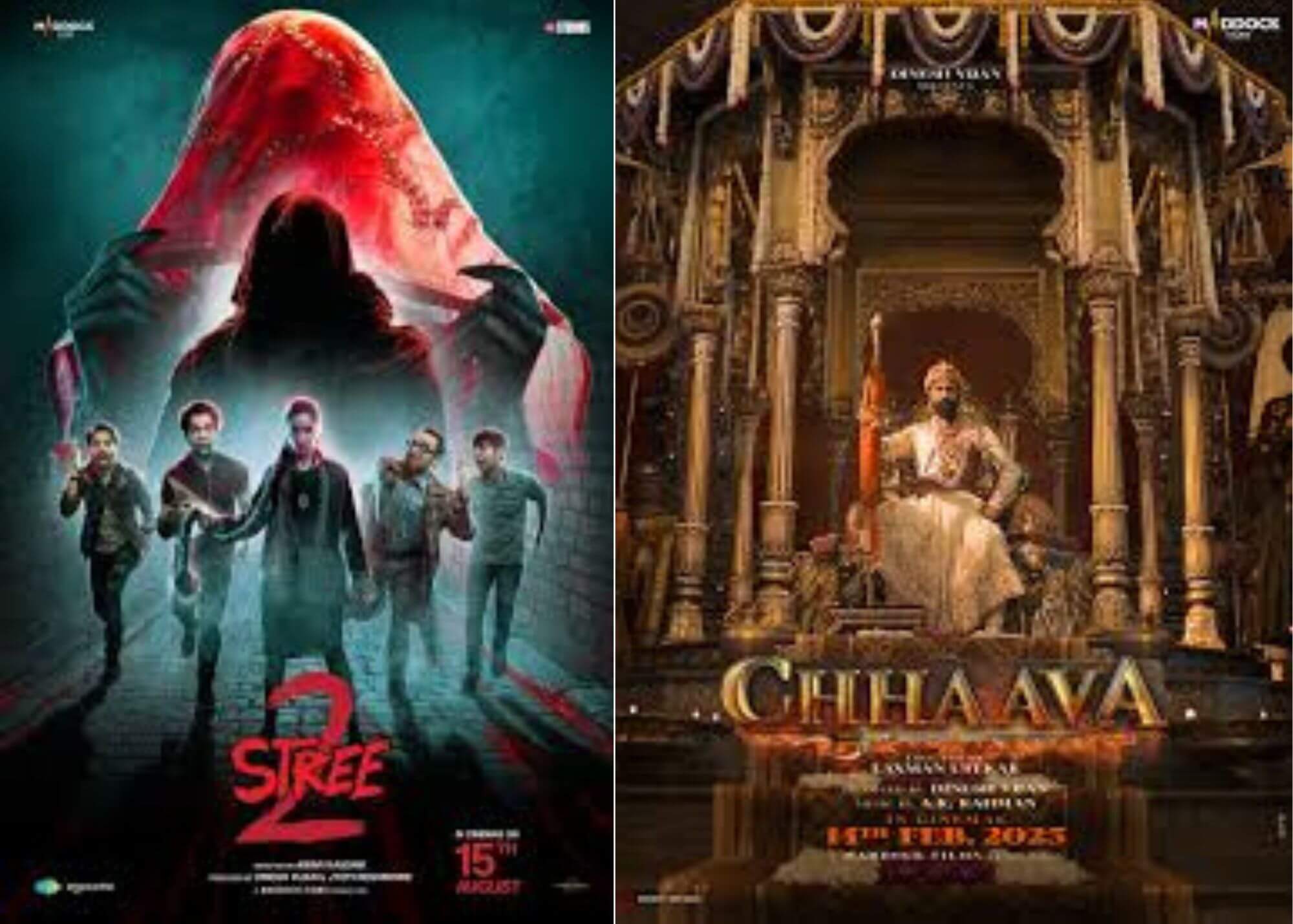
Two films, one spine-chilling and one soul-stirring—Stree 2 and Chhaava—redefine Indian cinema with wit, war, and wonder. A comparative review by Sukanya, exclusively for Different Truths.

What unfolds when a spectral whisper brushes past midnight walls in Chanderi, while thunderous war cries echo through the hallowed forts of the Maratha Empire? Stree 2 and Chhaava—though worlds apart in genre—serve as cinematic juggernauts from the 2024–2025 slate, offering both chills and chills-down-your-spine.
Plot Snapshot (Spoiler-Free)
Stree 2: The haunted lanes of Chanderi beckon once again, where men live in paranoia and legends breathe. This sequel to the cult horror-comedy spins a denser web, deeper mythology, sharper social satire, and creepier turns, all garnished with desi humour.
Chhaava: A sweeping historical epic drawn from Shivaji Sawant’s acclaimed novel, it charts the tempestuous life of Sambhaji Maharaj—warrior, poet, and prince. From palace politics to battlefield pyrotechnics, the film paints a portrait of valour draped in saffron.
Thematic Undercurrents
Stree 2 weaponises folklore to interrogate gender power plays, urban mythos, and collective fear. Its narrative unravels the absurdity of machismo through ghostly allegory.
Chhaava is a meditation on duty, spiritual sovereignty, and dynastic legacy. It wrestles with philosophical binaries—power vs. piety, bloodline vs. belief, glory vs. grief.
Performances that Stick
Stree 2: Rajkummar Rao continues to be Bollywood’s everyman sorcerer—effortlessly fusing panic with pathos. Shraddha Kapoor exudes mystery, a ghost with depth. Pankaj Tripathi, meanwhile, delivers laugh-out-loud sermons laced with socio-political spice.
Chhaava: Vicky Kaushal dons the crown and anguish of Sambhaji with magnetic restraint. He oscillates between fire-eyed rage and philosophical gravitas. Sharvari Wagh adds tender grit, while Sanjay Dutt lends thundering gravitas in key scenes.
Directorial Signature
Amar Kaushik dances between the tightropes of slapstick and spectral dread with genre-fluid mastery. He sneaks in social messages through jump scares and satire.
Laxman Utekar crafts an operatic visual poem. His lens captures the grandeur of Maratha ethos but doesn’t shy away from the intimate ache of sacrifice. It’s grandeur without bombast—a Bhansali without the glitter overdose.
Script and Dialogue
Stree 2: A treasure chest of double entendres, witty punchlines, and cultural callbacks. Every line feels dipped in irony and spice, with folklore mashed into meme culture.
Chhaava: Laced with philosophical musings and poetic lament, the dialogues feel rooted in Marathi literature and warrior code. It’s high-octane history with a soul.
Visual Palette and Cinematic Texture
Stree 2: Jishnu Bhattacharjee frames shadows like brushstrokes on a mythic canvas—alleyways that breathe, dim bulbs that flicker like ghost eyes. It’s lo-fi horror with an art-house attitude.
Chhaava: Awash in saffron hues and battle-grey tones, the cinematography swings from lush palace interiors to war-torn panoramas. Every frame is worthy of a freeze—and perhaps a patriotic playlist.
Soundscapes and Score
Stree 2: Sachin-Jigar layer the soundscape with playful eeriness—where beats drop between laughs and shrieks. The silence often roars louder than the screams.
Chhaava: A.R. Rahman’s score is thunder married to flute. He folds in Marathi folk, devotional strains, and sweeping orchestration, elevating emotion to near transcendence.
Editing & Narrative Rhythm
Stree 2: Snappy and kinetic, the editing keeps the tempo humming. Comic timing lands like jump scares, and horror lingers just long enough to tickle the spine.
Chhaava: Designed with gravitas, its pacing honours the slow burn of history. While some may find it indulgent, others will savour its operatic cadence.
World-Building and Mise-en-Scène
Stree 2: The Chanderi of this film is a character itself—part haunted town, part social caricature. The production design blends realism with surrealism, channelling the absurdity of rural-urban India.
Chhaava: The detailing in fort architecture, regal attire, and wartime logistics echoes a historian’s notebook. Nothing feels synthetic; everything feels lived-in.
Cultural Echoes & Intertextual Layering
Stree 2: Draws from the real-life “Nale Ba” legend but morphs it into a gendered fable. There’s a cheeky nod to horror B-movies, feminist think pieces, and small-town memes.
Chhaava: Its intertextual richness stems from scriptures, folk ballads, and Maratha oral tradition. It evokes nationalistic fervour but also critiques the cost of immortality.
Emotional Arc and Audience Pulse
Stree 2: More than scares, it delivers a sense of delightful discomfort. It teases the audience into reflecting while they laugh.
Chhaava: Operates like a slow crescendo—each act heavier than the last. It leaves audiences stirred, silenced, and, at times, tear-streaked.
Final Takeaway
Stree 2 is Bollywood’s haunted mirror—funhouse reflections of real fears.
Chhaava is Bollywood’s burning torch—illuminating lost pages of valour and sacrifice.
One flickers in candle-lit corners with whispers and wit; the other roars across historical battlefields with blood and poetry. Stree 2 and Chhaava prove that the heart of Indian cinema beats loudest when it dares to be diverse, dramatic, and deeply rooted.
Verdict Ratings (Out of 5)
Stree 2: ★★★★★
Chhaava: ★★★★½
Picture from IMDb

Sukanya Basu Mallik is a renowned Indian writer, known for her works in various publications and for winning Best Manuscript Awards for fiction & non-fiction categories (Mumbai Litofest, 2018). She is currently pursuing a PhD at IIT Madras, focusing on organisational behaviour and art-based therapies for enhancing teaching-learning effectiveness using immersive technologies. She was recognised for her short story ‘Healing of Wounds’ at NCLF, led by Ruskin Bond.


 By
By
 By
By
 By
By
 By
By
Clarity, wielded with verve: a pleasure to read!