
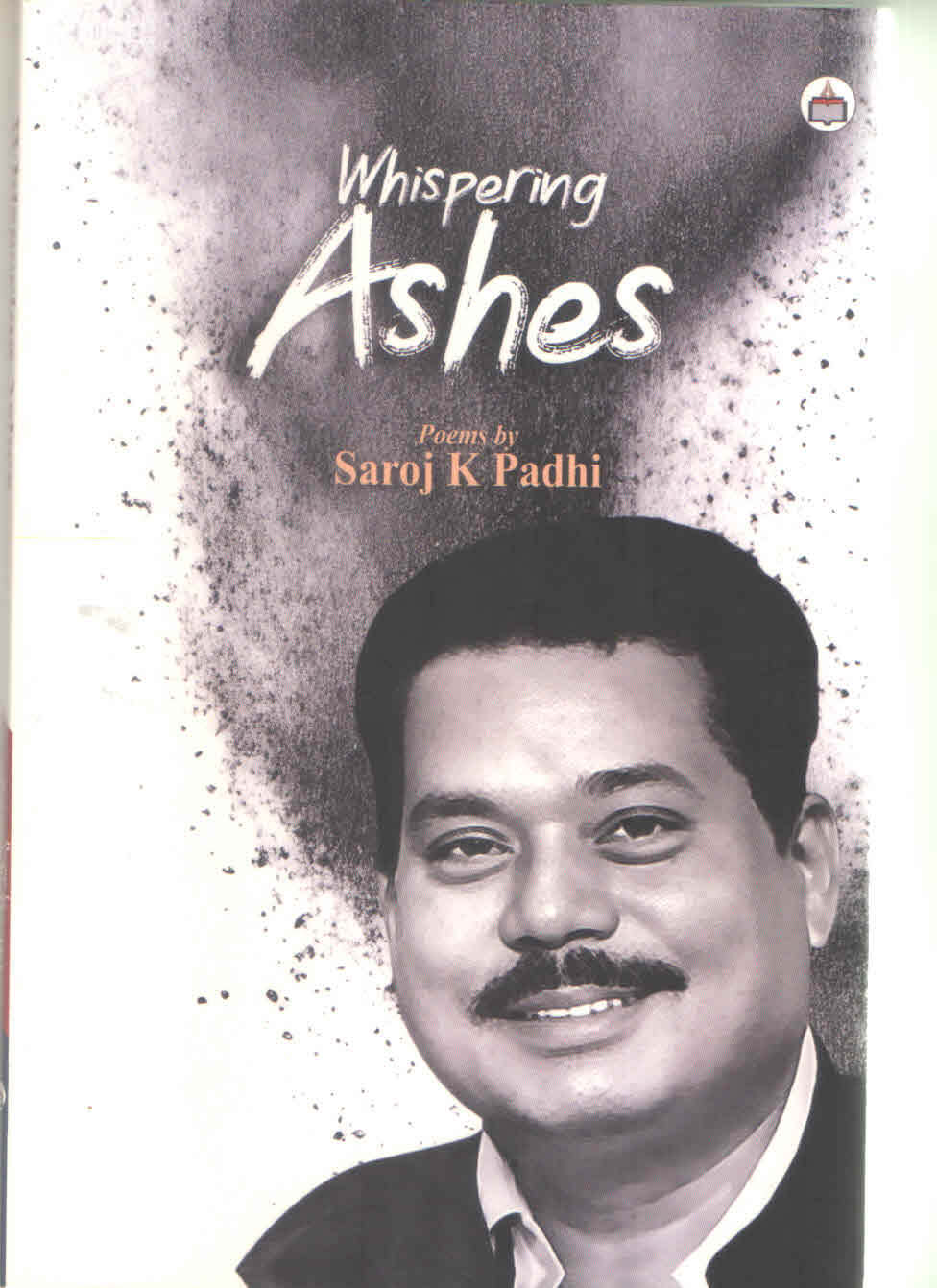
Saroj K Padhi presents poignant poetry in Whispering Ashes, exploring nature, society, love, loss, and inequality. A review by Pankajam, exclusively for Different Truths.

Saroj K Padhi is a retired English professor from the government of Odisha and a writer by passion. He is well known in Indian English literature and has published two books of criticism and 16 collections of poems. The book under review is Whispering Ashes, published by Authorspress in 2025, containing 41 poems and excerpts of prose from the book ‘A Survey of Indian English Poetry’ by Dr Prof. Satish Kumar. This review is limited to the first part of the poems, and I’m taking a few of them for analysis here.
The title poem, Ashes Whisper, talks about the environmental concerns of the poet caused by burning jungles and other human acts causing degradation of nature, and he is worried about our future generations, who have an equal right to enjoy the fineness of nature. His concern is deeply reflected in the following lines:
Beneath hectares of jungle burning
crying piteously for thousands of species
that died out and are still dying
their sad shadows trailing
the graveyard of humanity warning
He goes on talking about our so-called sane society that is caught up in a mad race with its conscience dumped into the dustbin, with a cry to society to save the world from the jaws of these sharks. He concludes the poem thus:
Alas! Our lord sneers at false smiles
as the world sinks still deeper
into lust for bucks and more of guiles.                                  (Ashes Whisper)
The poem titled Black Pagoda at Night is one of the best poems in this collection, which deals with so many evils in society, like acts of violence, horror and bloodshed; the plight of farmers betrayed by failing crops and debt traps, who take the extreme step of killing themselves with poisonous insecticides; atrocious acts of ragging and brutal homicide; facts about the misdirected lost youths and much more. The poem is a must-read, and I’m not killing the anxiety of readers to read it by quoting from the poem extensively. The beautiful rhyming in this poem is not to be missed.
(Black Pagoda at Night)
‘Thorny’ is a sonnet, again with lovely rhyming, dealing with roses. This poem has layers of meanings to it, and a rereading of the poem will reveal that to the readers. I am quoting the concluding six lines for their poetic appeal:
roses blossom but to bleed alone
stuck by own thorns after lovers’ sweet meet
besotted by the wine overflown
to a dark corner with clots in heart to retreat

love like roses has many thorns to sting
of burns, bruises and lost causes to sing.                                          (Thorny)
Mother is a poem, a tribute by the poet to his mother, who left him long back after fighting squabbles in the joint family system. Those brought up in a joint family system can immediately step into the shoes of the poet. Mother is not simply a relationship. It’s a bond for life, an emotion stuck deep in the walls of our hearts. This poem would be relatable to many readers who have similar secret pains and memories, as I experienced, and one is sure to instantly feel the depth of pain the mother’s demise leaves upon him/her.
Anyhow you left
claimed by a deadly disease
to a fire of redemption
silently you slipped
leaving us to
wonder about death
a sweetness recoiling
early to earth.                                                           (Mother)
The next poem taken up here is titled ‘December Smell’. It’s the last month, a month coming after rains carrying with it the smell of earth, and always I have felt a melancholic appeal to it, perhaps being the last month of the year. I am quoting the concluding lines of this poem:
December smells
like knotted grey hair
done up with stale flowers
with their stench in the air.
Thoughtful usage of words like knotted grey hair, stale flowers and stench in the air brings a gloomy mood to this poem.
(‘December Smell’)
The poem “I Loved Her” is an intimate poem expressing the speaker’s love for his beloved, who left him like spring yielding to winter.
she broke a beautiful heart
but at the same time
created a tragi-comic poet
causing pain of loss
to wings of emotional
flutter.
According to me, this stanza stands apart, imparting a lesson to the readers on how to transform one’s failures into achievements or pains into pleasures.
(I Loved Her)
The lines quoted below are from the poem titled “Fall”, a beautiful poem, and its imageries are so vivid, though it explains the barrenness in winter.
Like a drop of tear
from a bereaved mother’s eye
the leaf falls
by a thrash from the autumn wind
echoing the eternal elegy
of love in every heart
that is always wet and kind
chanting the end of every
romance of earthly kind.                                                           (Fall)
In the current global scenario, sanity fails to resolve wars despite our ancient sages showing us a million doors to live away from chaos. In the poem “Shadows”, the poet points his fingers to this sad reality. Each one can do their mite to mitigate the miseries of the world half-lost to wars, homicide and self-annihilation. He brilliantly suggests that no leaf is inferior if it forms the tree’s bower. (Shadows)
“You Can” is a wonderful poem that tells us what we are capable of. The entire poem is worth quoting here, but I abstain from it, nudging the readers’ anxiety to read the poem.
(You Can)
“Poetry Writing” is a poem explaining it as ‘a passion, an obsession, a compulsive craving, a propulsion, a way to express the inner self with its ambiguity, complexity, irony and contradiction.’ He further says that it is madness, but of a unique kind, among many others.
(Poetry Writing)
The poem titled “Bonded Labourers” makes one ponder upon the ugly realities of unequal distribution of income, affluence on one side and poverty on the other, and the sad plight of the bonded labourers of Odia identity, the sorrow lines on whose faces are a mockery of so-called prosperity. It is the same everywhere, I must say, and not one exclusive to the Odia identity. Perhaps the poet is saddened to see people from his native state ‘leaving their homeland in quest of food; they are but a poor, raving band’.
(Bonded Labourers)
There are many poems in this collection, like ‘Black Storm’, ‘Lions Gate’, ‘It’s That Time’, ‘Life Says’, ‘Packaging Culture’, ‘On Taking Risks in Life’, ‘Deep States’, which I want to quote, but here I’m stopping with this for the sake of brevity.
As far as this collection of poems is concerned, poet Saroj K Padhi abundantly displays his love for nature, environmental degradation, a call for maintaining global peace, the beauty of relationships, marginalisation of the poor, the unequal distribution of wealth and resultant poverty paving the way for despair and unrest, misguided youth and much more, all in a convincing and commendable way. This book is of high poetic standards, and I wish the poet all the very best.
Best of luck to the poet, and happy reading.
Book cover photo sourced by the reviewer

K. Pankajam is a prolific bilingual author of 48 books, including 30 poetry collections and a French translation. Her extensive body of work, featured in global journals and anthologies, has earned significant critical acclaim and dedicated research. Her distinguished career is marked by prestigious honours, including the Reuel Lifetime Achievement Award (2022), the Global Literary Leadership Award (2022), and the Panorama International Book Award (2025), cementing her influence in contemporary literature.


 By
By
 By
By
 By
By