
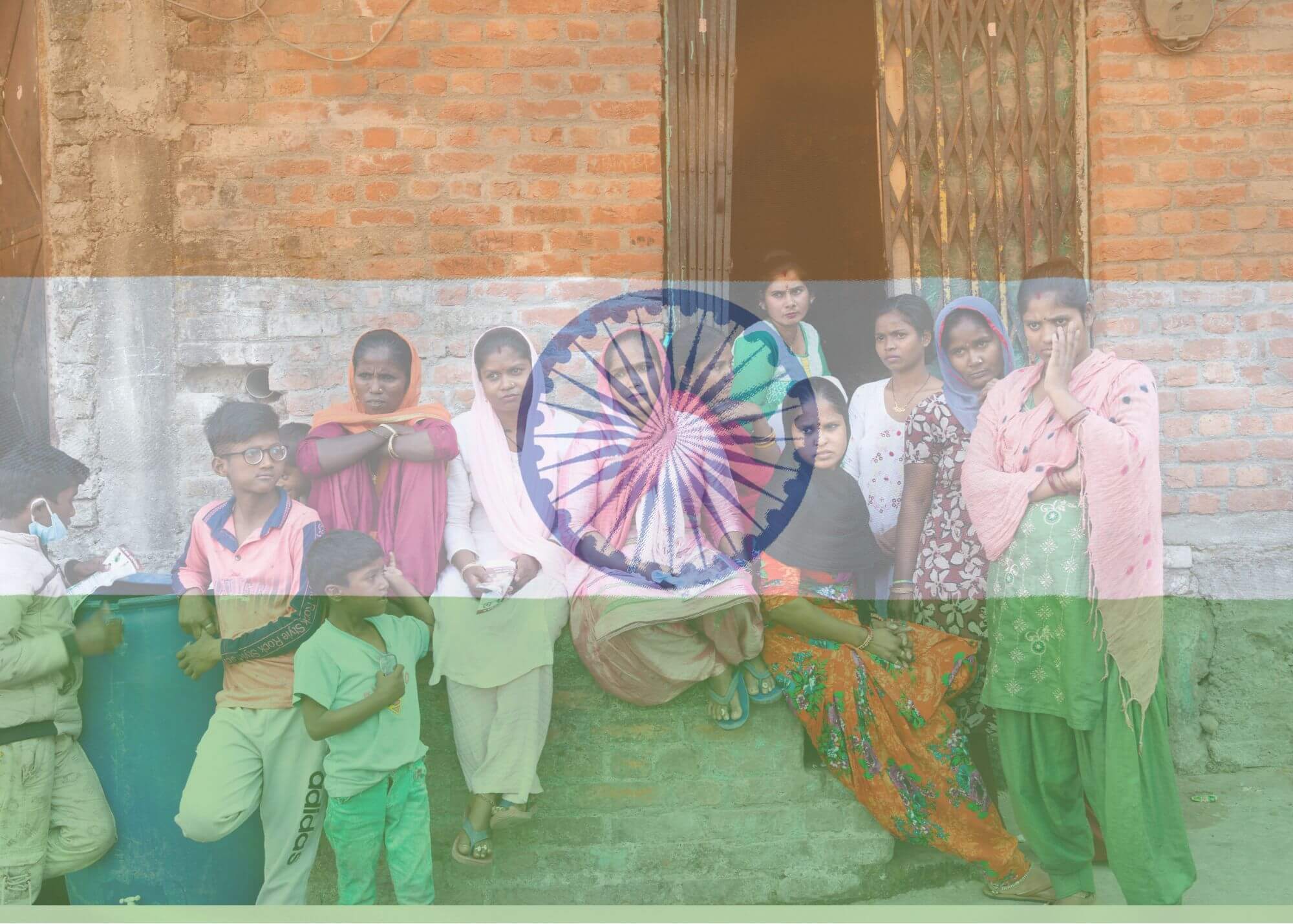
Why do Indians remain silent? Prof Bhaskar’s reflection explores silence, ethics, and power at the society-state interface in contemporary India, exclusively for Different Truths.
For the past few decades, I have wondered why people in India keep silent. Common people in my random sample did not respond to my question. Based on my wandering around and observing people interacting, I have written what follows. In my focus on silence and ethics, I take the society-state interface as the canvas.
It may not be surprising that the 1400 million population of India in 2025 maintains silence because this is the land of Buddha, Gandhi, and Chaitanya – the land of non-violence. Questions come whether this silence is self-determined or externally determined. In most cases, this is externally determined by fear-inability-custom. Self-determined silence is composed mainly of ‘micro-smart’ individuals who know silence-value; in silence, they maintain secrecy to optimise their objective functions. The micro-smart individual is hardly concerned about the nation or the need for social changes. Or it may be that he does not understand these abstractions, like nation and society. Rewards of ignorance, perhaps.
Social Structure
The power elite have an in-built silencer – their goals are the goals of the state. The people at the bottom who work as manual workers do not have the courage or capacity to break historical silence. India is a traditional society carelessly glorified. This society continued with ‘sati daha’, child marriage, dowry death, honour killing, public lynching, occasional riots and all that. Decision-makers in a patriarchal system turn a blind eye to such situations, despite the renaissance in undivided Bengal and the occasional rise of visionaries elsewhere. Wisdom seems region-neutral.
Gender Question
In a patriarchal system, women, educated or not, are conditioned to keep silent in the public domain. Hindu Bengali elderly women spend enough time in the thakur ghar (shrine at home, often a room)or temples or in rituals. Those are also guided or externally determined through Panchali or Panjika. They perform fasting on specific days and often live in pre-science. The male individuals seem happy in this arrangement. This arrangement seems archaic. In the heartland, it is recited mainly by men in private as well as in public.
Power Structure
The power structure is fundamentally state-centred. Even what appears to exist beyond the state’s boundaries is ultimately shaped by it, as the state positions itself as the custodian of nature, society, and nation. It exerts overriding control, determining what can and cannot be expressed in the public sphere. When the state perceives criticism of its actions or policies as a threat, individuals responsible may face intimidation or even imprisonment.
Ethics
The basic question in ethics is taking actions in need of society, for example, the challenged individuals, the households in crises, the refugees, the displaced people and all that. War and genocide are state questions that involve sovereignty and ethnicity; the latter cannot bypass ethics.
Ethics as practiced by individuals differ from the ethics upheld by institutions. For individuals, ethics often arise from self-learning or lived experience. Institutions, on the other hand, are collective entities bound by formal pledges and shared objectives. While institutions may pursue a set agenda, individuals are free to aspire to higher ethical standards, as long as these do not directly conflict with institutional goals.
The state’s role is to support the vulnerable, safeguard children, and enable society’s progress—or at the very least, not hinder it. Historically, many transformative social actions began with individuals, such as the abolition of sati daha and the push for widow remarriage during British India, which were later codified into law by the state. Yet, neither society nor the individual embodies the law itself.
Although state policies are intended to be universal, in practice, they often target specific communities, religions, or social groups. This creates a space for both cooperation and conflict between collective social choices and state decisions. In many cases, lawmakers prioritise electoral gains over ethical considerations, reducing policy decisions to numerical calculations rather than moral ones.
Fixing Agenda
The power structure fixes the agenda for the nation. In a liberal democracy, it is through parliament. In autocracy-fascism, it is through the leader with charisma. If it is a parliamentary democracy in outward appearance and an autocracy in practice, the outcome is camouflaged.
In a parliamentary democracy, it seems that it is majority rule fixed by the electoral outcome. The government in power determines the agenda, probably permitting the opposition to express views in debate in parliament unless the decisions are taken by ordinance. The examples are demonetisation and the lockdown announced abruptly by the head of the government a few years ago. It did not matter much how the migrant workers and families suffered or how people with cash habits suffered, because the purpose seemed to be much more than the immediate sufferings of people.
People First
Any sense of ethics requires the protection of people in need. Most of the people at the bottom live their lives or die in the routine rather than thinking about the nation-state. Most of the adult people in a study on need assessment as a part of my fieldwork in the Hindi heartland a few years ago told me, beta ko nokri dilwa do’ (provide a job to my son) and ‘beti ko shadi karwa do’ (get my daughter married). These seemed the highest ambition in their lives in a semi-pucca house in the rural society.
Ethics and State
India’s state encompasses all. Sometimes it self-rectified, also like shifting from the universal public distribution system (PDS) to targeted PDS after half a century of launching it. It abolished bonded labour after nearly three decades of India’s independence. It launched plans in 1951 and stopped in 2014. Political changes led to economic changes – the question of ethics was redundant.
The very issue of ethics embedded in policy changes or state actions is hardly understood at many layers of society. Like, who will be excluded from the network of targeted PDS? How could it have been that the agricultural labourers had to wait for 30 years to be freed from bondage? How could it be that income-poor people had to wait for a quarter century to listen to a pledge to remove poverty (Garibi Hatao)? All these are issues in ethics – ‘stop-go’ or ‘go slow’ for the state– and more than political-economic issues.
Most people probably could not articulate the fact that they were the cause of development historically and not the consequence of it. The state thought otherwise – after six decades of planning, it announced ‘inclusive development’ – that is, people not to be considered as excludable and not excluded from the processes of development. It is so far silent on adverse inclusion.
Ethics Failure?
Do the above imply failure of ethics? Rather than responding to this question in haste, it is better to presume that the determinant of the fate of people did not ponder over the link between the welfare-development activities on the one hand and ethics on the other. My understanding is, if the state can intervene in all the minute details of human life and living, then it becomes mandatory for the state to ponder over this question. However, non-intervention in all minute details seems a better choice, like who eats what, who posts what and so on, so long as these remain innocuous or so long as these do not challenge sovereignty.
Concluding Comments
Let the state not be accused of ethics failure simply because the state is not a unit in ethics – it is a unit in law. That law doesn’t need to incorporate ethics. The responsibility largely rests on the judiciary, which is an integral component of the state. Still, there may be an ethics failure. People need to learn from the practices in life and follow the path that is based on ethics.
The silence of people is criminal in a state of injustice.
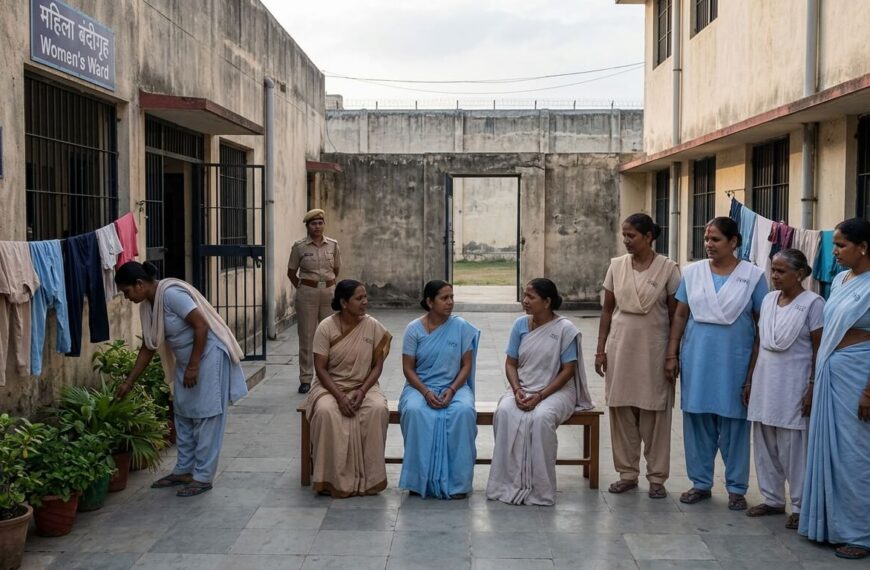
Picture design by Anumita Roy

Prof Bhaskar Majumder superannuated as an Economics professor from GB Pant Social Science Institute, Allahabad. He served as a visiting professor at Central University of Bihar (Patna), Sri Sri University (Cuttack), Banaras Hindu University (BHU), Science College (Calcutta University), and others. He published extensively in 26 reputed journals, authored 11 books, co-edited two, and contributed 38 chapters. He completed 26 research projects funded by the Planning Commission, GoI ministries, ICSSR, the World Bank, NTPC, and Tata Chemicals. An international academic, journal reviewer, and PhD supervisor, he holds degrees from the University of Calcutta. He is our National Editor: Economics and Social Science.


 By
By
 By
By
Food for much thought.