

On Earth Day 2025, Prof Bhaskar reflects on water conservation through observations in Arunachal Pradesh (forests) and Bihar (waterlogged areas), linking forests to groundwater recharge and highlighting conflicts between greed and nature.
The 22nd day of April 2025, as ‘Earth Day’, reminded people of their non-transferable duty to save the Earth by saving water. No doubt, life came from water, and water is an abode of life. I don’t have any knowledge in life science or earth science; as a traveller spanning the past half a century, I think I may offer little insight into this.
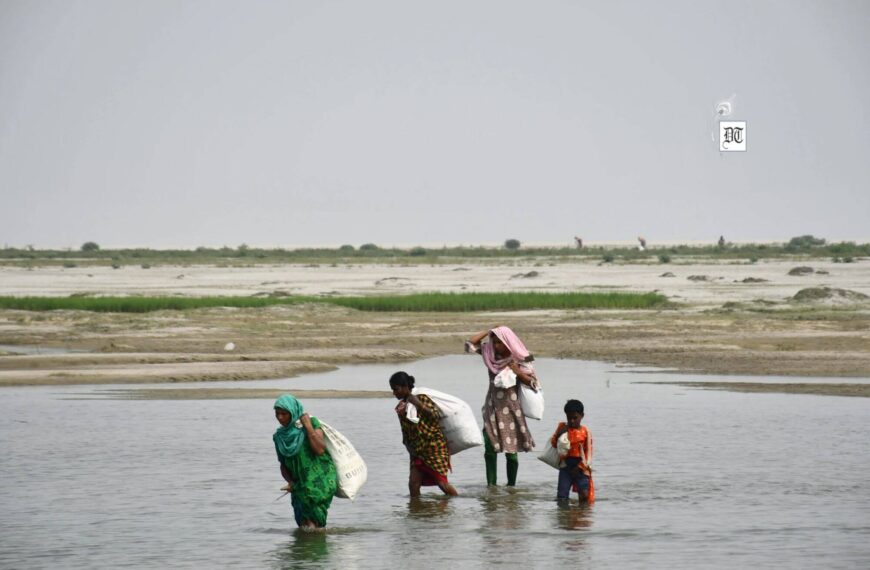
Two specific phenomena, among several others, I would like to present here: one, some years ago in the ‘forest-state’ of Arunachal Pradesh, and one very recently in the ‘historical state’ of Bihar. In Bihar, I asked one of the soil experts, ‘Why don’t you use water from the waterlogged areas that I find getting wasted each year on the outskirts of town, mainly Patna?’ The polite reply was, ‘Sir, this water is maintained to preserve the groundwater level’; in other words, the waterlogged areas would allow water to slowly seep down over time to keep the soil wet or cultivable. In Arunachal Pradesh, I was made to understand that one corporate entity had been driven out by the local people concerned to save forests despite permission by the government to cut bamboo in a specific number, for what the local people opined as the corporate had been cutting bamboo several times what was permitted.
While this note expresses a water-focused concern for the survival and livelihood of mankind, the context of forests will come from the symbiotic relationship between the two. In my understanding, outside oceanic water, all other earth spaces need forests for non-depletion of underground water through recharging and hence replenishment. The roots of trees generate water.
Uses, Non-Uses and Misuses of Water
Not surprisingly, drinking water became bottled, or a commodity for sale and purchase, implying scarcity value in urban areas, particularly in train compartments, buses on roads and depots, party-political functions, rituals, and public functions over the past few decades. Often railway pipes provide this water tapped by the vendors and properly sealed to make it look like mineral water. Innocent people buy it as mineral water.
The major uses of water are not for direct drinking at residential houses but for industrial purposes like cooling the boiler and manufacturing soft drinks like Coca-Cola. The coal-based plants are generally located on the banks of rivers, in absence of which water reservoirs are created in-house by the factory.
Rapid urbanisation through the construction of multi-storeyed buildings needs deep boring that forces the groundwater level of the surrounding areas to come down below the critical level; people started liking these concrete jungles that require no individual efforts to fetch water – the watchman does it mechanically. Urbanisation associated with the emergence of nuclear families is one major explanatory factor for the mushroom growth of such buildings with water drawn through deep boring. The not-very-distant crises of this are not readily realised; that is, the scarcity of water.
Villages still show visible water bodies like natural ponds, wells, lakes and canals. Rain-fed rural areas show life-saving water bodies for man and other animals apart from productive purposes like irrigation.
The cities, Udaipur in Rajasthan and Lalitpur in the Bundelkhand region of Uttar Pradesh, looked similar some decades ago due to the existence of comparable lakes. Udaipur could build it as a venue for tourism, while Lalitpur could not. It will be a hasty conclusion to say Uttar Pradesh cannot do what Rajasthan can. The choices and compulsions in decision-making in government may differ, but the lakes remained orphaned in Lalitpur.
Conflict
The conflict is not between nature and man; the conflict is between nature and greed – greed of the money elite. Just as the British deforested the Indian subcontinent under its control to add to the wealth of Britain, the Indian money elite made the forests nude for the timber trade. In the process, not only did the forests get nude, but the abode of the wild animals and birds was lost. The conflict, thus, manifested over forest dwellers in trees-bush-holes vis-à-vis man’s greed.
The conflict is also concealed in the development that leads to the destruction of nature. One example is the demolition of the peak portion of the Himalayan range for the construction of motorable roads on hills for the ‘char dham’ pilgrimage as well as for tourists. This led to less snowfall, less water that previously formed the hilly rivers and fish therein. Undoubtedly, all this led to deforestation and the increasing scarcity of water.
Nature is not an idea in abstraction – it is composed of air, water, sunlight, soil, trees and plants. All these are maintained not by guns but by the right people in the right place. These people need not be ‘paid people’. Forest dwellers have done it since the time of the Ramayana-Mahabharata era in India’s mythology. During the past few centuries, the zamindars engaged people to build large lakes and wells with a multi-purpose temple adjoining to facilitate travellers as well as devotees, the residue and ruins of which can be observed even today.
Symbiotic Relations
Most of the Adivasis are forest-based for living and livelihood. Based on medium-term credible research in the Kandhamal district in Odisha around 15 years ago, I have strong reasons to believe that Adivasi are the people who can be entrusted with the responsibility to save the forest and save the earth. The simple reason is that Adivasis do not suffer from neoclassical ‘non-satiety’, and hence the concept of greed is redundant for them.
People-centric nature-saving was also observed less than a decade ago in the Uttarkashi region of the state of Uttarakhand, where the needy homeless household was provided with one uprooted tree to construct the residential house. This was once and for all. This was community-decided.
Impossibility
The core state believes differently – it seems the core state is of the strong view that dense forests mean a den of extremists. Hence, there are two steps for the state: one is to kill the extremists seen as a threat to the state, and two, to deforest. The district of Sonebhadra in Uttar Pradesh may show the second choice. There are people first category, and there are people second category – the first category are forest-dependent for food, fuel, and animal feed; the second category are for the purchase of timber-transformed goods like furniture, etc. There is a perceived third category also as an offshoot of the second category – it is the conversion of forests into parks-hotels-resorts— for the money-elite (not nature-lovers). The government gets money in exchange; the market goes in favour of the conversion of forests into comfort goods – commoditisation of nature by quantification of nature.
The corporates transform forests into pharmaceutical products, paper products, and timber products. In British India, high-quality timber was imported from Burma (Myanmar). The existence value of forests is less recognised – what is more recognised is the transformative value. Economists focus on natural resources that are different from nature. Ecologists may be the exceptions in this perspective.
Forests, as the vital source of water, thus are in danger; that is not because of the first category of people.
Possibilities
There are a series of pledges on what to do: reuse-recycle water and replenish trees. The government and the philanthropist pledge. Who are the real stakeholders? Three of them: people, corporate, and government. People include forest-dependent, land (agriculture)-dependent, and food-fuel-animal-feed-dependent people. The corporate includes both public and private enterprises. The government controls both the people and the corporate. Global agencies are not being considered here, though those also may play a role in a sovereign country’s resources.
Innocent people have reasons not to know the relevant acts that the corporates know as formulated for implementation by the core state. Ignorance of the people cannot be a solid reason why they may be evicted from access to the needs that they have for water and non-timber forest produce. The responsibility lies with the government on how best to use and reuse, and not use, water and forests. This is for the simple reason that the state is committed to sustainable development, the core of which is saving the Earth.
Though it is too early to talk about the longevity of the earth, global leaders need to think along this line with the non-use of non-replenishable nature. This responsibility is beyond the frontier of sustainable development. Non-use rests often on non-development in the conventional sense of the term. It needs serious thinking on non-use by period and the conscious consensus of people.
Methodology: Participatory observations.
Picture design by Anumita Roy

Prof Bhaskar Majumder superannuated as an Economics professor from GB Pant Social Science Institute, Allahabad. He served as a visiting professor at Central University of Bihar (Patna), Sri Sri University (Cuttack), Banaras Hindu University (BHU), Science College (Calcutta University), and others. He published extensively in 26 reputed journals, authored 11 books, co-edited two, and contributed 38 chapters. He completed 26 research projects funded by the Planning Commission, GoI ministries, ICSSR, the World Bank, NTPC, and Tata Chemicals. An international academic, journal reviewer, and PhD supervisor, he holds degrees from the University of Calcutta. He is our National Editor: Economics and Social Science.


 By
By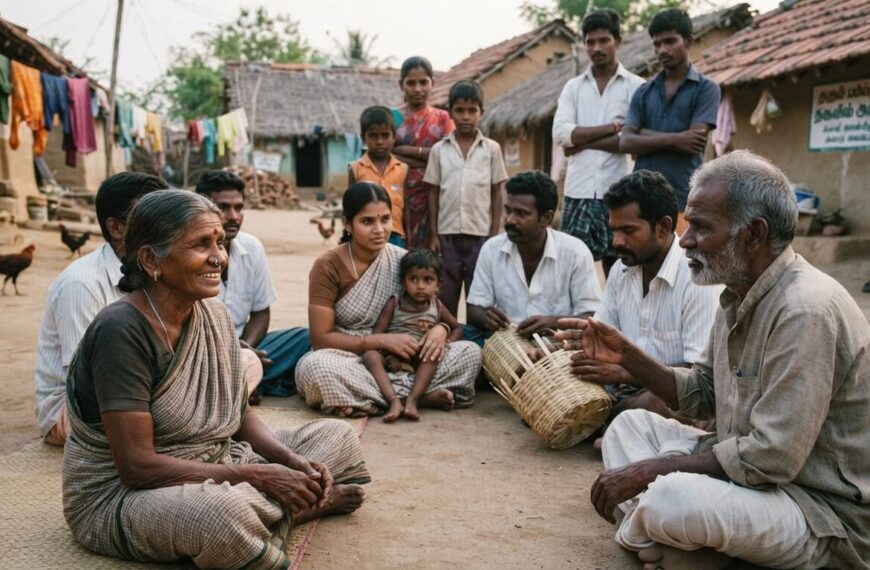
 By
By
 By
By