
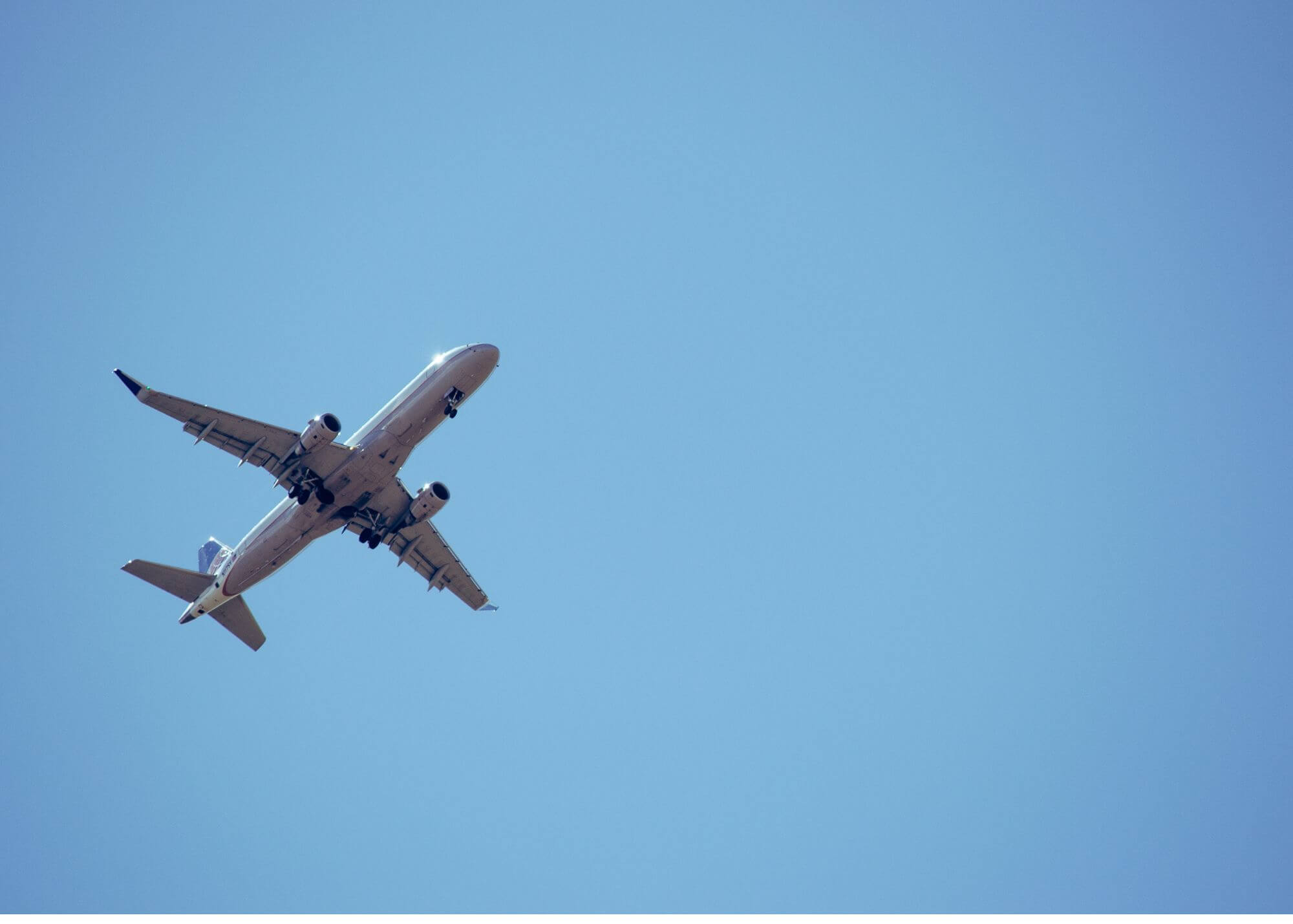

Praveen Swami’s analysis of “False Flags” precedes this account of Dr Azam’s 1975 jail encounter with Hashim Qureshi, the 1971 Ganga hijacker. The author met him in jail, an exclusive for Different Truths.
As usual, The Print’s Contributing Editor, Praveen Swami’s video clip, False Flags, is researched and professorially delivered. This humble scribe offers a few personal anecdotes and observations about Hashim Qureshi, one of the two hijackers who skyjacked Indian Airlines, Ganga, to Lahore in 1971.
Scene: First encounter with Hashim the Hijacker, in Kote Lakhpat Jail, 1975, sixteen kilometres south of Lahore.
Cast of characters
Hashim Qureshi, one of the two hijackers of Indian Airlines Ganga, hijacked to Lahore in 1971.
Rajasthani dacoit Thakur Jagmal Singh: wanted for 163 murders in India but only one in Pakistan. Reportedly, caught in a conflict of interest between the Indian authorities, the Nawab of Bahawalpur and Pakistani authorities, he became excess baggage for the latter. They activated the pending Pakistani First Intelligence Report (FIR) and surrounded the abandoned fort in Cholistan, which was Thakur Jagmal Singh’s headquarters. After a thirty-six-hour gun battle, when the Thakur and his roughly 200-strong band of merry men ran out of ammunition, he surrendered in exchange for his troops going free. They roamed between Cholistan and Rajasthan, so the Pakistani authorities handled their sirdar with velvet gloves!
Panna Singh, the Thakur’s pockmarked, sprightly bodyguard who had faithfully accompanied him into prison.
Ashraf Arain a.k.a. Khalifa — the Caliph — a Lahore District Don, charged with multiple murders in and out of jail. His men, too, were still out there.
Khadim Butt, former Air Force commando sergeant, caught in flagrante delicto, intimately entwined with his commanding officer’s begum, and charged with the theft of government property. His recurringly fearless opposition to jail authority had earned him a rear end permanently blackened with congealed blood, which he was prone to ceremonially flash on occasions. He was under Khalifa Ashraf’s mentorship.
Both were formidable chess players.
Azam Gill, former Rifle Company Commander, Punjab Regiment, settling the bill presented by a Field General Court Martial (FGCM) consequent to summarily punishing his Battalion Commander for consistently besmirching his troops’ honour by sexually explicit verbal abuse, evoking their mothers and sisters.
Thakur Jagmal Singh had invited me to tea in his chakki to welcome me to Kote Lakhpat, along with the two dukhies mentioned above. A chakki is a millstone that was used to be ground by convicts undergoing rigorous imprisonment, and an individual cell is still known as a chakki.
By respectful vox populi, we were Dukhies — the aggrieved.
Not goondas, assaulters, thieves, robbers or murderers.
Dukh is grief, and we were those who had been aggrieved and then personally administered undelivered justice. Kind of helped the overloaded delivery system move along.
Our mutually enriching conversation was about the pros and cons of different ways to obtain justice, as well as the misfirings of grenades and sten-guns.
A shadow fell over the chakki’s entrance.
There was silence.
The steel-bar door framed a stocky, muscular young man of medium height, fair skin and shifty eyes that darted over me. I caught his gaze, but it slid sideways.
“I—I just came to pay my respects to Kaptan Saab,” he stammered nervously, jerking his chin in my direction.
I nodded, the Thakur looked away, and on cue, Panna Singh’s tongue clicked in the sound made to speed up a Tonga horse, and he flicked his head. The young man folded his hands, bowed his head and disappeared.
I was struck by his noiseless walk.
“My apologies for that bin-bulai (uninvited) interruption, Kaptaan saab,” Thakur Jagmal Singh intoned in his deep baritone, as Panna Singh poured more tea from a blackened kettle into our small glasses. “That was Hashim Qureshi, the Kashmiri hijacker. He is not among the dukhies.”
Khalifa snorted, Butt had a sneer on his face, I looked into the Thakur’s eyes and we both smiled.
Scene: Hijacker in absentia
Cast of characters for this scene
Major (ex) Ayaz Sipra, Baluch Regiment
Lt. Col (ex) Hamdani of the Inter-Services Intelligence (ISI).
Both had been convicted for the abortive 1973 Attock Conspiracy by a Field General Court Martial presided over by General Zia-ul-Haq and were serving their sentences in Kote Lakhpat Jail.
Our chakkies were in a row facing a lawn, surrounded by a high wall and a steel-bar entrance gate.
Riaz, my designated mushakati, came up, adjusting his white convict’s cap. A Mushakati does hard labour. An A-class prisoner is granted one to look after his cooking and cleaning. Riaz had been a minor pickpocket and bicycle thief in the seediest STD-ridden alleys of Heera Mandi, until the pimps caught him, thrashed him, and handed him over to the police.
“I’ve had a word with the Superintendent, and that bloody hijacker will be warned that I’ll beat him to the point of defecation!” Ayaz Sipra growled. He sprawled on the chair next to Hamdani.
“Cha’a, Major saab jee?” Riaz inquired.
“Yes,” and Riaz toddled off to stew tea with milk, cardamom, cloves, cinnamon and badian.
Col. Hamdani gave Major Sipra a keen look.
“What’s wrong, young man?”
“Sir, my mushakati sat on one of Hashim Qureshi ’s chairs.” Hashim was a B class prisoner. He had a cell to himself, slept on the floor but was authorized a chair and a mushakati. Sipra, Hamdani and I were A-classya’as, in individual cells with a bed, toilet facilities, mushakatis and a chair.
“Hashim gave him a shoe-beating. I just informed the Jail superintendent to sort him out, before I did.”
“Rather petty, for a celebrity hijacker!” Hamdani snorted.
Major Ayaz Sipra’s brother was the Deputy Inspector General of Police for Lahore Division, and things could get very rough.
Shortly after, Hashim Qureshi, accompanied by his nambardaar in his red trustee’s beret, turned up and profusely apologized to Sipra, insisting that he hadn’t known that the bloke sitting on his chair was Major Saab’s mushakati.
Hashim the Hijacker was licking his lips and his naturally shifty eyes were struggling for a reset.
He stood awkwardly.
We stared him down.
Then he murmured a goodbye greeting and left — noiselessly.
Hashim the Hijacker, Zulfikar Ali Bhutto’s Hero
Hashim Qureshi and his brother Ashraf — later a Professor at Lahore’s Punjab University — brought Ganga, Indian Airlines’ Fokker F27, to Lahore at gunpoint on 30 January 1971. They claimed to be Kashmiri separatists of the National Liberation Front (NLF). The plane was surrounded by Pakistani security personnel. However, they let through the deg cauldrons of biryani, nihari, wicker trays laden with roghni nans and matka clay-pots of gulab jamuns brought by the rank and file of admirers hysterically emitting battle cries and dancing p’hangrdhas to the energetic beat of t’holkis.
The hijackers were also effusively lionised by future Prime Minister Zulfikar Ali Bhutto, who had, by then, stopped calling self-promoted Field Marshal Ayub Khan ‘Daddy.’ Bhutto had designed the 1965 Operation Gibraltar, convincing the army that once commandos entered Kashmir, they would trigger a popular revolt merely based on a shared religion.
That didn’t happen.
Instead, the Kashmiris gave them up to the Indian authorities.
As the Pakistan army’s resident intellectual monopolising geopolitical specialisation, Bhutto had also convinced the army high command that India would never attack across the international border.
That’s exactly what happened!
And Zulfikar Ali Bhutto was also wrong about the hijackers, who were destined to be demoted from heroes to villainous traitors for being part of an R&AW plot to weaken the Pakistan army in (then) East Pakistan, by providing India with a pretext to ban Pakistani military flights over Indian territory. Funnily enough, though, India had stopped Pakistani military overflights in 1951!
Following the hijacking and destruction of the Indian Airlines Fokker aircraft, India was also enabled to an Pakistan’s civilian overflights.
Then came the Dacca Surrender and the creation of Bangladesh.
And that was when things started falling apart for the glamourised Qureshi brothers.
Their heroic hijacking transformed itself into an R&AW operation designed to ban overflights and weaken the Pakistan army’s supply chain.
The flipped narrative was justified by the Qureshi brothers’ imprisonment.
The poor Qureshi brothers’ gratuitous menus of biryani, roghni naans, nihari and gulab jamuns had to make way for prison dal-roti.
Hashim the Hijacker: Scapegoat or R&AW’s groomed villain?
According to Wikipedia, Hashim Qureshi “read Mahatma Gandhi, Martin Luther King Jr., Nelson Mandela and others in jail.”
All the same, his conversation revolved around banalities about the weather, food, sexual deprivation and narrow political perceptions limited to his aspirations. Although deriding both the Indian and Pakistani governments, he placed the Pakistanis a tad higher than the Indians!
His conclusions were a narrowly focused wishlist and consequently muddied his opinions. He looked down on all other Indian prisoners—smugglers, the lot of them, called blackya’as. They, in turn, despised him. Had he not been accorded B-class status due to his university degree and the government’s wariness of Pakistani Kashmiris, the blackya’as would have made short work of him.
As for the Pakistani convicts, apart from the petty criminals on the lowest rung of the prison’s social ladder, they bypassed him and avoided any confrontation — no pangaa.
Whatever the case, Hashim Qureshi had the run of the prison, the guards and trustees showed him grudging respect, and he walked in and out of the superintendent’s office and the medical clinic at will.
He was well-dressed, well-fed and had pocket money to pay the guards for treats. So, he was being looked after from ‘outside,’ — in prison parlance, he had ‘pairvee.’
I shared my observation of this anomaly with Colonel Hamdani and waited for his opinion.
His eyes deadpanned, and he shrugged his shoulders noncommittally.
I backed off and let it go.
Hashim Qureshi had a very high opinion of Maqbool Bhat (or Butt), the leader of the Kashmiri NLF. Qureshi told me that Butt had trained him and his batch in Gilgit and/or Chitral. Their training included 30-kilometre marches in the Karakoram mountains, carrying a full battle load in inclement weather. Qureshi’s prideful cribbing over minor details of a soldier’s ‘sufferance’— the pull of a rucksack, bite of a nylon strap, the pleasure of hot tea in snow and sleet, wet socks, hunger, sleep deprivation, etc., were authentic. I believed him and still do. And he also displayed a sound knowledge of infantry weapons.
He could equally well have experienced and learned all this in India’s Border Security Force (BSF): after the Dacca surrender, he had been accused of being an Assistant Sub Inspector in the BSF.
He swore on the Holy Quran that he was not.
I only had his word, in addition to Pakistani newspaper reports mainly woven from an official spinning wheel. And, for whatever it might be worth, the recall of my judgement.
Christmas morning 1975, though, Hashim Qureshi came to greet me, followed by Ashraf Khalifa with a box of Amritsari Mithai sweets of Beadon Road, and Jungoo, a former police head constable, carrying a soup plate of steaming hot kishmish custard garnished with chopped nuts!
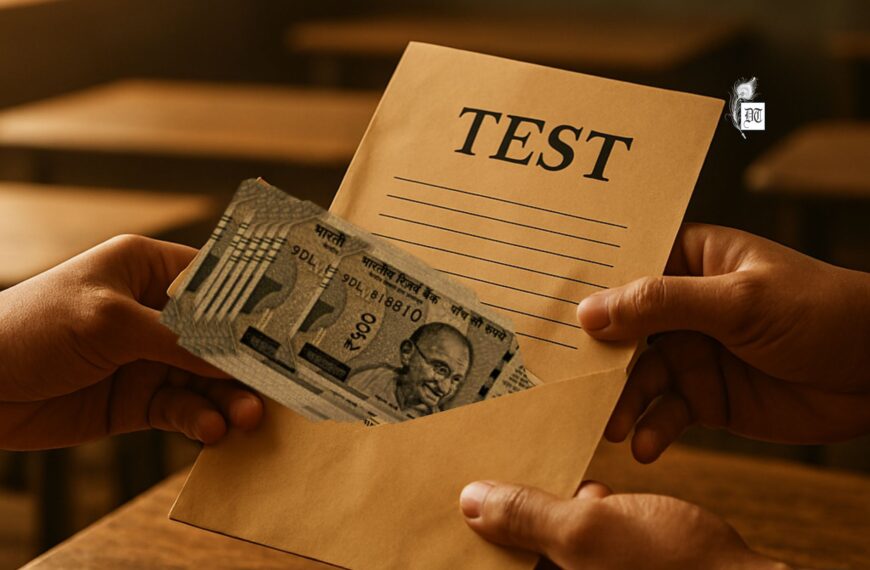
Picture design by Anumita Roy
Editor-in-Chief, Arindam Roy’s Note
In this compelling piece, Azam Gill—a former officer in the Pakistan Army now residing in France—presents a well-substantiated account highlighting Pakistan’s long-standing support for terrorism and its continued efforts to export terror to India. His write-up gains added relevance in the context of Operation Sindoor.

Dr Azam Gill is a France-based novelist, analyst and retired tenured Lecturer of Toulouse University, France. He has authored nine books, including four thrillers — Blood Money, Flight to Pakistan, Blasphemy and JADINY, and contributed to six anthologies. He also writes for Different Truths, The Express Tribune, and The International Association of Thriller Writers and blogs at https://writegill.com/. He served in the French Foreign Legion, the French Navy, and the Punjab Regiment. JADINY: Just Another Day in New York, his latest novel, is the first counterfactual/alternative history thriller about the 9/11 Twin Tower attacks. He is our Editor-at-Large, Europe.
 By
By
 By
By
Reference of parliamentary debate on Jagmal Singh in the Indian Parliament
https://rsdebate.nic.in/handle/123456789/571525?viewItem=browse
Bro is this comment OK for Different Truths:-
“A powerful and eye-opening account. Dr. Gill’s reflections show how easily public heroes can become political scapegoats, and how prison walls often reveal deeper truths than official narratives. The story reminds us that justice, loyalty, and honour are rarely straightforward—and that history often hides more than it tells.
Basically, freedom of speech and opinion in a democracy implicitly carries the answer to your question!
Thank you for your interest, kind words and perception.
A powerful and eye-opening account. Dr. Gill’s reflections show how easily public heroes can become political scapegoats, and how prison walls often reveal deeper truths than official narratives. The story reminds us that justice, loyalty, and honour are rarely straightforward—and that history often hides more than it tells.