

Prof Bhaskar expresses concern over the decline in book interest and the challenges faced by public libraries in West Bengal, exclusively for Different Truths.

Man does not live by bread alone, so goes the saying. Of late, I feel convinced that most of the men live by bread alone—for some, even bread may be rare. Undoubtedly, food comes first; should education take the second rank? Where is the choice or compulsion for man? Are some men now book-haters? Let me elaborate based on the West Bengal experience of the recent past.
The reason why I felt compelled to pen or open what follows is the disappearance of books from different locations and the invisibility of book lovers. This is notwithstanding the Kolkata Book Fair and Delhi Book Fair once every year, mostly for the display of what new has been written by the authors. There was a belief that Bengalis were fond of Rabindranath, books, and fish. Rabindranath and fish have remained; books disappeared from the list.
The question comes: when there are authors, there must be readers. The instantaneous response could have been the visible existence of a few readers relative to a large number of books in supply – that questions the proposition in economics, ‘Supply creates its own demand,’ as JB Say said once. Now, books are in excess supply – authors are unstoppable.
Point of Inflexion
The economy, or the material conditions of life, started taking a different route since the emergence of Haldiram Bhujiwala and mobile smartphones and Google. Students at schools and colleges have learnt that all knowledge is available through Google. They keep their smartphone in their hands for almost 24 hours. Often, they check from their mobile phone in the classroom what the teacher is teaching – is the content Google-consistent?
Visibility-Invisibility
Once, almost all the major railway platforms in India had Wheeler’s bookstall, where people used to browse books, if not immediately purchase them. Now those have disappeared; Haldiram Bhujiwala has come up as a substitute – ‘old order changeth, yielding place to new’.
Most of the cultural libraries attached to cultural clubs in the suburban areas of West Bengal wait for readers to come – readers are invisible. Even if a few come once in a blue moon, they come to peruse the local news-centric newspapers like Anandbazar and Ajkal that suit them linguistically, apart from time pass and/or gossip in the tea stall – ‘time pass’ is a local vocabulary term that shows how to spend idle time.
The book that is sold the most is Panjika (almanack), which tells auspicious and inauspicious days and the days of rituals and festivals. Each house has an up-to-date Panjika in the Hindu Bengali family – if not, the priest invited to perform rituals will ask for it before he is convinced about the appropriate date and time. Dictionaries used to be an asset in Hindu Bengali families in the pre-smartphone era. Now the dictionary has disappeared almost.
Library Failure
A library may well be seen as a store of knowledge – each book is the captured soul of an author. West Bengal has no dearth of huge libraries like the National Library, Asiatic Society, Indian Statistical Institute Library, State Central Library, etc. All are Kolkata-located, of course. West Bengal can boast of the bookshops located on College Street, Kolkata, like Dasgupta Book House and Sarat Book House, apart from numerous book stalls. There is a crowd also on this road to search for books and, if necessary, purchase them.
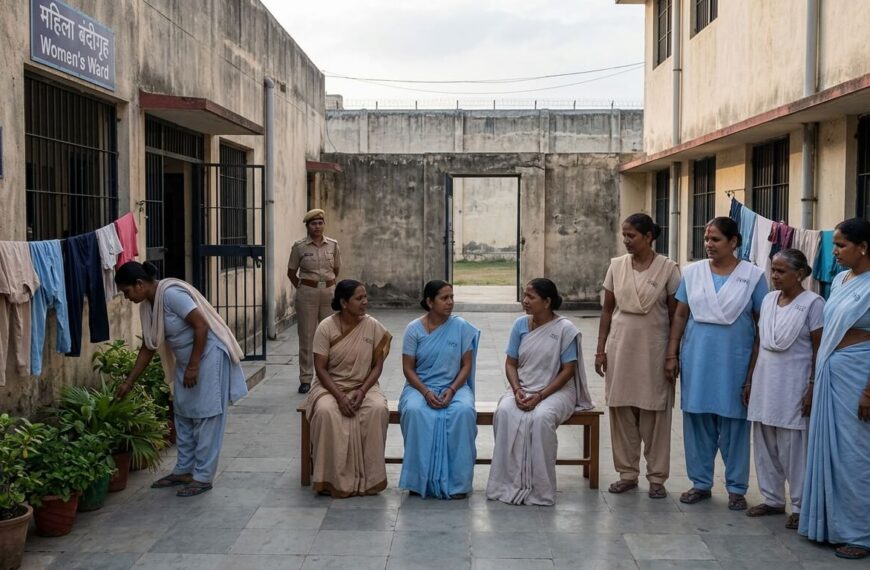
But the general condition shows failure. This is reflected in the failure of libraries in suburban areas, where most of these are shut down in the absence of members and readers. People are not interested in books – it is not known what specific books they are interested in. It is also not that they don’t have time to visit libraries, many of which are cost-free for reading books. These people are visible in tea stalls, sitting on benches on the railway platform, gossiping on public roads, visiting temples and all that. It is not known if they are book-haters, but to be haters, one has first to know what is in a book to hate.
Example 1.
One public library named Sushil Chandra Memorial Library was set up and inaugurated on September 26, 2022, which is the auspicious birthday of Vidyasagar, and was attended by around 35 educated adult persons at Agarpara, which is a suburban area of West Bengal. Since then, the membership grew to nine by April 2025. The library contains books mostly in social sciences, literature in three languages – English, Bengali, and Hindi. The propaganda was that the library contained high-level books of economics only based on the supposition that it was set up by a superannuated Professor of Economics. Then the propaganda was that all the books were in English, which were unreadable. As soon as this gossip was gone, most of the gossipers started avoiding the road that stands in front of the library – the tragedy of errors. But the responsibility lies with the person who dared to set up the library.
Exceptions
The institutions of higher education are exceptions where there are libraries meant for the students, and those libraries are functional like the libraries in Calcutta University, Jadavpur University, Presidency University, and St. Xavier’s University, apart from colleges like Goenka College, Lady Brabourne College, Ashutosh College, and Vidyasagar College, all in Kolkata proper, to name a few. Thus, some serious teachers and students love books, both for public examinations and a ‘natural love for books’.
Political Society, or Money Society, or Religious Society
Social beings become readers, and very few of them are writers. What I observed is enough of a crowd, mainly women, in temples on different occasions, none of whom came to visit libraries in the not-very-remote past. Male members in their families carry flowers and different types of leaves, like mango-tulsi-bel, bought from the market. Family priority has no substitute, of course.
The marginalised people are engaged in petty business, work as vendors, and ply three-wheelers on public roads; they do not think about visiting libraries, as they are self-engaged most of the time each day. Money matters – not books.
Members in polity are self-captivated in their fixed ideas and avoid being influenced by other types of books in libraries – redundancy of libraries. Political party offices and party leaders matter more or wholly for the social beings as followers or as voters.
Social Decay
The failure of the public library is one step forward for socio-cultural decay. The captivated soul of the author remains strangulated in the dust and termites. The librarian may think it is his failure – he needs to be assured it is the social failure of which he is a part, of course. His fault was that he did not go to sell bhujia to reap his success.
Present priorities do not centre around books. Some decades ago, books as a gift at functions including marriages were a symbol of cultural aristocracy that has now come down to cash in an envelope and non-book gift items in attractive packaging. The offshoot is shut down of bookshops that were set up long ago.
Symbiotic Decay
If the setting up of temples ensures more social acceptance and the setting up of libraries shows less social acceptance, the system will go for the former. The crowd in temples is also the crowd in the queue for political voting. So very recently, a Jagannath temple was set up at Digha, the main sea-coast tourist spot in West Bengal – social success breeds political success. If the priest is accepted more relative to teachers and librarians, more temples will be visible. The priests are unquestionable – teachers are. In increasing the invisibility of teachers teaching, books are not referred to, so where then is the relevance of public libraries?
Of course, there is a mushrooming growth of coaching centres that are often no less famous than the universities, like the gossip once in circulation that many people knew the existence of the University of Allahabad as a location just opposite Krishna Coaching. Some coaching centres are meant to teach from Reader’s Digest and Competition Master for ‘sure success’ in competitive examinations that make efficient bureaucrats. This may be one reason why a few libraries in suburban West Bengal keep only these objective-type, easy-to-swallow books for the aspirant students.
Concluding Comments
I considered the library as a store of books and knowledge, and avoided books purchased/owned by individuals. With apologies to all individual book lovers who buy and read books, this article is meant to draw attention to the failure of libraries in West Bengal that once flourished, and people used to discuss books that included poems, novels and short stories. The failure of the public library is not the failure of the person who set it up; it is a social failure. Civil society needs to ponder this and guide the government to pay attention to the social priority. This has no conflict with the Lakshmir Bhander or Jagannath temple.
Methodology: Based on a library set up by self for public use, several visits to book fairs in Kolkata and Delhi, participatory and disguised observations, and communications with middle-class adult educated people.
Picture design by Anumita Roy

Prof Bhaskar Majumder superannuated as an Economics professor from GB Pant Social Science Institute, Allahabad. He served as a visiting professor at Central University of Bihar (Patna), Sri Sri University (Cuttack), Banaras Hindu University (BHU), Science College (Calcutta University), and others. He published extensively in 26 reputed journals, authored 11 books, co-edited two, and contributed 38 chapters. He completed 26 research projects funded by the Planning Commission, GoI ministries, ICSSR, the World Bank, NTPC, and Tata Chemicals. An international academic, journal reviewer, and PhD supervisor, he holds degrees from the University of Calcutta. He is our National Editor: Economics and Social Science.


 By
By
 By
By
 By
By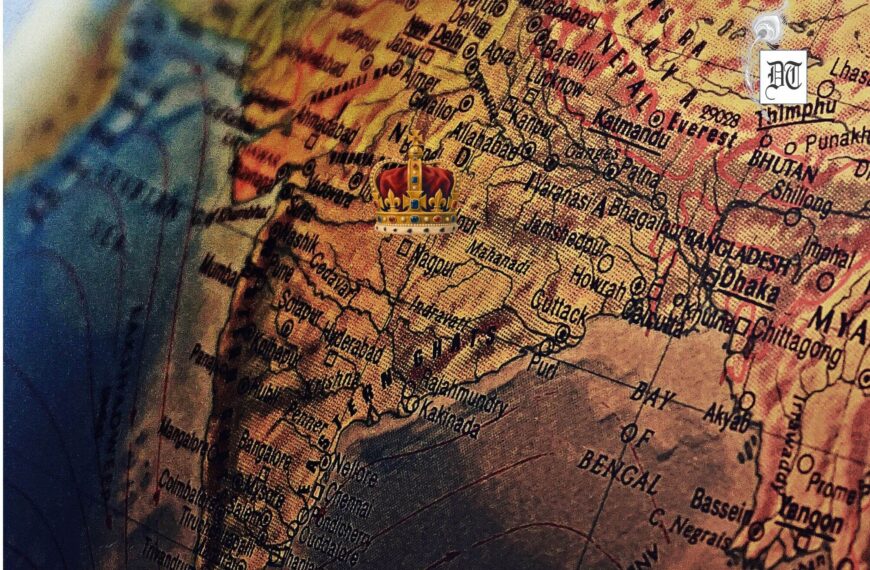
 By
By
I fully agree with your observations, Professor Majumder. I often think there are more poets and writers than readers. Even the so-called book fairs that draw big names hardly care to promote authors that are not known to an established writer, reviewer or editor even if their books may be gifted away with great expectations. The culture of reading is dying fast and the new culture of viewing has taken over the mind and habit of everyone.
–Professor R K Singh