

Navodita profiles Tezpur Mahila Samiti, a century-old organisation founded by Chandraprabha Saikiani, as a symbol of women’s strength and Gandhian ideals, exclusively for Different Truths.

I recently had the privilege of visiting a hundred-year-old All-Mahila Samiti founded by Ms. Chandraprabha Saikiani, a single mother born in 1901. She raised not only her only son with grit, determination and courage but built up this Samiti keeping in mind the foundations of the Gandhian dignity of labour’ and ‘respect for all.’
Tezpur Mahila Samiti had Saikiani as the first secretary from 1919 to 1922. She took up social issues like the Purdah system and child marriage, which had plagued society at that time. She also combatted the problem of opium, which made many working men inebriated following Gandhi’s call against opium as an evil. The women of this Samiti, under her leadership, led the 1920-21 Non-Cooperation Movement and the 1932 Civil Disobedience Movement around their area.
Later, she became a teacher and then headmistress of the Girls’ M.E. School in Tezpur. Other women who supported her in this cause were Tarini Devi and Hemlata Barua. Hemlata was the assistant secretary to the Xilpi Mandi (the handloom unit) of Samiti till 1937. She was a young widow at the age of 18 but deftly managed Samiti’s handloom unit. During 1942, under her secretaryship, the Samiti offered their services to the refugees from Burma. She later received domestic science training from Calcutta and oversaw the sewing and home-based production of clothes for the Tibetan refugees in 1959.
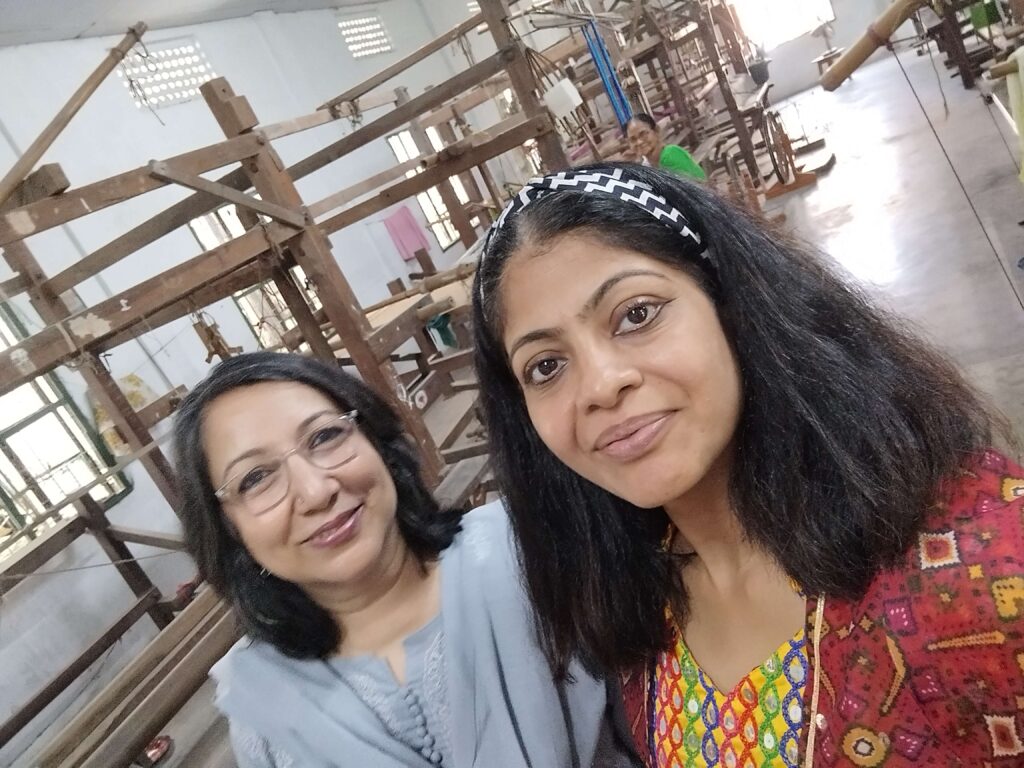
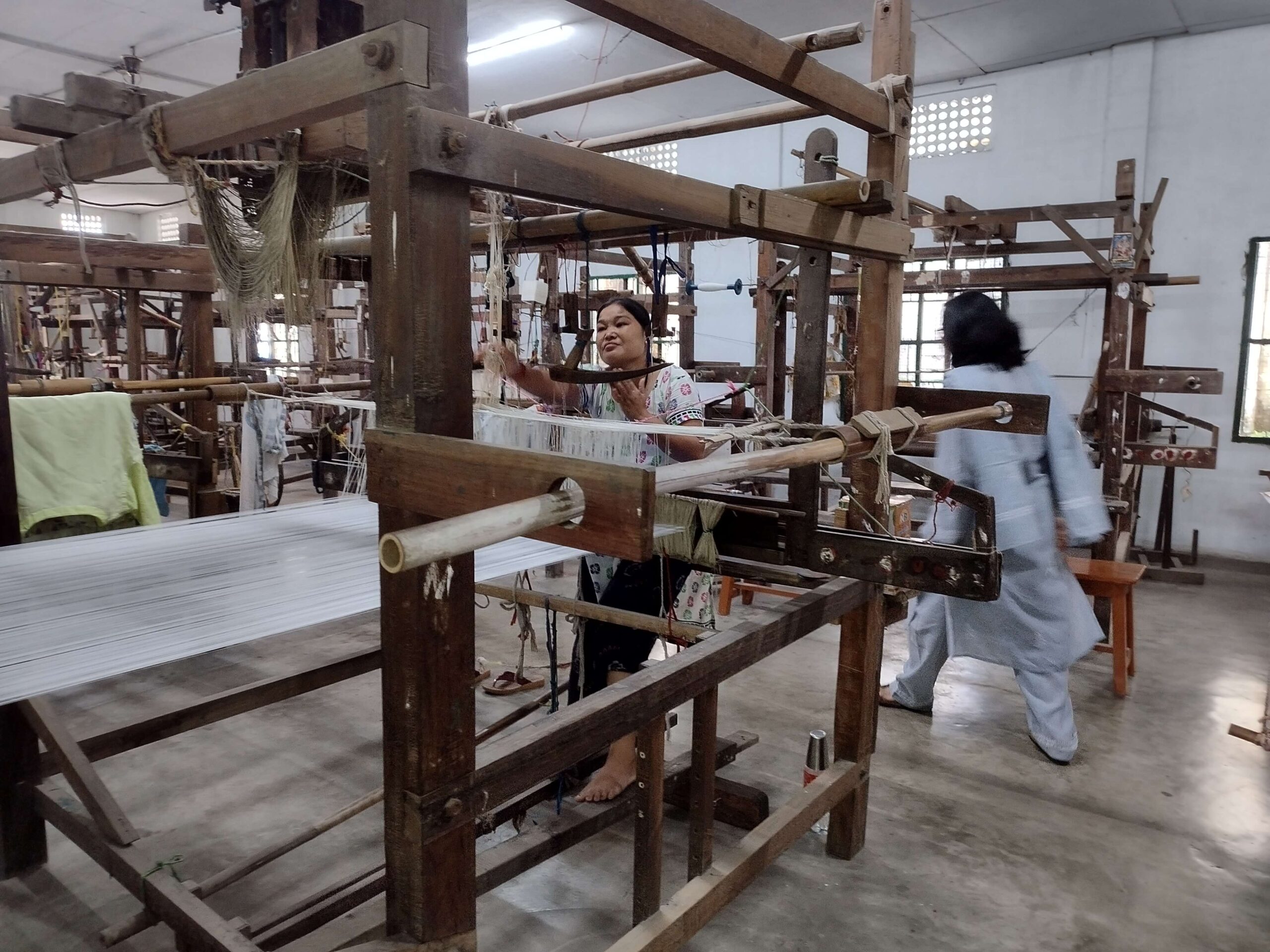
In its present stage, the Samiti employs several women who reside on the premises and work at the handloom unit. A school is also run for young, underprivileged children within the precincts of the Samiti, and there is also a unit for environmentally friendly products, which are sold at the local in-built shop run by the Samiti.
The Samiti stands up for the values of kindness, compassion, equality, inclusivity, generosity, and empathy, along with the basic Gandhian principles of Satya and Ahimsa. There is a women’s cell that provides counselling to households that are victims of domestic violence or any such untoward incident within the domestic environment. The Samiti has helped several women victims of household burns, violence, poverty, abuse, and disease find feet and helped them become self-reliant and self-sufficient in their own way through work and ‘Shram’.
Mita Nangia Goswami further plans to steer the Samiti to success with environment-friendly ways of knitting, weaving, stitching clothes, and helping women make a mark for themselves. The weavers are particularly the cynosure of this centre for everything Gandhian. So, if you decide to visit Tezpur in Assam, be sure to visit this Samiti and buy a hand-knitted frock or tablecloth, which you so wish your grandma had knitted for you!
Photos by the author

Navodita Pande teaches Mass Media and Communication and English to ICSE/ISC school in Assam. She also trains students in Yoga, gratitude and healing. She loves to paint, write and read as her pastimes. She lives in Assam with her daughter.


 By
By
 By
By

 By
By