

Medical profession has no remedy to offer in the aftermath of nuclear exchange. Abolition is the only answer. The recent summit between US President Donald Trump and North Korean leader Kim Jong Un has given some positive signals. The Treaty Prohibiting Nuclear Weapons (TPNW) passed by the UN General Assembly on 7th July 2017 is a big hope for complete nuclear disarmament and saving the world from nuclear catastrophe. A report, for Different Truths.
July the 7th will always be remembered as a historical day. On this day in 2017 the world community decided to vote for complete nuclear disarmament and save the world from catastrophe that could threaten the very existence of mankind. It wasn’t an easy task. The UN General Assembly passed a Treaty Prohibiting Nuclear Weapons (TPNW) with 122 countries voting in favour of the resolution. Only one country, the Netherlands voted against while Singapore abstained. It is an irony that none of the nuclear armed countries, the USA, Russia, China, England, France, Israel, India, Pakistan and North Korea participated in the deliberations. All the countries who voted for the resolution withstood pressures of all kinds, threats, blackmail, economic allurements, nuclear security umbrella etc. from the powerful nuclear weapon possessing countries and voted with one voice to declare all activities related to nuclear weapons, including their possession, manufacture, putting them on alert, trade, sale etc, as illegal.
This was a clear message that people want life on earth to sustain. They do not want money to be wasted on nuclear arms race. Instead resources should be used for health, education and development. Experience worldwide has shown that “war is the most serious threat to public health with catastrophic effects on infrastructure and environment and accounts for more deaths and disability than many major diseases combined. It destroys families, communities and sometimes whole cultures. It channels limited resources away from health and other social needs”. The wars cause death, injury, migration and concentration in refugee camps that affect family life. In conflict situations children lose their education and as a result of continuous exposure to violence, watching death of near and dear ones, get psychologically disturbed and land up in Post -Traumatic Stress Disorder.
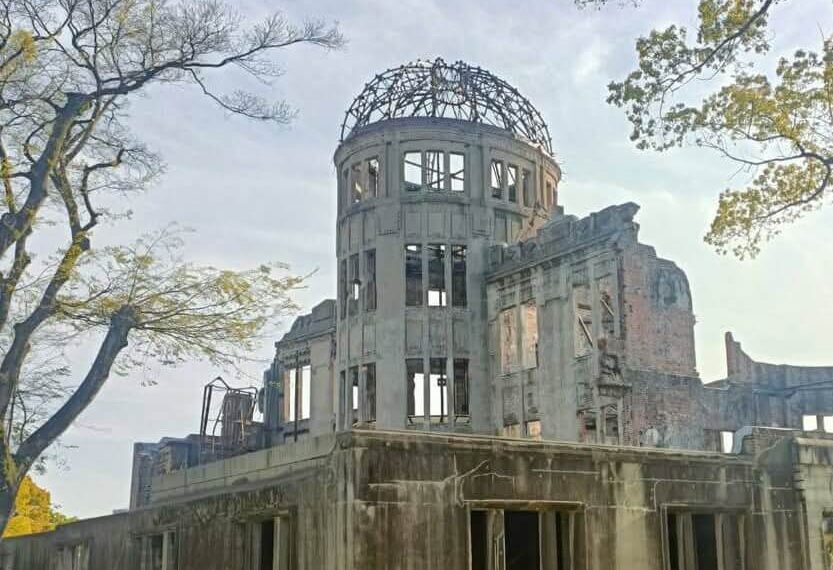
We have experience of the impact of nuclear attack on human population in Hiroshima and Nagasaki, where over 200,000 people were killed and many times more injured. Effects of radiations causing genetic mutations still continue to occur. Dr. Marcel Junod, the first foreign doctor to reach Hiroshima after the atom bomb attack on 6 August 1945 and treat some of the victims noted the consequences of the bomb for Hiroshima’s medical corps: “out of 300 doctors, 270 died or were injured; out of 1,780 nurses, 1,654 perished or were injured”. He made an appeal for the bomb to be banned outright.
Events in Syria, Palestine and ongoing low level conflicts in South Asia are issues that concern us all. These could at any time trigger into larger wars, threatening the use of nuclear weapons. There are about 17,000 nuclear weapons present on earth today. Various studies on humanitarian impact of nuclear weapons have proved through scientific evidence that nuclear war in present times could be catastrophic and the end of modern civilisation. As per the study “climatic consequences of nuclear war” by Ira Helfand and Alan Robock, a nuclear war using 100 Hiroshima sized bombs would put 2 billion people at risk of starvation and death.
Even if governments decide against the use of nuclear weapons, the danger of their use by terrorist groups persists. Moreover, manufacture of these weapons, possession, putting them on alert and their maintenance cause huge amount on the exchequer, depriving the resources which could otherwise have been used for health, education and development.
Medical profession has no remedy to offer in the aftermath of nuclear exchange. Abolition is the only answer. The recent summit between US President Donald Trump and North Korean leader Kim Jong Un has given some positive signals. The Treaty Prohibiting Nuclear Weapons (TPNW) passed by the UN General Assembly on 7th July 2017 is a big hope for complete nuclear disarmament and saving the world from nuclear catastrophe. It is time the nuclear armed states realize this and join the treaty without any ifs and buts. The role of International Physicians for the Prevention of Nuclear War (IPPNW), recipient of Nobel Peace Prize 1985, and the International Campaign to Abolish Nuclear Weapons (ICAN) recipient of Nobel Peace Prize 2017 in their consistent efforts to get the TPNW through by highlighting the Humanitarian Impact of Nuclear Weapons has to be carried forward to achieve the goal of a world free of nuclear weapons.
Dr. Arun Mitra
©IPA Service
Photo from the Internet

 By
By
 By
By
 By
By
 By
By