
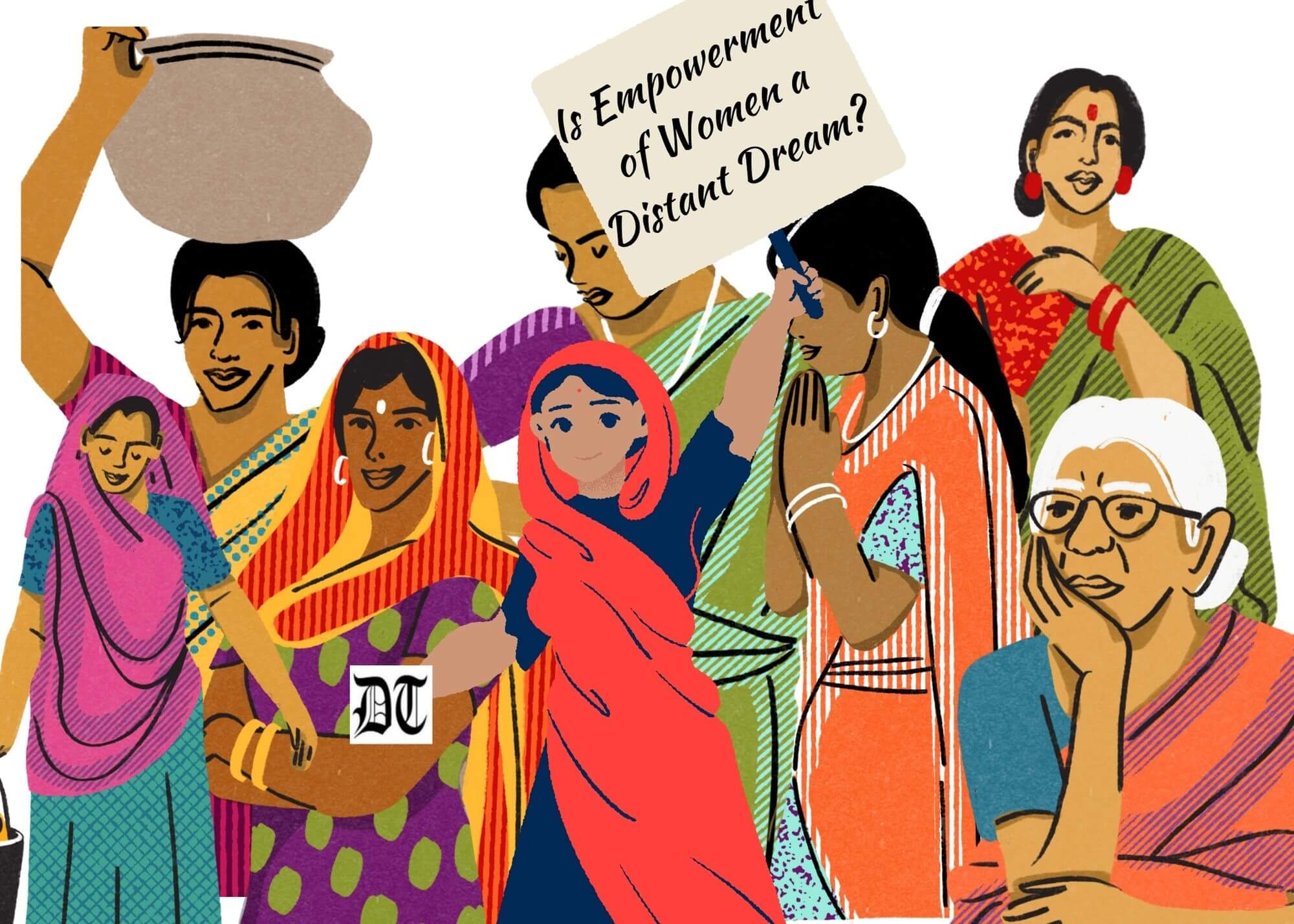

Women roughly constitute half the population, but in every aspect, women remain grossly under-represented. Certainly, the women in the world’s largest democracy rank well below the top 100 in the global ranking. Hemashri examines the issue of women’s empowerment using several indicators in the Special Feature, exclusively for Different Truths.

A working woman is considered to be the ultimate symbol of women’s empowerment. But is she really empowered?
If a woman is working, is that a guarantee that she is empowered? What are the elements of women’s empowerment?
Women’s empowerment is the process of empowering women. It is making the women better off by lending them a voice. It also gives them a will of their own. It fosters greater self-confidence and a sense of independence among women. The infographic describes the essence of women’s empowerment.
Does a woman going to work mean that she has a safe and comfortable working environment? Doesn’t it mean that she has equal rights to economic and social justice? Can she make her own choice and decision? Does she have equal rights to participate in social, religious and public activities? Finally, can she live her life with a sense of self-worth, respect and dignity?
‘Women empowerment’ refers to strengthening the social, economic and educational powers of women. It refers to an environment free of gender bias and discrimination, where people have equal rights in the community, society, and workplaces.
Experts have developed various indicators to measure women’s empowerment. Basically, the condition of women can be assessed using indicators of their health status, economic and educational attainment, and representation in government, parliament, the media, higher academic circles, and other areas.
The United Nations Development Programme (UNDP) has been measuring gender empowerment since 1995. It took into account three basic dimensions of empowerment:
1. Economic participation and decision-making
2. Political participation and decision-making
3. Power over economic resources
Consequently, several other indicators have been developed, including the Gender Equity Index (GEI) since 2007. It is designed to measure the gap between men and women across 150 countries, based on dimensions of education, economic activity, and empowerment.
The Gender Development Index (GDI) is an index designed to measure gender equality. GDI, together with the Gender Empowerment Measure (GEM), was introduced in 1995 in the Human Development Report published by the United Nations Development Program. Gender Inequality Index was introduced in the
Human Development Index. The Global Gender Gap is designed to measure gender equality and was first published in 2006 by the World Economic Forum.
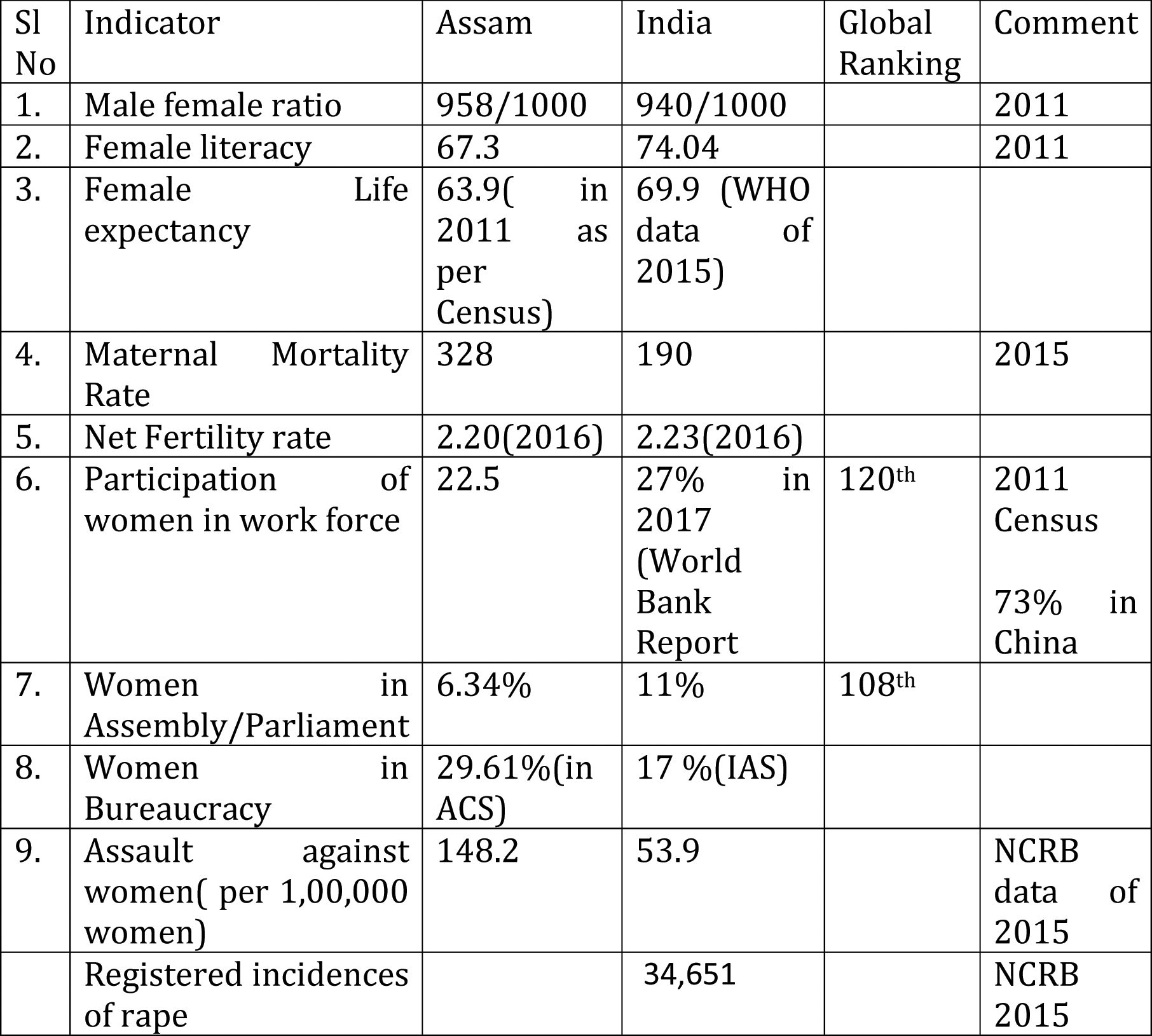
India ranks 125th in the Gender Equity Index. It is 87th in the Gender Gap Index and 108th in the Global Gender Gap estimated by the World Economic Forum.
The statistics above clearly show that much remains to be done to empower women in the true sense. Women roughly constitute half the population, but in every aspect, they still remain grossly under-represented. Certainly, the women in the world’s largest democracy rank well below the top 100 in the global ranking. For example, women’s participation in the workplace: only 27% of Indian women are
engaged in the labour force, which means that 73% of women are economically dependent.
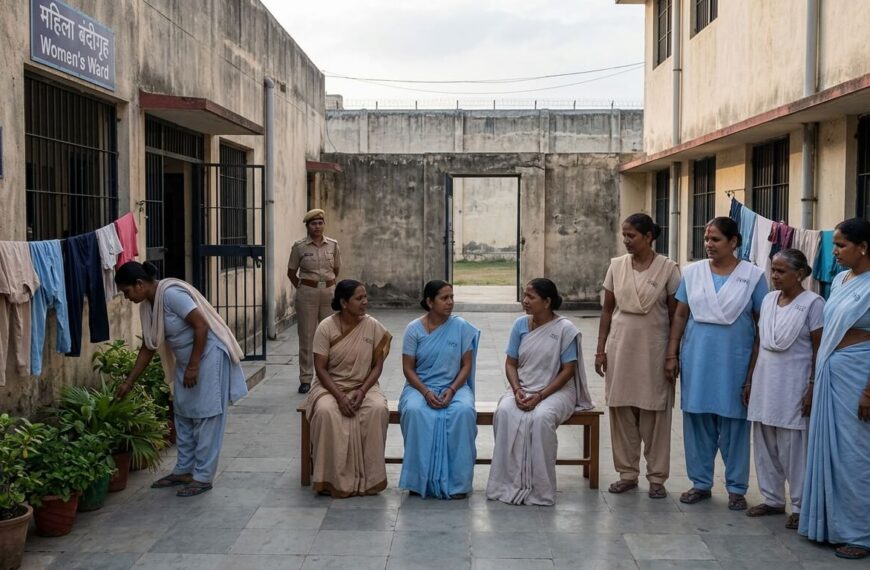
Crimes against women start before the birth of a girl in the form of female foeticide. After birth, anything can happen, from child marriage, honour killing, acid attacks, molestation, rape, dowry death, domestic violence, marital rape, gang rape, trafficking and forced prostitution. Twenty-one dowry deaths are reported across the country every day, but the conviction rate is only 34.7 per cent. The National Crime
Records Bureau (NCRB) states that in 2015, as many as 7,634 women died in the country due to dowry harassment. Either they were burnt alive or forced to commit suicide over a dowry demand.
India is home to a predominantly Hindu population, in which deities are worshipped as goddesses. Isn’t it shameful that the country known for being the oldest civilisation is where women still endure all kinds of violence?
When it comes to the Global Gender Gap, neighbouring countries China and Bangladesh are ranked above India, thanks to their high levels of women’s participation in economic activity.
Thus, a working woman is only a small part of the problem. It may seem like a positive change, but much work remains to be done. Even those who work often have to endure very adverse situations, ranging from an adverse working atmosphere to unshared family and household responsibilities, which stress working women and create severe mental, physical, and health issues.
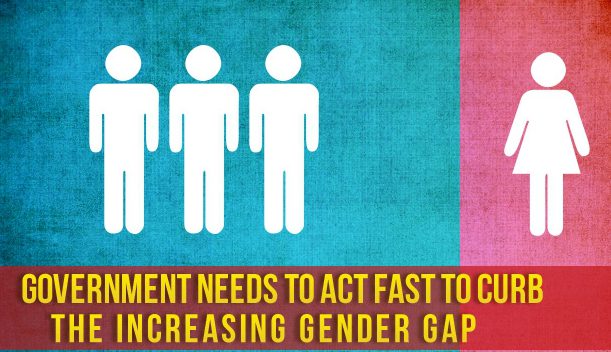
A change of mindset is urgently needed to break age-old adverse family and social customs that demean women as inferior, along with the spread of education and skills; the improvement of the social atmosphere to promote the safety of women; an efficient and effective judicial and executive system to enforce rules and laws; political empowerment of women; and so on.
Having only a few women in the workplace is insufficient!
Charts and infographics from the Internet and images designed by Anumita Roy, Different Truths

Hemashri Hazarika is an Officer of the Assam Civil Service since 1997. Her research on Assam Civil Service brought reforms in 2015. A first-class Postgraduate in Economics from Gauhati University, she was awarded JRF/NET by UGC in 1997. Her experience as a bureaucrat has sensitised her to human sufferings. A solutionist by passion, she takes an active interest in issues related to Governance, Development, Women, Children, etc. Reading, Writing, Speaking and Painting are her hobbies.

 By
By
 By
By
 By
By
 By
By
VERY WELL WRITTEN
A very important issue concerning 50% of our society..very well highlighted supported by statistical datas..👏👏